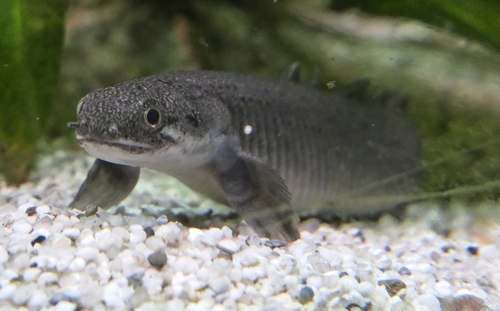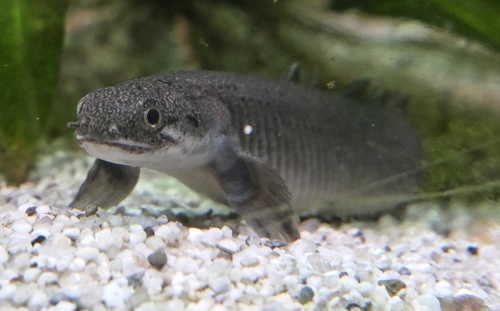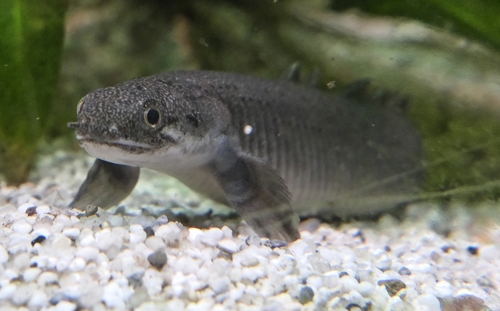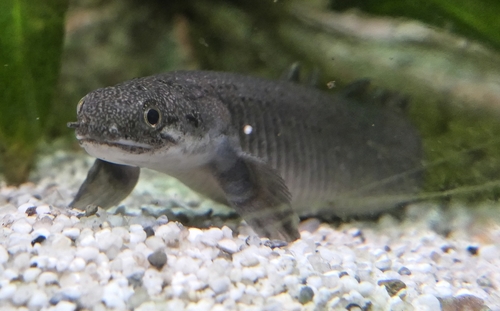
Polypterus teugelsi
Polypterus teugelsi
In Stock
Common stock
Wild Caught
Moderate care
Not Reef Safe
SKU: 01-A-30-028-04
Discover the unique Polypterus teugelsi, a stunning nocturnal bichir from Cameroon.
Pricing for Verified Importers
Log in to see wholesale prices and order.
Export Size
up to 40.0 cm
Origin
West Africa
Temperature
24.0–28.0°C
Min. Tank Size
200 L
pH
6.50–7.50
Diet
carnivore
Polypterus teugelsi, commonly known as Teugels' bichir, is a captivating species of carnivorous fish that inhabits the Cross River drainage basin in Cameroon. Described by Ralf Britz in 2004, this species is notable for its primitive characteristics, which connect it to ancient fish lineages. Unlike many other freshwater species, P. teugelsi retains a unique blend of traits, including a series of dorsal finlets and a distinctive elongated body, making it a fascinating addition to any aquarium.
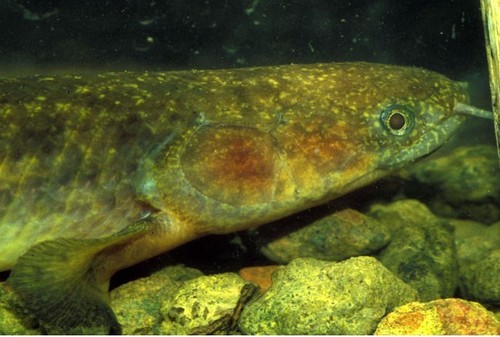
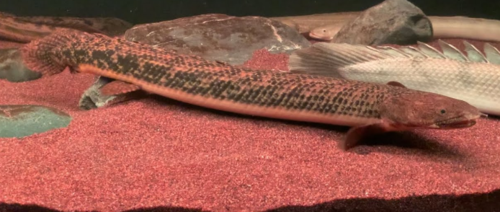
The appearance of Polypterus teugelsi is striking with its dark brown to olive-green coloration, adorned with lighter spots and a striking pattern that enhances its aesthetic appeal. This species can grow up to 40 cm in length, showcasing a robust, elongated body that is well-adapted for life in slow-moving waters. Its unique gill structure allows it to breathe air, a feature that further distinguishes it from many other freshwater fish.
Primarily nocturnal, P. teugelsi exhibits a range of behaviors that align with its predatory lifestyle. It is an inquisitive species that thrives on a diet of smaller fish and invertebrates. During the day, it prefers to hide among submerged structures and vegetation, emerging at night to hunt. This behavior not only highlights its adaptability but also makes it an engaging species for aquarium enthusiasts who appreciate observing their natural hunting instincts.
In its natural habitat, Polypterus teugelsi is found in shallow waters with abundant cover, such as dense vegetation and submerged logs. These environments provide crucial hiding spots and hunting grounds, reflecting its need for both safety and a diverse feeding area. Creating a similar environment in captivity is essential for its well-being and activity levels.
The appearance of Polypterus teugelsi is striking with its dark brown to olive-green coloration, adorned with lighter spots and a striking pattern that enhances its aesthetic appeal. This species can grow up to 40 cm in length, showcasing a robust, elongated body that is well-adapted for life in slow-moving waters. Its unique gill structure allows it to breathe air, a feature that further distinguishes it from many other freshwater fish.
Primarily nocturnal, P. teugelsi exhibits a range of behaviors that align with its predatory lifestyle. It is an inquisitive species that thrives on a diet of smaller fish and invertebrates. During the day, it prefers to hide among submerged structures and vegetation, emerging at night to hunt. This behavior not only highlights its adaptability but also makes it an engaging species for aquarium enthusiasts who appreciate observing their natural hunting instincts.
In its natural habitat, Polypterus teugelsi is found in shallow waters with abundant cover, such as dense vegetation and submerged logs. These environments provide crucial hiding spots and hunting grounds, reflecting its need for both safety and a diverse feeding area. Creating a similar environment in captivity is essential for its well-being and activity levels.
To successfully care for Polypterus teugelsi, maintaining optimal water parameters is crucial. Ideal temperatures range from 24°C to 28°C, with a pH level between 6.5 and 7.5. Regular water changes and filtration are necessary to keep water quality high, as bichirs can be sensitive to poor conditions. A minimum tank size of 200 liters is recommended to provide ample swimming space and hiding spots.
Feeding P. teugelsi involves offering a varied diet that includes high-quality pellets, live or frozen foods such as bloodworms, brine shrimp, and small fish. This species is a carnivore and thrives when provided with a diverse diet to mimic its natural feeding habits. Compatibility with tank mates should be approached cautiously, as its predatory nature can lead to aggression towards smaller fish or invertebrates. Therefore, it’s best housed with similarly sized or larger fish.
Acclimation is vital when introducing Polypterus teugelsi to a new aquarium. A slow acclimation process over several hours helps reduce stress and increases the chances of a successful transition. Quarantine is also recommended for new arrivals to prevent the spread of diseases to existing tank inhabitants. A quarantine period of at least two weeks allows for observation and treatment of any potential health issues before adding the fish to the main display tank.
Feeding P. teugelsi involves offering a varied diet that includes high-quality pellets, live or frozen foods such as bloodworms, brine shrimp, and small fish. This species is a carnivore and thrives when provided with a diverse diet to mimic its natural feeding habits. Compatibility with tank mates should be approached cautiously, as its predatory nature can lead to aggression towards smaller fish or invertebrates. Therefore, it’s best housed with similarly sized or larger fish.
Acclimation is vital when introducing Polypterus teugelsi to a new aquarium. A slow acclimation process over several hours helps reduce stress and increases the chances of a successful transition. Quarantine is also recommended for new arrivals to prevent the spread of diseases to existing tank inhabitants. A quarantine period of at least two weeks allows for observation and treatment of any potential health issues before adding the fish to the main display tank.
Polypterus teugelsi is suitable for shipping due to its hardy nature, but care must be taken to maintain appropriate temperatures during transit. Packing density should be moderate to ensure adequate oxygen levels, and temperatures should be kept within the ideal range of 24°C to 28°C. As a CITES-listed species, proper documentation is required for export to ensure compliance with international trade regulations.
Species Parameters
Max Adult Size
40.0 cm
Origin
West Africa
Diet
carnivore
Temp Min
24.0 °C
Temp Max
28.0 °C
pH Min
6.50
pH Max
7.50
Min Tank
200 L