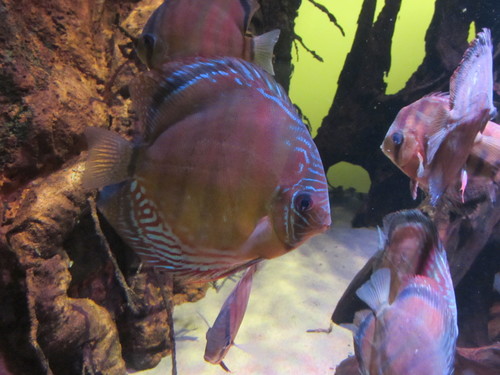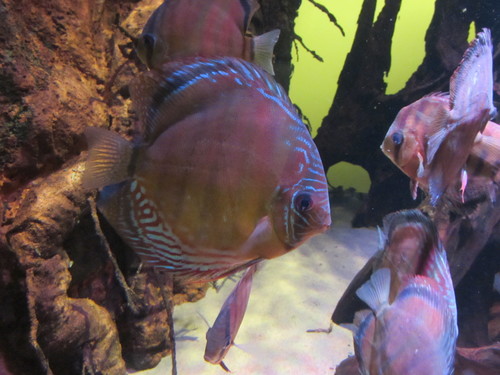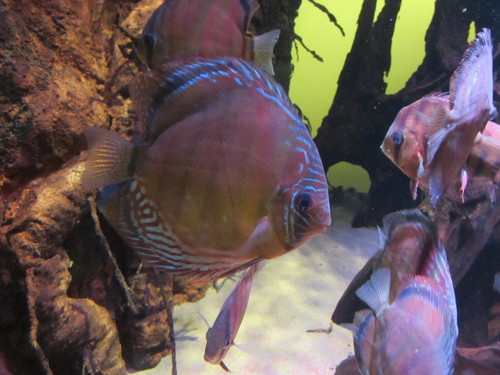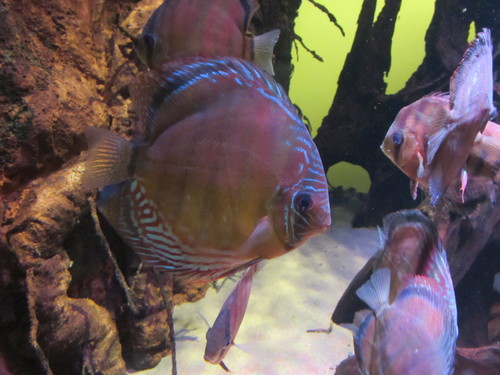
Blue Turquoise Discus
Symphysodon aequifasciata
Out of Stock
Scarce stock
Wild Caught
Experienced care
Not Reef Safe
SKU: 01-A-05-043-07
Discover the stunning Blue Turquoise Discus, a vibrant freshwater fish prized for its beauty.
Pricing for Verified Importers
Log in to see wholesale prices and order.
Export Size
up to 15.0 cm
Origin
Amazon Basin
Temperature
24.0–30.0°C
Min. Tank Size
200 L
pH
6.00–7.50
Diet
omnivore
The Blue Turquoise Discus (Symphysodon aequifasciata) is a captivating freshwater fish known for its striking blue coloration and unique patterning. This species is native to the Amazon Basin, where it inhabits slow-moving waters, floodplains, and lakes. The Blue Turquoise Discus thrives in warm, acidic waters, making it an ideal choice for aquarium enthusiasts seeking to create a naturalistic habitat. Its vibrant hues and graceful swimming patterns make it a focal point in any aquarium setting.
Physically, the Blue Turquoise Discus features a flattened, disk-like shape with bright blue bodies adorned with turquoise and greenish stripes. These colors can vary depending on environmental factors and the specific lineage of the fish. Adult Blue Turquoise Discus can reach sizes of up to 15 cm, making them a noticeable presence in larger aquariums. Their social behavior is another highlight, as they are known to form strong pair bonds and can display interesting interactions with one another.
In their natural habitat, Blue Turquoise Discus are typically found in schools, which provides them with safety from predators. They are primarily herbivorous, feeding on a diet of plant matter and small invertebrates. This species exhibits a peaceful temperament, making it suitable for community tanks when housed with compatible species. Their serene nature and beautiful appearance contribute to their popularity among both novice and experienced aquarists.
As a result of their stunning looks and gentle disposition, the Blue Turquoise Discus has become a sought-after species in the aquarium trade. Proper care and an understanding of their natural behaviors can lead to successful breeding and keeping in captivity, providing aquarists with a rewarding experience as they observe these beautiful fish thrive in their tanks.
Physically, the Blue Turquoise Discus features a flattened, disk-like shape with bright blue bodies adorned with turquoise and greenish stripes. These colors can vary depending on environmental factors and the specific lineage of the fish. Adult Blue Turquoise Discus can reach sizes of up to 15 cm, making them a noticeable presence in larger aquariums. Their social behavior is another highlight, as they are known to form strong pair bonds and can display interesting interactions with one another.
In their natural habitat, Blue Turquoise Discus are typically found in schools, which provides them with safety from predators. They are primarily herbivorous, feeding on a diet of plant matter and small invertebrates. This species exhibits a peaceful temperament, making it suitable for community tanks when housed with compatible species. Their serene nature and beautiful appearance contribute to their popularity among both novice and experienced aquarists.
As a result of their stunning looks and gentle disposition, the Blue Turquoise Discus has become a sought-after species in the aquarium trade. Proper care and an understanding of their natural behaviors can lead to successful breeding and keeping in captivity, providing aquarists with a rewarding experience as they observe these beautiful fish thrive in their tanks.
To successfully care for Blue Turquoise Discus, maintaining optimal water conditions is crucial. Ideal temperature ranges from 28°C to 30°C, with a pH between 6.0 and 7.5. The water should be soft, with a hardness of 1-10 dGH. Regular water changes are essential to keep the environment clean and healthy. It is advisable to use a high-quality filtration system, as Discus are sensitive to poor water quality.
Feeding should consist of a balanced diet rich in protein and plant matter. High-quality pellets, frozen or live foods such as brine shrimp and bloodworms, and spirulina flakes are excellent choices. Providing a varied diet will promote vibrant colors and optimal health. Blue Turquoise Discus are social fish, so keeping them in groups of at least six will help minimize stress and encourage natural behaviors.
Acclimation is essential when introducing new fish to an aquarium. A slow drip acclimation method is recommended to minimize shock. Additionally, quarantine new arrivals for at least two weeks to prevent the introduction of diseases. Blue Turquoise Discus are generally peaceful but should be housed with other non-aggressive species to ensure a harmonious community tank.
Feeding should consist of a balanced diet rich in protein and plant matter. High-quality pellets, frozen or live foods such as brine shrimp and bloodworms, and spirulina flakes are excellent choices. Providing a varied diet will promote vibrant colors and optimal health. Blue Turquoise Discus are social fish, so keeping them in groups of at least six will help minimize stress and encourage natural behaviors.
Acclimation is essential when introducing new fish to an aquarium. A slow drip acclimation method is recommended to minimize shock. Additionally, quarantine new arrivals for at least two weeks to prevent the introduction of diseases. Blue Turquoise Discus are generally peaceful but should be housed with other non-aggressive species to ensure a harmonious community tank.
Shipping Blue Turquoise Discus requires careful consideration due to their sensitivity to temperature and water quality. Fish should be packed with adequate oxygen and insulation to maintain stable conditions during transit. A packing density of 1-2 fish per liter is recommended to minimize stress. The ideal shipping temperature is between 24°C and 28°C. As a non-CITES species, there are no restrictions on international trade, but adherence to local regulations is necessary.
Species Parameters
Max Adult Size
15.0 cm
Origin
Amazon Basin
Diet
omnivore
Temp Min
24.0 °C
Temp Max
30.0 °C
pH Min
6.00
pH Max
7.50
Min Tank
200 L