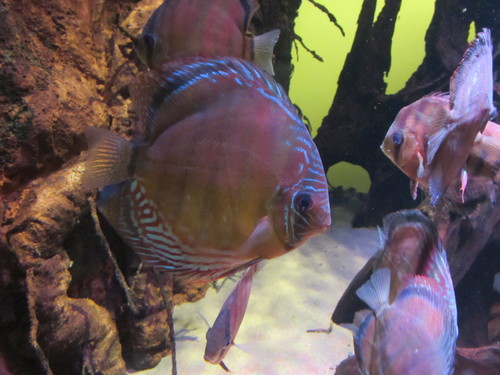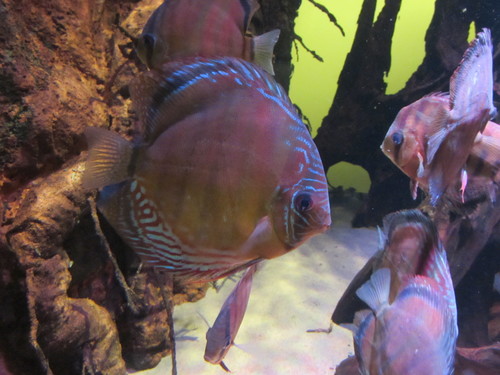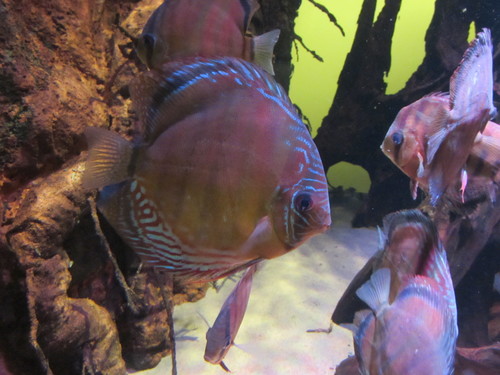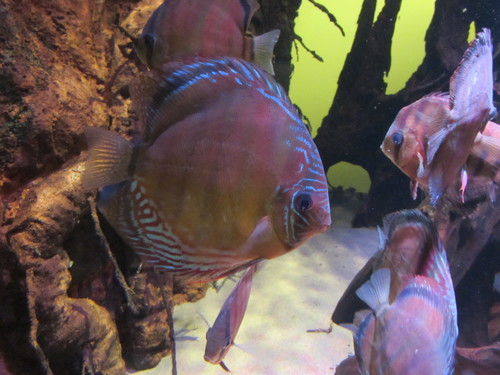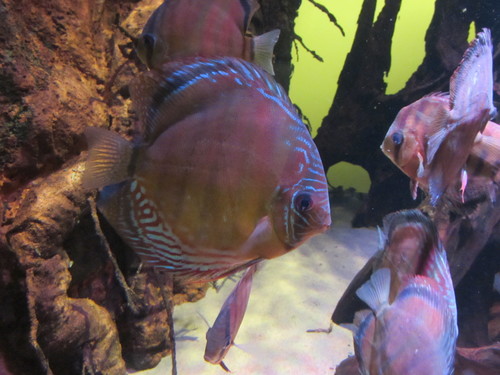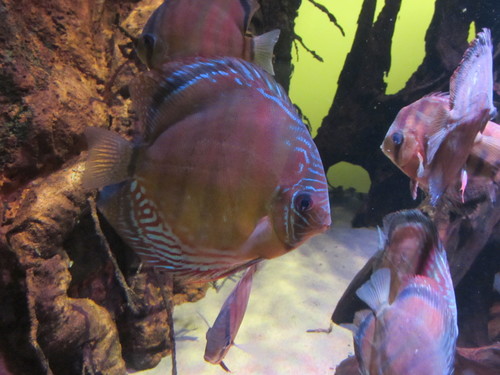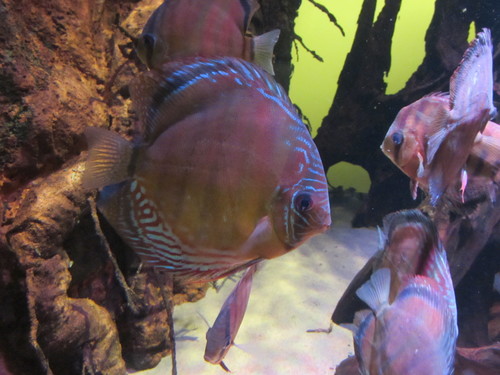
Leopard Snake Discus (Bio-Secured Bred)
Symphysodon aequifasciata
Out of Stock
Scarce stock
Wild Caught
Experienced care
Not Reef Safe
SKU: 01-W-01-019-04
The Leopard Snake Discus is a stunning freshwater fish known for its vibrant colors and unique patterns.
Pricing for Verified Importers
Log in to see wholesale prices and order.
Export Size
up to 15.0 cm
Origin
Amazon Basin
Temperature
28.0–32.0°C
Min. Tank Size
200 L
pH
6.00–7.50
Diet
omnivore
The Leopard Snake Discus (Symphysodon aequifasciata) is a remarkable species belonging to the cichlid family, primarily found in the Amazon River Basin. This fish is known for its striking appearance, characterized by a mix of vibrant colors and intricate patterns resembling that of a leopard. The species exhibits a flattened, disc-like body shape, which allows it to navigate the gentle currents of its natural habitat. Adult Leopard Snake Discus can reach sizes of up to 15 cm, making them a favorite among aquarium enthusiasts.
In the wild, these fish inhabit slow-moving waters, often found in densely vegetated areas with a rich substrate. They thrive in soft, acidic waters that are typical of their natural environment. The Leopard Snake Discus is social by nature, often forming small groups that exhibit complex social behaviors. These fish are known for their peaceful demeanor, making them an ideal choice for community tanks with similarly sized species.
As they mature, Leopard Snake Discus develop vibrant coloration and distinctive patterns that can vary significantly among individuals. Their coloration typically includes shades of blue, green, and red, with intricate markings that make each fish unique. This beautiful appearance, combined with their graceful swimming style, contributes to their popularity in the aquarium trade.
Wild populations of Leopard Snake Discus are becoming increasingly threatened due to habitat loss and overfishing. However, bio-secured breeding programs have been established in Bali, Indonesia, ensuring a sustainable supply for the aquarium industry while helping to conserve wild populations. This careful breeding process not only enhances their aesthetic appeal but also contributes positively to the ecosystem by reducing the pressure on natural habitats.
In the wild, these fish inhabit slow-moving waters, often found in densely vegetated areas with a rich substrate. They thrive in soft, acidic waters that are typical of their natural environment. The Leopard Snake Discus is social by nature, often forming small groups that exhibit complex social behaviors. These fish are known for their peaceful demeanor, making them an ideal choice for community tanks with similarly sized species.
As they mature, Leopard Snake Discus develop vibrant coloration and distinctive patterns that can vary significantly among individuals. Their coloration typically includes shades of blue, green, and red, with intricate markings that make each fish unique. This beautiful appearance, combined with their graceful swimming style, contributes to their popularity in the aquarium trade.
Wild populations of Leopard Snake Discus are becoming increasingly threatened due to habitat loss and overfishing. However, bio-secured breeding programs have been established in Bali, Indonesia, ensuring a sustainable supply for the aquarium industry while helping to conserve wild populations. This careful breeding process not only enhances their aesthetic appeal but also contributes positively to the ecosystem by reducing the pressure on natural habitats.
For successful care of the Leopard Snake Discus, maintaining optimal water parameters is crucial. The ideal temperature range is between 28°C and 32°C, with a pH level of 6.0 to 7.5. These fish prefer soft, slightly acidic water, so regular monitoring and maintenance are essential. Regular water changes and a good filtration system will help keep the environment clean and healthy.
The Leopard Snake Discus is an omnivore, and its diet should consist of high-quality flakes, pellets, and live or frozen foods such as bloodworms and brine shrimp. Feeding multiple times a day in small amounts is recommended to ensure proper nutrition and growth. Compatibility with other species is generally good, but caution should be exercised to avoid aggressive tank mates. Ideal companions include other peaceful cichlids and small community fish.
Acclimation is critical when introducing these fish to a new tank. Slowly acclimate them to the new environment over several hours to reduce stress. Additionally, a quarantine period of at least two weeks is recommended for new arrivals to monitor for any signs of illness and prevent potential outbreaks in established tanks.
The Leopard Snake Discus is an omnivore, and its diet should consist of high-quality flakes, pellets, and live or frozen foods such as bloodworms and brine shrimp. Feeding multiple times a day in small amounts is recommended to ensure proper nutrition and growth. Compatibility with other species is generally good, but caution should be exercised to avoid aggressive tank mates. Ideal companions include other peaceful cichlids and small community fish.
Acclimation is critical when introducing these fish to a new tank. Slowly acclimate them to the new environment over several hours to reduce stress. Additionally, a quarantine period of at least two weeks is recommended for new arrivals to monitor for any signs of illness and prevent potential outbreaks in established tanks.
Leopard Snake Discus are sensitive to temperature fluctuations, so shipping should be conducted in temperature-controlled environments. A packing density of 1-2 fish per liter is recommended to minimize stress during transit. Ensure that the shipping temperature stays within the optimal range of 28°C to 30°C. These fish are not listed on the CITES appendices, allowing for legal and straightforward export processes.
Species Parameters
Max Adult Size
15.0 cm
Origin
Amazon Basin
Diet
omnivore
Temp Min
28.0 °C
Temp Max
32.0 °C
pH Min
6.00
pH Max
7.50
Min Tank
200 L