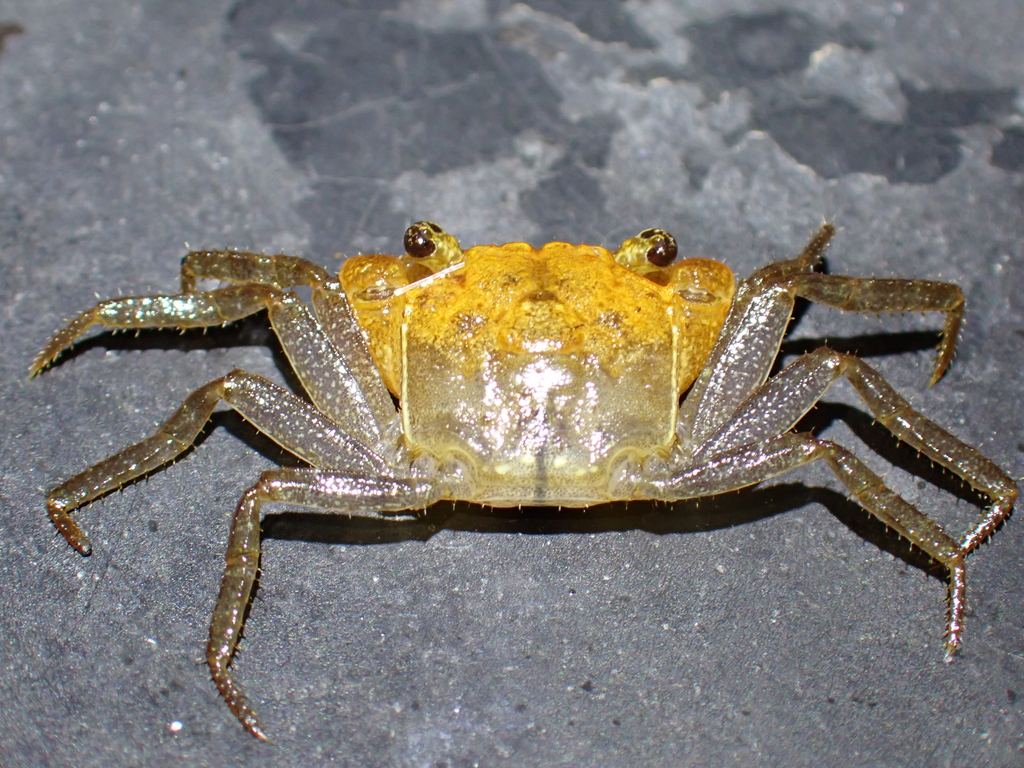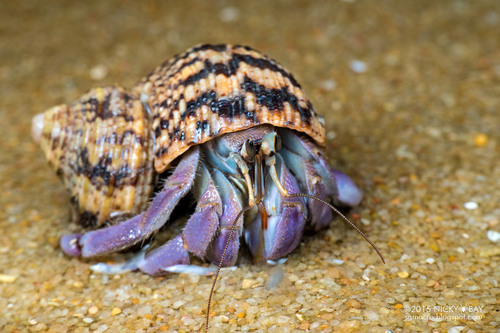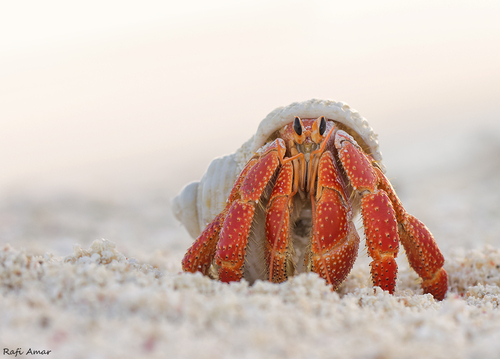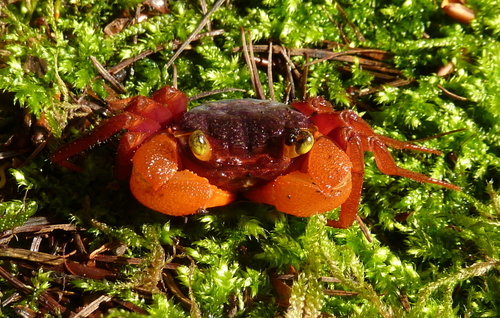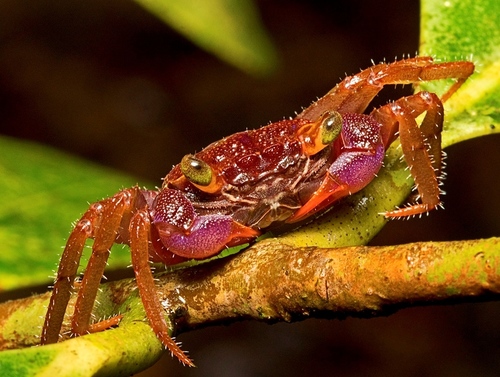
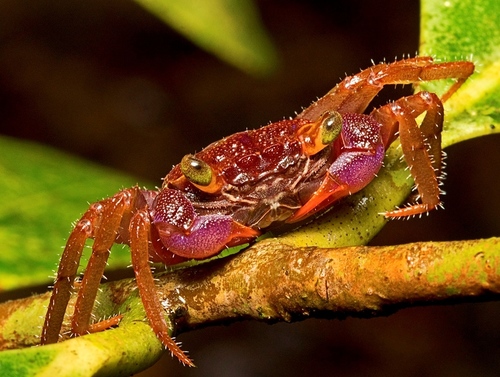
Oranged Eye Carnaval Crab
Geosesarma sp.
Out of Stock
Scarce stock
Wild Caught
Moderate care
Not Reef Safe
SKU: 01-F-01-052-20
The Oranged Eye Carnaval Crab is a striking invertebrate known for its vibrant coloration and unique behaviors.
Pricing for Verified Importers
Log in to see wholesale prices and order.
Export Size
up to 5.0 cm
Origin
Southeast Asia
Temperature
24.0–28.0°C
Min. Tank Size
40 L
pH
6.50–7.50
Diet
omnivore
The Oranged Eye Carnaval Crab (Geosesarma sp.) is a captivating freshwater invertebrate native to the lush mangrove ecosystems of Southeast Asia, particularly found in Indonesia. This species is easily recognized by its vivid orange eyes and striking coloration, which can range from deep purples to bright reds and blacks, making them a popular choice among aquarium enthusiasts. Their small size, typically reaching up to 5 cm, allows them to fit comfortably in various tank setups while still showcasing their spectacular appearance.
In their natural habitat, Oranged Eye Carnaval Crabs thrive in brackish water environments, often found among the roots of mangrove trees, where they utilize the complex structure for both shelter and foraging. These crabs are primarily terrestrial but require access to water for hydration and feeding. Their diet consists of detritus, algae, and small invertebrates, making them essential scavengers in their ecosystem.
Behaviorally, these crabs exhibit fascinating social interactions and can often be seen engaging in territorial displays or courtship rituals. They are known for their curious and active nature, which adds a dynamic element to any aquarium. With proper care, they can display vibrant colors and engage in interesting behaviors, making them a delight for both novice and experienced aquarists.
Oranged Eye Carnaval Crabs are best kept in groups as they exhibit social behaviors, although territorial disputes can arise. Providing plenty of hiding spots and climbing structures will help mitigate aggression and encourage natural behaviors. Their unique appearance and engaging personality make them a standout species for aquarists looking to enhance their displays with lively invertebrates.
In their natural habitat, Oranged Eye Carnaval Crabs thrive in brackish water environments, often found among the roots of mangrove trees, where they utilize the complex structure for both shelter and foraging. These crabs are primarily terrestrial but require access to water for hydration and feeding. Their diet consists of detritus, algae, and small invertebrates, making them essential scavengers in their ecosystem.
Behaviorally, these crabs exhibit fascinating social interactions and can often be seen engaging in territorial displays or courtship rituals. They are known for their curious and active nature, which adds a dynamic element to any aquarium. With proper care, they can display vibrant colors and engage in interesting behaviors, making them a delight for both novice and experienced aquarists.
Oranged Eye Carnaval Crabs are best kept in groups as they exhibit social behaviors, although territorial disputes can arise. Providing plenty of hiding spots and climbing structures will help mitigate aggression and encourage natural behaviors. Their unique appearance and engaging personality make them a standout species for aquarists looking to enhance their displays with lively invertebrates.
To maintain the health of the Oranged Eye Carnaval Crab, it is crucial to replicate their natural habitat as closely as possible. Ideal water parameters include a temperature range of 24-28°C and a pH level between 6.5 and 7.5. While they prefer slightly brackish conditions, they can adapt to freshwater with regular water changes. A minimum tank size of 40 liters is recommended to provide ample space for foraging and territorial behavior.
Feeding should consist of a varied diet, including high-quality pellets, algae wafers, and occasional protein sources like blanched vegetables and small invertebrates. It's essential to avoid overfeeding, as uneaten food can deteriorate water quality. Compatibility with other species should be assessed carefully; while they can be housed with other peaceful invertebrates, aggression may occur with more territorial species.
Acclimation is vital when introducing Oranged Eye Carnaval Crabs to a new environment. A slow drip acclimation method is recommended to help them adjust to changes in water chemistry. Quarantine new arrivals for at least two weeks to monitor for any potential health issues before adding them to a main display tank. By adhering to these care guidelines, importers and retailers can ensure the successful keeping and sale of this vibrant species.
Feeding should consist of a varied diet, including high-quality pellets, algae wafers, and occasional protein sources like blanched vegetables and small invertebrates. It's essential to avoid overfeeding, as uneaten food can deteriorate water quality. Compatibility with other species should be assessed carefully; while they can be housed with other peaceful invertebrates, aggression may occur with more territorial species.
Acclimation is vital when introducing Oranged Eye Carnaval Crabs to a new environment. A slow drip acclimation method is recommended to help them adjust to changes in water chemistry. Quarantine new arrivals for at least two weeks to monitor for any potential health issues before adding them to a main display tank. By adhering to these care guidelines, importers and retailers can ensure the successful keeping and sale of this vibrant species.
The Oranged Eye Carnaval Crab is suitable for shipping due to its hardy nature. It is recommended to pack them in breathable, moisture-retentive bags to maintain humidity during transit. Optimal shipping temperatures should be maintained between 22-26°C to prevent stress. As a non-CITES species, there are no restrictions on export, allowing for straightforward international trade.
Species Parameters
Max Adult Size
5.0 cm
Origin
Southeast Asia
Diet
omnivore
Temp Min
24.0 °C
Temp Max
28.0 °C
pH Min
6.50
pH Max
7.50
Min Tank
40 L