
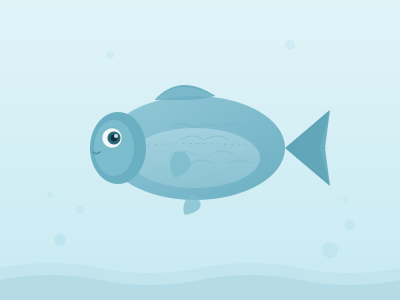
Tamasaba Goldfish Grade B
Carassius auratus
In Stock
Common stock
Wild Caught
Easy care
Not Reef Safe
SKU: 01-A-40-152-06
Discover the vibrant Tamasaba Goldfish Grade B, a stunning addition to any aquarium.
Pricing for Verified Importers
Log in to see wholesale prices and order.
Export Size
up to 15.0 cm
Origin
Southeast Asia
Temperature
18.0–24.0°C
Min. Tank Size
100 L
pH
6.50–8.50
Diet
omnivore
The Tamasaba Goldfish (Carassius auratus) is a unique variety of goldfish renowned for its striking appearance and engaging behavior. Originating from East Asia, this freshwater fish is a domesticated species that has been selectively bred for centuries. The Tamasaba features a distinctive body shape, characterized by a rounded, deep body and flowing fins that create a captivating display in aquariums. Its coloration can range from bright orange to gold, often exhibiting variations that make each fish unique.
In terms of natural history, goldfish were originally bred from wild carp and have since evolved into various forms, including the Tamasaba. Unlike traditional goldfish, Tamasaba goldfish have a more robust physique, which enhances their swimming agility. They are social creatures and thrive in groups, displaying playful interactions with their tank mates. Their natural habitat consists of slow-moving waters, such as ponds and lakes, where they can forage on aquatic vegetation and small invertebrates.
Tamasaba goldfish are also known for their resilience and adaptability, making them suitable for both novice and experienced aquarists. They exhibit a range of behaviors, from foraging at the substrate to darting around the tank, which provides an engaging viewing experience. Additionally, their peaceful demeanor makes them compatible with various other freshwater species, allowing for diverse community tanks.
Overall, the Tamasaba Goldfish Grade B stands out not just for its aesthetic appeal but also for its lively personality and adaptability, making it a delightful choice for aquarium enthusiasts.
In terms of natural history, goldfish were originally bred from wild carp and have since evolved into various forms, including the Tamasaba. Unlike traditional goldfish, Tamasaba goldfish have a more robust physique, which enhances their swimming agility. They are social creatures and thrive in groups, displaying playful interactions with their tank mates. Their natural habitat consists of slow-moving waters, such as ponds and lakes, where they can forage on aquatic vegetation and small invertebrates.
Tamasaba goldfish are also known for their resilience and adaptability, making them suitable for both novice and experienced aquarists. They exhibit a range of behaviors, from foraging at the substrate to darting around the tank, which provides an engaging viewing experience. Additionally, their peaceful demeanor makes them compatible with various other freshwater species, allowing for diverse community tanks.
Overall, the Tamasaba Goldfish Grade B stands out not just for its aesthetic appeal but also for its lively personality and adaptability, making it a delightful choice for aquarium enthusiasts.
To ensure the health and longevity of Tamasaba Goldfish, maintaining optimal water conditions is crucial. The ideal temperature range is between 18-24°C, with a pH level between 6.5 and 8.5. Regular water changes and filtration are essential to keep the water clean and well-oxygenated. Goldfish produce significant waste, so a robust filtration system is recommended.
Feeding should consist of a balanced diet, including high-quality flakes, pellets, and occasional treats like blanched vegetables or bloodworms. It is important to avoid overfeeding, as this can lead to health issues. In terms of compatibility, Tamasaba Goldfish are generally peaceful and can coexist with other non-aggressive freshwater species such as tetras, danios, and loaches.
Acclimation is key when introducing Tamasaba Goldfish to a new environment. Gradually acclimatize them to the new water conditions over several hours to minimize stress. Quarantine new arrivals for at least two weeks to monitor for any signs of disease before introducing them to the main tank. This practice helps maintain a healthy aquarium ecosystem and prevents the spread of potential pathogens.
Feeding should consist of a balanced diet, including high-quality flakes, pellets, and occasional treats like blanched vegetables or bloodworms. It is important to avoid overfeeding, as this can lead to health issues. In terms of compatibility, Tamasaba Goldfish are generally peaceful and can coexist with other non-aggressive freshwater species such as tetras, danios, and loaches.
Acclimation is key when introducing Tamasaba Goldfish to a new environment. Gradually acclimatize them to the new water conditions over several hours to minimize stress. Quarantine new arrivals for at least two weeks to monitor for any signs of disease before introducing them to the main tank. This practice helps maintain a healthy aquarium ecosystem and prevents the spread of potential pathogens.
Tamasaba Goldfish Grade B are suitable for shipping due to their hardiness. They should be packed in secure, breathable bags with sufficient water and oxygen to ensure their well-being during transport. A temperature range of 18-24°C is ideal during shipping to reduce stress. The fish should be shipped with care to prevent overcrowding, ensuring a maximum of 4-6 fish per liter of water. This species is not listed under CITES, simplifying export and compliance.
Species Parameters
Max Adult Size
15.0 cm
Origin
Southeast Asia
Diet
omnivore
Temp Min
18.0 °C
Temp Max
24.0 °C
pH Min
6.50
pH Max
8.50
Min Tank
100 L