Blue Gourami
Trichogaster trichopterus
In Stock
Common stock
Wild Caught
Moderate care
Not Reef Safe
SKU: 01-A-26-027-07
The Blue Gourami stands out for its vibrant color and peaceful nature, making it a favorite among aquarists.
Pricing for Verified Importers
Log in to see wholesale prices and order.
Export Size
up to 15.0 cm
Origin
Southeast Asia
Temperature
24.0–28.0°C
Min. Tank Size
100 L
pH
6.00–8.00
Diet
omnivore
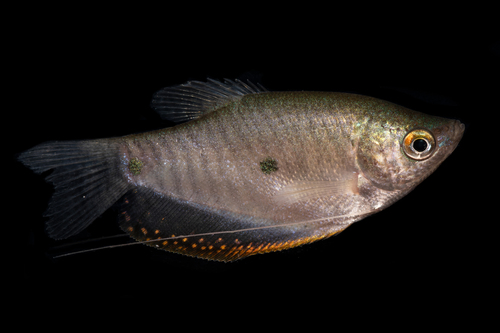
The Blue Gourami (Trichogaster trichopterus) is a freshwater fish native to the tropical regions of Southeast Asia, including countries like Indonesia, Thailand, and Malaysia. This species is also known as the three spot gourami due to the distinct spots located on either side of its body, in alignment with the eye, which are often highlighted by their opalescent coloration. In addition to its beauty, the Blue Gourami is recognized for its hardiness, making it an excellent choice for both novice and experienced aquarists alike.
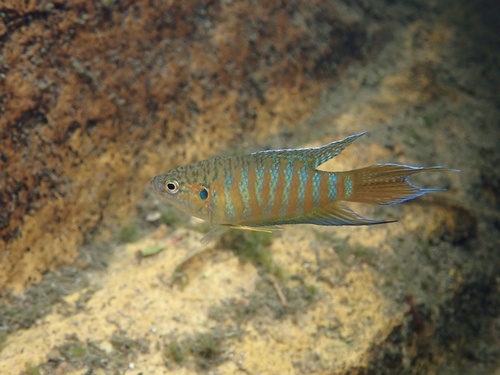
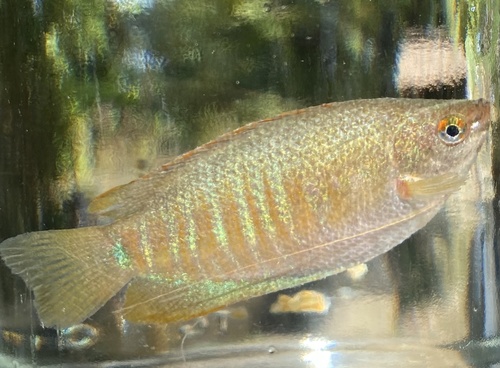
In terms of appearance, the Blue Gourami typically displays a shimmering blue body with hints of green and gold, complemented by vertical stripes that enhance its visual appeal. This species can reach a maximum length of about 15 cm, and its size, coupled with its peaceful disposition, allows it to thrive in community tanks. Blue Gouramis are known for their labyrinth organ, which enables them to breathe atmospheric oxygen, making them adaptable to various water conditions.
Behaviorally, Blue Gouramis are relatively calm and social fish. They often interact with their tank mates and can exhibit interesting behaviors, such as bubble nest building during the breeding season. They are best kept in pairs or small groups and should be housed with similarly sized and temperament-friendly species to avoid aggression. In their natural habitat, they inhabit slow-moving waters, such as ponds, swamps, and rice paddies, often surrounded by dense vegetation, which provides shelter and breeding grounds.
In captivity, providing a well-planted aquarium with plenty of hiding spots is essential to mimic their natural environment, as it promotes a sense of security for the fish. Regular water changes and good filtration are important to maintain optimal water quality for these vibrant fish. Overall, the Blue Gourami is not just a visual delight but also a fascinating species that adds life and color to any freshwater aquarium.
In terms of appearance, the Blue Gourami typically displays a shimmering blue body with hints of green and gold, complemented by vertical stripes that enhance its visual appeal. This species can reach a maximum length of about 15 cm, and its size, coupled with its peaceful disposition, allows it to thrive in community tanks. Blue Gouramis are known for their labyrinth organ, which enables them to breathe atmospheric oxygen, making them adaptable to various water conditions.
Behaviorally, Blue Gouramis are relatively calm and social fish. They often interact with their tank mates and can exhibit interesting behaviors, such as bubble nest building during the breeding season. They are best kept in pairs or small groups and should be housed with similarly sized and temperament-friendly species to avoid aggression. In their natural habitat, they inhabit slow-moving waters, such as ponds, swamps, and rice paddies, often surrounded by dense vegetation, which provides shelter and breeding grounds.
In captivity, providing a well-planted aquarium with plenty of hiding spots is essential to mimic their natural environment, as it promotes a sense of security for the fish. Regular water changes and good filtration are important to maintain optimal water quality for these vibrant fish. Overall, the Blue Gourami is not just a visual delight but also a fascinating species that adds life and color to any freshwater aquarium.
To successfully care for Blue Gouramis, it is crucial to maintain specific water parameters. The ideal temperature range is between 24°C to 28°C, with a pH level between 6.0 and 8.0. These fish prefer slightly acidic to neutral water, so regular monitoring and adjustments may be necessary. The minimum tank size recommended is 100 liters to provide ample swimming space and territory.
Feeding Blue Gouramis is straightforward. They are omnivores and will thrive on a varied diet that includes high-quality flake foods, pellets, and live or frozen foods like brine shrimp and daphnia. It is essential to feed them twice a day, ensuring that any uneaten food is promptly removed to maintain water quality.
In terms of compatibility, Blue Gouramis are generally peaceful but can exhibit territorial behavior during breeding. Ideal tank mates include other peaceful community fish such as tetras, rasboras, and small catfish. When introducing new fish, gradual acclimation is crucial to reduce stress and aggression. It is recommended to quarantine new arrivals for at least two weeks in a separate tank to ensure they are healthy and free of disease before adding them to the main aquarium.
Feeding Blue Gouramis is straightforward. They are omnivores and will thrive on a varied diet that includes high-quality flake foods, pellets, and live or frozen foods like brine shrimp and daphnia. It is essential to feed them twice a day, ensuring that any uneaten food is promptly removed to maintain water quality.
In terms of compatibility, Blue Gouramis are generally peaceful but can exhibit territorial behavior during breeding. Ideal tank mates include other peaceful community fish such as tetras, rasboras, and small catfish. When introducing new fish, gradual acclimation is crucial to reduce stress and aggression. It is recommended to quarantine new arrivals for at least two weeks in a separate tank to ensure they are healthy and free of disease before adding them to the main aquarium.
Blue Gouramis are suitable for shipping due to their hardiness. They should be packed with adequate oxygen and minimal water to prevent stress during transport. A packing density of 1 fish per liter is recommended to ensure they have enough space. The optimal shipping temperature is between 24°C to 28°C, as they are sensitive to extreme temperatures. Currently, there are no CITES restrictions on this species.
Species Parameters
Max Adult Size
15.0 cm
Origin
Southeast Asia
Diet
omnivore
Temp Min
24.0 °C
Temp Max
28.0 °C
pH Min
6.00
pH Max
8.00
Min Tank
100 L