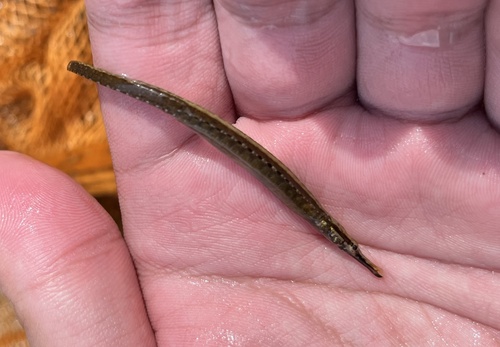
Pipefish Freshwater (Gere-Gere/ Tangkur Buaya)
Doryichthys martensii
In Stock
Common stock
Wild Caught
Moderate care
Not Reef Safe
SKU: 01-A-34-012-07
Discover the unique Pipefish Freshwater, a captivating addition to any aquarium.
Pricing for Verified Importers
Log in to see wholesale prices and order.
Export Size
up to 25.0 cm
Origin
Southeast Asia
Temperature
22.0–28.0°C
Min. Tank Size
100 L
pH
6.50–7.50
Diet
carnivore
The Pipefish Freshwater, known locally as Gere-Gere or Tangkur Buaya, is a fascinating species native to the freshwater systems of Southeast Asia. Belonging to the family Syngnathidae, this elongated fish shares similarities with its marine cousins, the seahorses, and is distinguished by its unique body shape and long snout. Unlike many other freshwater fish, the Pipefish has adapted to thrive in a variety of freshwater habitats, including rivers, swamps, and lakes, showcasing its versatility and resilience.
Physically, the Pipefish Freshwater exhibits a slender, elongated body that can reach lengths of up to 25 centimeters. Its coloration ranges from shades of green to brown, often adorned with intricate patterns that provide effective camouflage among aquatic vegetation. The long snout is equipped with a small mouth, which it uses to feed on small crustaceans and zooplankton, making it an interesting species for aquarists who appreciate unique feeding behaviors.
Behaviorally, the Pipefish is generally peaceful and can be kept in community tanks with other non-aggressive species. They are known to be quite shy, often seeking refuge among plants or decorations in the aquarium. Their unique swimming style, characterized by a gentle undulation of their bodies, adds a dynamic visual element to any tank setup. Additionally, they exhibit interesting breeding behaviors, where males carry the fertilized eggs in a specialized brood pouch, similar to seahorses.
In terms of habitat, the Pipefish Freshwater prefers slow-moving waters with abundant vegetation. This environment not only offers protection from predators but also provides ample feeding opportunities. Importers and retailers should consider recreating this natural habitat in aquariums to ensure the health and well-being of this species.
Physically, the Pipefish Freshwater exhibits a slender, elongated body that can reach lengths of up to 25 centimeters. Its coloration ranges from shades of green to brown, often adorned with intricate patterns that provide effective camouflage among aquatic vegetation. The long snout is equipped with a small mouth, which it uses to feed on small crustaceans and zooplankton, making it an interesting species for aquarists who appreciate unique feeding behaviors.
Behaviorally, the Pipefish is generally peaceful and can be kept in community tanks with other non-aggressive species. They are known to be quite shy, often seeking refuge among plants or decorations in the aquarium. Their unique swimming style, characterized by a gentle undulation of their bodies, adds a dynamic visual element to any tank setup. Additionally, they exhibit interesting breeding behaviors, where males carry the fertilized eggs in a specialized brood pouch, similar to seahorses.
In terms of habitat, the Pipefish Freshwater prefers slow-moving waters with abundant vegetation. This environment not only offers protection from predators but also provides ample feeding opportunities. Importers and retailers should consider recreating this natural habitat in aquariums to ensure the health and well-being of this species.
To successfully care for Pipefish Freshwater, it is essential to maintain stable water parameters. The ideal temperature range is between 22°C to 28°C, with a pH level between 6.5 and 7.5. As a freshwater species, salinity is not applicable. A minimum tank size of 100 liters is recommended to provide ample swimming space and maintain water quality.
Feeding should consist of a varied diet, including live or frozen foods such as brine shrimp, daphnia, and finely crushed pellets. Regular feeding 2-3 times a day is advisable to mimic their natural hunting behavior. Compatibility is key; they thrive in community tanks with other peaceful species, avoiding aggressive fish that may stress them.
Acclimation is crucial for reducing stress during the introduction to a new environment. Gradually acclimatize the Pipefish by floating the sealed bag in the aquarium for about 20 minutes, followed by slowly mixing tank water into the bag every 10 minutes. Quarantine new arrivals for at least two weeks to prevent the spread of diseases and ensure their health before adding them to the main display tank.
Feeding should consist of a varied diet, including live or frozen foods such as brine shrimp, daphnia, and finely crushed pellets. Regular feeding 2-3 times a day is advisable to mimic their natural hunting behavior. Compatibility is key; they thrive in community tanks with other peaceful species, avoiding aggressive fish that may stress them.
Acclimation is crucial for reducing stress during the introduction to a new environment. Gradually acclimatize the Pipefish by floating the sealed bag in the aquarium for about 20 minutes, followed by slowly mixing tank water into the bag every 10 minutes. Quarantine new arrivals for at least two weeks to prevent the spread of diseases and ensure their health before adding them to the main display tank.
Pipefish Freshwater is suitable for shipping, but care must be taken to ensure they are packed securely to minimize stress. A packing density of 1-2 individuals per liter is recommended, along with proper oxygenation and thermal insulation to maintain a stable temperature during transit. These fish are sensitive to temperature fluctuations, so maintaining a consistent temperature range between 22°C and 28°C is essential. Currently, there are no CITES restrictions on this species, making it easier for export.
Species Parameters
Max Adult Size
25.0 cm
Origin
Southeast Asia
Diet
carnivore
Temp Min
22.0 °C
Temp Max
28.0 °C
pH Min
6.50
pH Max
7.50
Min Tank
100 L