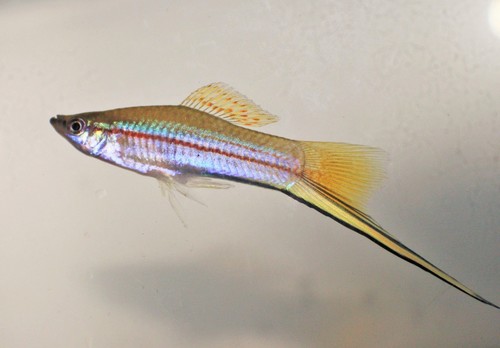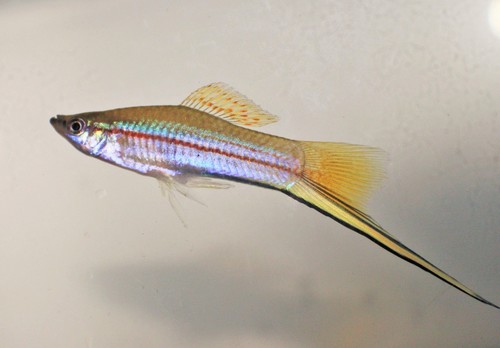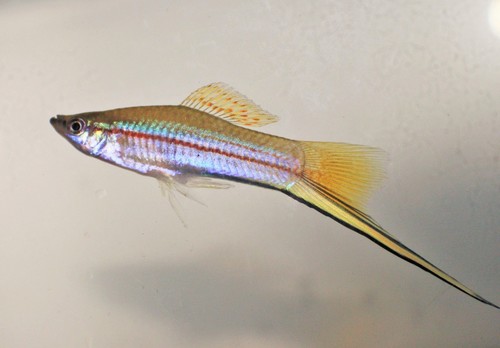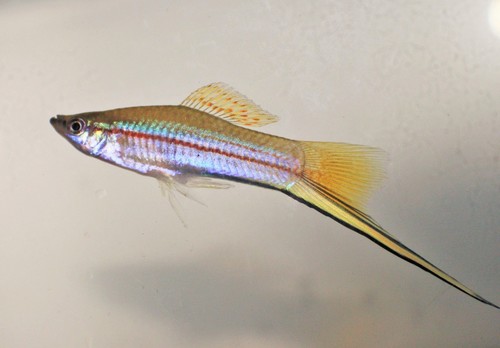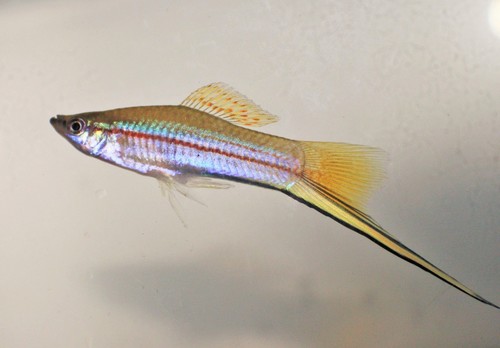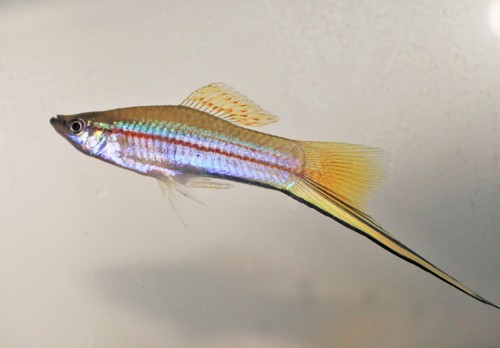
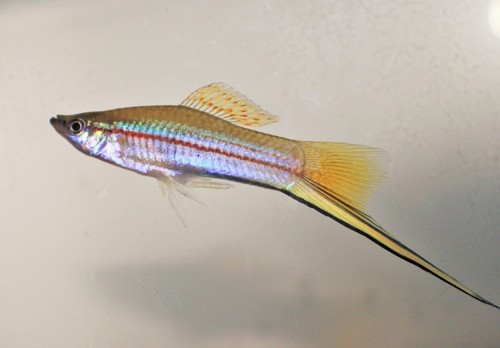
Santa Clause Swordtail
Xiphophorus helleri
In Stock
Common stock
Wild Caught
Easy care
Not Reef Safe
SKU: 01-A-24-005-07
The Santa Clause Swordtail is a vibrant live-bearer known for its striking colors and friendly nature.
Pricing for Verified Importers
Log in to see wholesale prices and order.
Export Size
up to 10.0 cm
Origin
North and Central America
Temperature
24.0–28.0°C
Min. Tank Size
100 L
pH
6.80–7.80
Diet
omnivore
The Santa Clause Swordtail (Xiphophorus helleri) is a captivating freshwater fish that belongs to the Poeciliidae family. This species is known for its unique appearance, characterized by a long, sword-like extension on the tail fin, especially prominent in males. Native to freshwater environments across North and Central America, particularly from Veracruz, Mexico to northwestern Honduras, the Santa Clause Swordtail thrives in warm, shallow waters, often found in rivers, streams, and ponds amidst dense vegetation.
In terms of coloration, males exhibit brilliant hues of green, red, and yellow, while females are typically less colorful and possess a fuller body. Their vibrant colors not only enhance their aesthetic appeal but also play a crucial role in mating displays and social interactions. Behaviorally, these fish are social creatures that exhibit schooling tendencies, making them ideal for community tanks. They are also known for their lively and active nature, often darting around the tank in search of food or engaging with tank mates.
The natural habitat of the Santa Clause Swordtail features a variety of vegetation, which provides shelter and breeding grounds. They prefer environments with slow-moving water and a substrate that allows for plant growth, which is essential for their breeding habits. Understanding their natural habitat is crucial for replicating the right conditions in captivity, ensuring their health and vibrant coloration.
As live-bearers, Santa Clause Swordtails give birth to free-swimming fry instead of laying eggs, which requires careful consideration of breeding practices in a captive environment. Their reproductive strategies contribute to their popularity in the aquarium trade, as they can quickly populate tanks and provide a continuous source of young fish for enthusiasts and retailers alike.
In terms of coloration, males exhibit brilliant hues of green, red, and yellow, while females are typically less colorful and possess a fuller body. Their vibrant colors not only enhance their aesthetic appeal but also play a crucial role in mating displays and social interactions. Behaviorally, these fish are social creatures that exhibit schooling tendencies, making them ideal for community tanks. They are also known for their lively and active nature, often darting around the tank in search of food or engaging with tank mates.
The natural habitat of the Santa Clause Swordtail features a variety of vegetation, which provides shelter and breeding grounds. They prefer environments with slow-moving water and a substrate that allows for plant growth, which is essential for their breeding habits. Understanding their natural habitat is crucial for replicating the right conditions in captivity, ensuring their health and vibrant coloration.
As live-bearers, Santa Clause Swordtails give birth to free-swimming fry instead of laying eggs, which requires careful consideration of breeding practices in a captive environment. Their reproductive strategies contribute to their popularity in the aquarium trade, as they can quickly populate tanks and provide a continuous source of young fish for enthusiasts and retailers alike.
To ensure the health and longevity of Santa Clause Swordtails, it is essential to maintain optimal water parameters. Ideally, they thrive in temperatures ranging from 24°C to 28°C and a pH level between 6.8 and 7.8. A minimum tank size of 100 liters is recommended to accommodate their active swimming behavior and social nature.
Feeding these fish is relatively straightforward, as they are omnivorous and will accept a varied diet. High-quality flakes, pellets, and occasional live or frozen foods such as brine shrimp or daphnia will provide the necessary nutrition. To maintain a stable and healthy environment, it is crucial to monitor water quality and perform regular water changes.
Santa Clause Swordtails are generally compatible with other peaceful freshwater species, making them excellent additions to community tanks. However, it is advisable to avoid aggressive species that may stress them. Acclimation should be gradual, introducing them slowly to their new environment to minimize shock. Additionally, a quarantine period of at least two weeks is recommended before introducing them to an established tank to prevent the spread of diseases.
Feeding these fish is relatively straightforward, as they are omnivorous and will accept a varied diet. High-quality flakes, pellets, and occasional live or frozen foods such as brine shrimp or daphnia will provide the necessary nutrition. To maintain a stable and healthy environment, it is crucial to monitor water quality and perform regular water changes.
Santa Clause Swordtails are generally compatible with other peaceful freshwater species, making them excellent additions to community tanks. However, it is advisable to avoid aggressive species that may stress them. Acclimation should be gradual, introducing them slowly to their new environment to minimize shock. Additionally, a quarantine period of at least two weeks is recommended before introducing them to an established tank to prevent the spread of diseases.
Santa Clause Swordtails are well-suited for shipping due to their hardiness. Proper packing density is essential, with a recommendation of 1-2 fish per liter to minimize stress during transit. Maintain water temperatures between 22°C and 26°C during shipping, as they are sensitive to extreme temperatures. This species is not listed under CITES, ensuring a more straightforward export process.
Species Parameters
Max Adult Size
10.0 cm
Origin
North and Central America
Diet
omnivore
Temp Min
24.0 °C
Temp Max
28.0 °C
pH Min
6.80
pH Max
7.80
Min Tank
100 L