CITES App. II
Yellow Bubble Coral
Plerogyra sinuosa
In Stock
Common stock
Aquacultured
Easy care
Reef Safe ✓
SKU: CRPLERyell
The Yellow Bubble Coral captivates with its unique bubbly appearance and vibrant colors.
Pricing for Verified Importers
Log in to see wholesale prices and order.
Export Size
up to 30.0 cm
Origin
Indo-Pacific
Temperature
24.0–28.0°C
Min. Tank Size
100 L
Salinity
1.020–1.025 ppt
pH
8.10–8.40
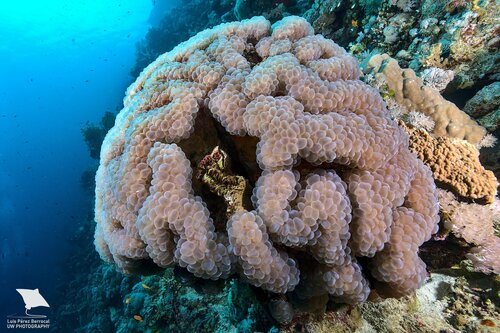
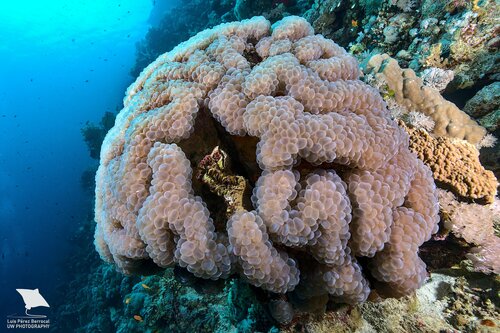
Plerogyra sinuosa, commonly known as the Yellow Bubble Coral or grape coral, is a captivating species belonging to the phylum Cnidaria. This coral is easily recognizable by its distinctive bubble-like formations, which resemble grapes and serve to increase its surface area for photosynthesis. During the day, these bubbles expand significantly, providing a striking visual display, while at night, they retract to allow tentacles to extend and capture plankton and other food sources from the water column.
This species thrives in the shallow waters of the Indo-Pacific region, ranging from the Red Sea to Madagascar, Okinawa, and the Line Islands. It typically inhabits reef slopes and lagoons, where it benefits from low light conditions and gentle water flow. The Yellow Bubble Coral forms symbiotic relationships with zooxanthellae, microscopic algae that live within its tissues, providing it with essential nutrients through photosynthesis.
Behaviorally, Plerogyra sinuosa exhibits a unique feeding strategy. While it primarily relies on photosynthesis, it also captures small prey using its tentacles, which are equipped with stinging cells called nematocysts. This dual feeding mechanism allows it to thrive in various environments, although it is particularly sensitive to changes in water quality and flow.
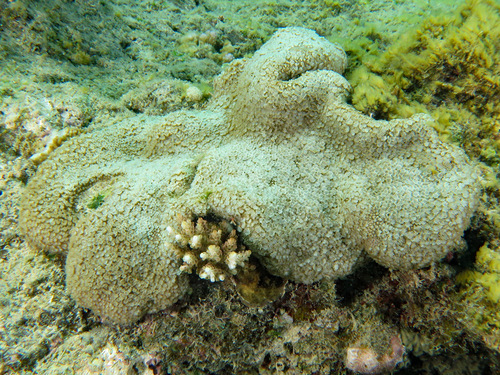
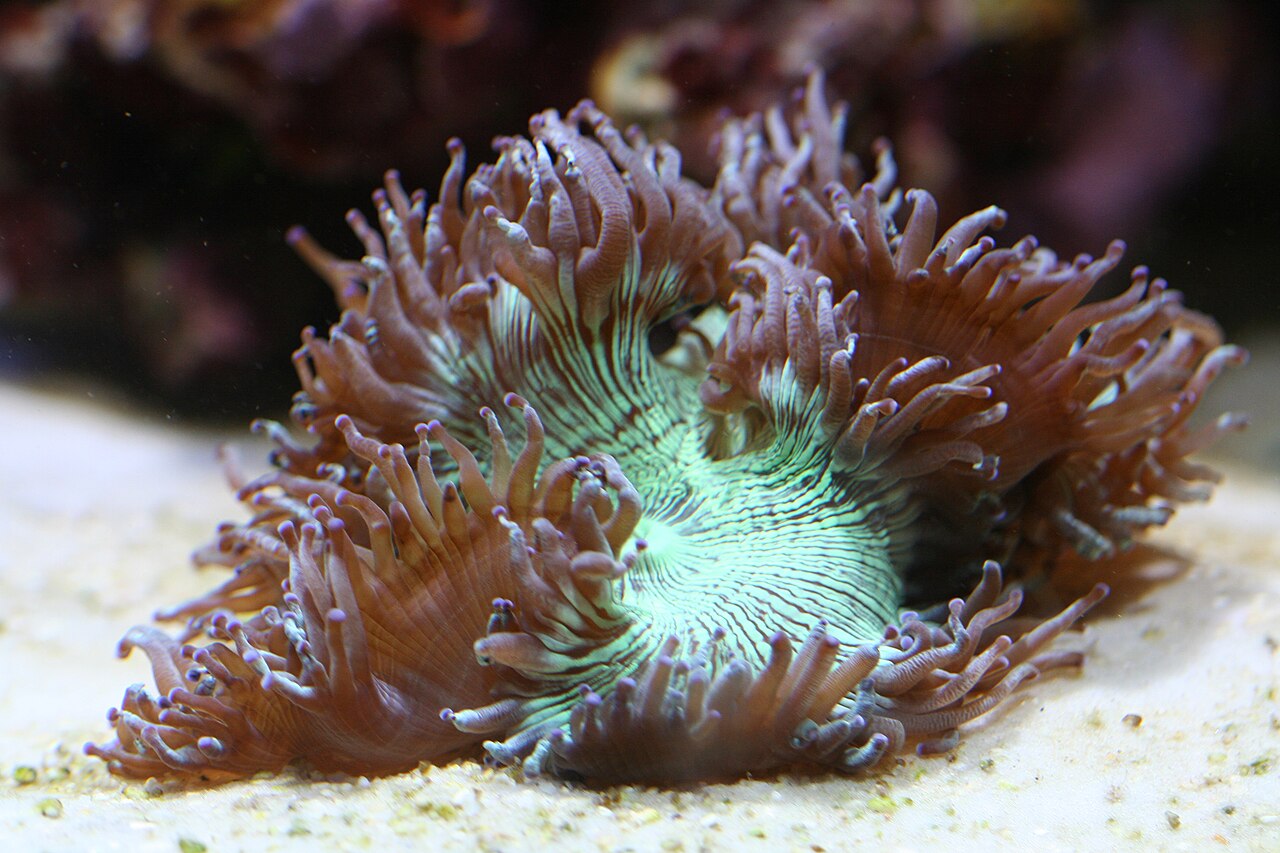
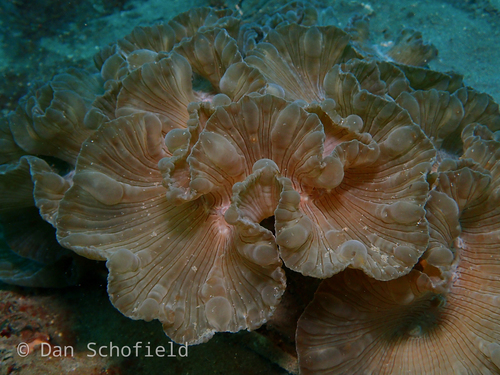
In terms of appearance, the Yellow Bubble Coral can showcase a range of colors, from bright yellow to greenish hues, depending on the specific environmental conditions and light exposure. Its large, inflated bubbles give it a three-dimensional presence within the aquarium, making it an attractive addition to coral displays and reef tanks.
This species thrives in the shallow waters of the Indo-Pacific region, ranging from the Red Sea to Madagascar, Okinawa, and the Line Islands. It typically inhabits reef slopes and lagoons, where it benefits from low light conditions and gentle water flow. The Yellow Bubble Coral forms symbiotic relationships with zooxanthellae, microscopic algae that live within its tissues, providing it with essential nutrients through photosynthesis.
Behaviorally, Plerogyra sinuosa exhibits a unique feeding strategy. While it primarily relies on photosynthesis, it also captures small prey using its tentacles, which are equipped with stinging cells called nematocysts. This dual feeding mechanism allows it to thrive in various environments, although it is particularly sensitive to changes in water quality and flow.
In terms of appearance, the Yellow Bubble Coral can showcase a range of colors, from bright yellow to greenish hues, depending on the specific environmental conditions and light exposure. Its large, inflated bubbles give it a three-dimensional presence within the aquarium, making it an attractive addition to coral displays and reef tanks.
The Yellow Bubble Coral requires specific care to thrive in a captive environment. Ideal water parameters include a temperature range of 24-28°C and a pH level between 8.1 and 8.4. Salinity should be maintained between 1.020 and 1.025 ppt. Gentle water flow is crucial, as excessive current can damage its delicate structure.
In terms of feeding, this coral benefits from supplemental feeding of zooplankton and other small particles, especially during the evening when it extends its tentacles. While it can rely on photosynthesis, providing additional nutrition will promote growth and vibrant coloration. Compatibility with other tank inhabitants is generally good, but caution should be exercised around aggressive corals or fish that may harm it.
Acclimation is important; gradual introduction to the tank environment will help reduce stress. Quarantine new specimens for at least two weeks before adding them to a display tank to prevent the introduction of pests or diseases. Regular monitoring of water parameters and visual health checks will ensure a thriving specimen.
In terms of feeding, this coral benefits from supplemental feeding of zooplankton and other small particles, especially during the evening when it extends its tentacles. While it can rely on photosynthesis, providing additional nutrition will promote growth and vibrant coloration. Compatibility with other tank inhabitants is generally good, but caution should be exercised around aggressive corals or fish that may harm it.
Acclimation is important; gradual introduction to the tank environment will help reduce stress. Quarantine new specimens for at least two weeks before adding them to a display tank to prevent the introduction of pests or diseases. Regular monitoring of water parameters and visual health checks will ensure a thriving specimen.
The Yellow Bubble Coral is suitable for shipping, provided it is carefully packed to minimize stress. Optimal packing density should allow for adequate water flow and air exchange. Temperature sensitivity is moderate; it should be shipped at a stable temperature between 24-26°C. As a species listed under CITES, compliance with all regulations is mandatory for exports.
Species Parameters
Max Adult Size
30.0 cm
Origin
Indo-Pacific
Habitat
reef
Temp Min
24.0 °C
Temp Max
28.0 °C
Salinity Min
1.020
Salinity Max
1.025
pH Min
8.10
pH Max
8.40
Min Tank
100 L