Six Banded/Six Bar Angelfish Adult
pomacanthus sexstriatus adult
In Stock
Common stock
Wild Caught
Moderate care
With Caution
SKU: ML-MF-0015
The Six Banded Angelfish captivates with its striking coloration and unique patterns.
Pricing for Verified Importers
Log in to see wholesale prices and order.
Export Size
up to 25.0 cm
Origin
Indo-Pacific
Temperature
24.0–28.0°C
Min. Tank Size
300 L
Salinity
35.000–35.000 ppt
pH
8.10–8.40
Diet
omnivore
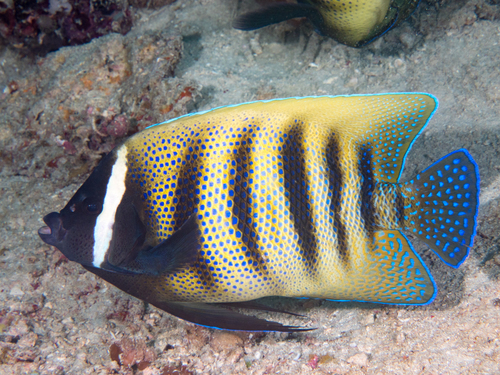
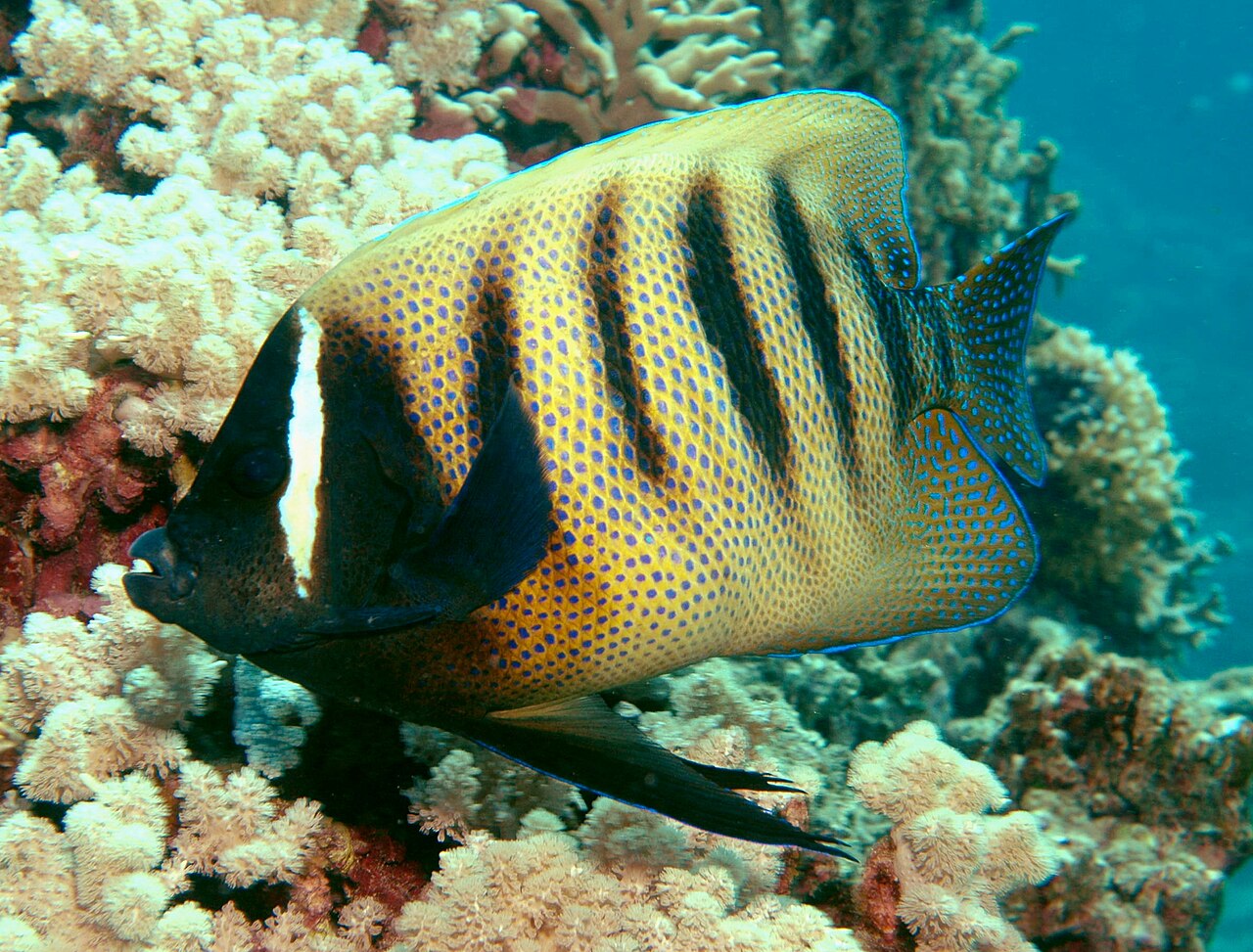
The Six Banded Angelfish (Pomacanthus sexstriatus) is a stunning marine fish native to the coral reefs of the Indo-Pacific region. Known for its vibrant coloration, this species exhibits six prominent vertical bars that contrast beautifully against its yellowish body. Adult specimens can reach a size of up to 25 cm, making them a breathtaking addition to any large reef aquarium. Their striking appearance and dynamic movements make them a popular choice among marine aquarists.
In their natural habitat, Six Banded Angelfish are usually found in shallow waters, often around coral reefs where they graze on algae and small invertebrates. They are a territorial species, commonly engaging in displays of dominance, especially during mating season. This behavior can be quite fascinating to observe, as they establish hierarchies within their environment. Their diet in the wild primarily consists of sponges, algae, and small crustaceans, showcasing their omnivorous nature.
Behaviorally, these angelfish are typically peaceful but can become aggressive towards other angelfish or similarly shaped fish, especially in smaller tanks. They require ample space to swim and exhibit their natural behaviors, making them best suited for larger aquarium setups. These fish thrive in a well-maintained reef environment, where they can feel secure among rocks and corals.
Overall, the Six Banded Angelfish is not only visually striking but also plays a vital ecological role in maintaining the health of coral reefs by controlling algae growth. Their unique beauty and engaging behavior make them a cherished species in the marine aquarium trade.
In their natural habitat, Six Banded Angelfish are usually found in shallow waters, often around coral reefs where they graze on algae and small invertebrates. They are a territorial species, commonly engaging in displays of dominance, especially during mating season. This behavior can be quite fascinating to observe, as they establish hierarchies within their environment. Their diet in the wild primarily consists of sponges, algae, and small crustaceans, showcasing their omnivorous nature.
Behaviorally, these angelfish are typically peaceful but can become aggressive towards other angelfish or similarly shaped fish, especially in smaller tanks. They require ample space to swim and exhibit their natural behaviors, making them best suited for larger aquarium setups. These fish thrive in a well-maintained reef environment, where they can feel secure among rocks and corals.
Overall, the Six Banded Angelfish is not only visually striking but also plays a vital ecological role in maintaining the health of coral reefs by controlling algae growth. Their unique beauty and engaging behavior make them a cherished species in the marine aquarium trade.
To ensure the health and well-being of the Six Banded Angelfish, maintaining optimal water parameters is essential. The recommended temperature range is between 24°C to 28°C, with a salinity of 1.020 to 1.025 ppt. pH levels should be kept between 8.1 and 8.4 to mimic their natural reef environment. A minimum tank size of 300 liters is advisable to provide ample swimming space and reduce territorial disputes.
Feeding these angelfish is relatively straightforward; they thrive on a varied diet that includes high-quality marine flakes, pellets, and frozen or live foods such as brine shrimp and spirulina. It is important to provide a mix of plant-based and protein-rich foods to meet their nutritional needs. Compatibility-wise, they can coexist with other peaceful fish, but caution should be exercised when introducing them to tanks with other angelfish species.
Acclimation is crucial for reducing stress during transport; a slow drip acclimation method is recommended. Quarantine is suggested for new arrivals to prevent the spread of diseases. A period of at least two weeks in isolation is ideal for monitoring health and behavior before introducing them to the main display tank.
Feeding these angelfish is relatively straightforward; they thrive on a varied diet that includes high-quality marine flakes, pellets, and frozen or live foods such as brine shrimp and spirulina. It is important to provide a mix of plant-based and protein-rich foods to meet their nutritional needs. Compatibility-wise, they can coexist with other peaceful fish, but caution should be exercised when introducing them to tanks with other angelfish species.
Acclimation is crucial for reducing stress during transport; a slow drip acclimation method is recommended. Quarantine is suggested for new arrivals to prevent the spread of diseases. A period of at least two weeks in isolation is ideal for monitoring health and behavior before introducing them to the main display tank.
The Six Banded Angelfish is suitable for shipping due to its resilient nature. Packing density should be managed to ensure adequate oxygen levels during transit. Maintaining a stable temperature between 24°C and 28°C is critical, as they can be sensitive to temperature fluctuations. Currently, this species is not listed under CITES, simplifying the export process.
Species Parameters
Max Adult Size
25.0 cm
Origin
Indo-Pacific
Diet
omnivore
Temp Min
24.0 °C
Temp Max
28.0 °C
Salinity Min
35.000
Salinity Max
35.000
pH Min
8.10
pH Max
8.40
Min Tank
300 L