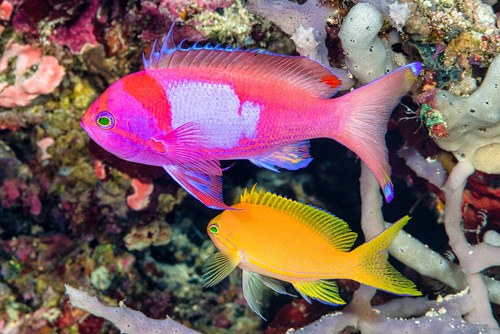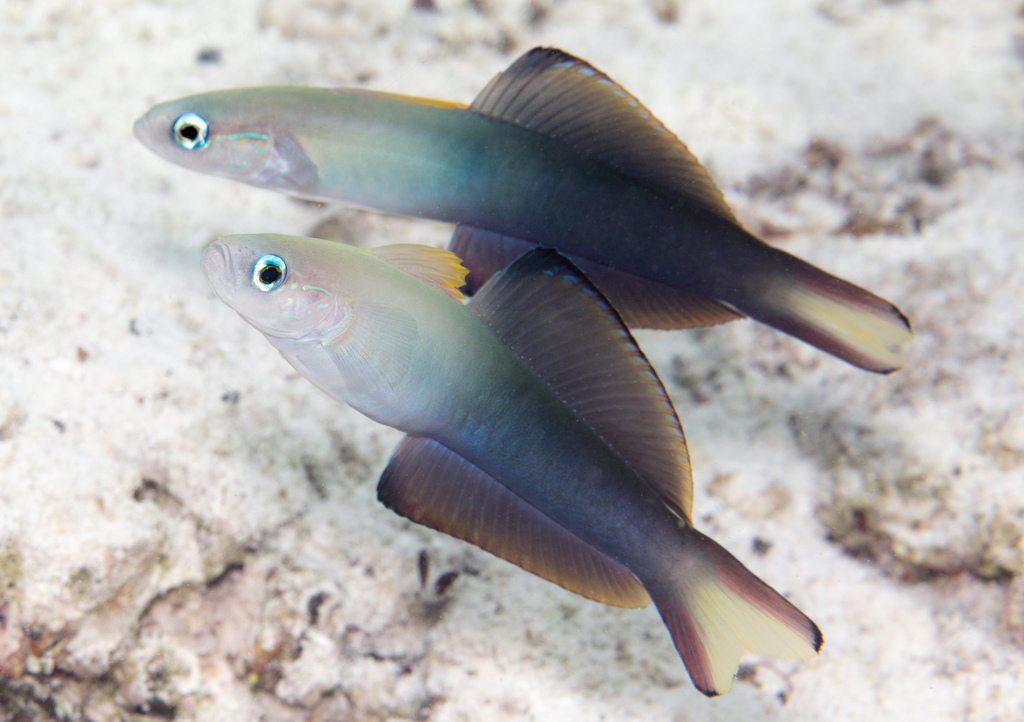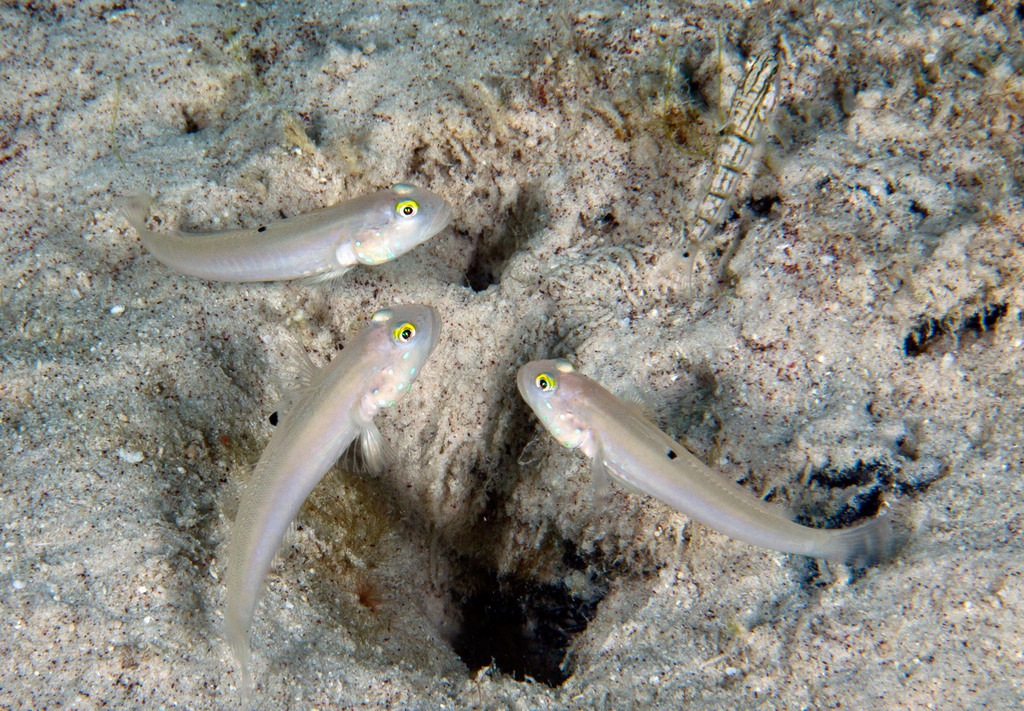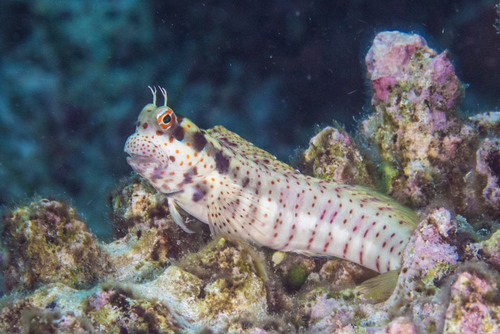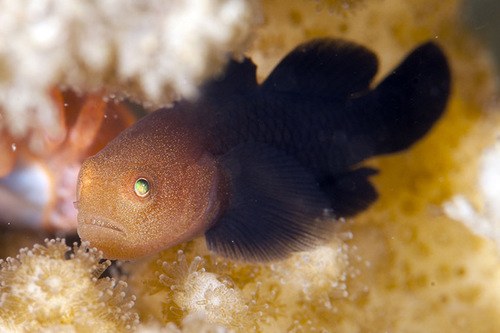
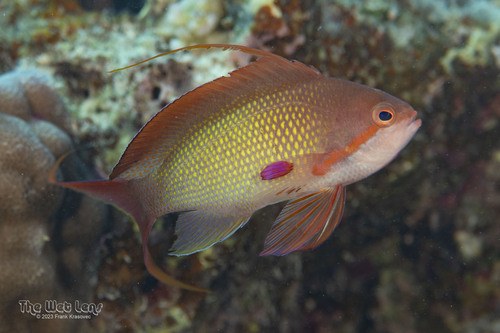
Blue Eye Red Basslet (Male)
Pseudanthias squamipinnis
In Stock
Common stock
Wild Caught
Moderate care
With Caution
SKU: CB-MF-0198
The Blue Eye Red Basslet is a vibrant marine fish known for its stunning coloration and peaceful nature.
Pricing for Verified Importers
Log in to see wholesale prices and order.
Export Size
up to 10.0 cm
Origin
Indo-Pacific
Temperature
24.0–28.0°C
Min. Tank Size
200 L
Salinity
1.020–1.025 ppt
pH
8.10–8.40
Diet
carnivore
The Blue Eye Red Basslet (Pseudanthias squamipinnis) is a captivating marine species renowned for its dazzling coloration and social behavior. Often found in the coral reefs of the Indo-Pacific region, this fish exhibits a striking combination of bright orange and pink hues, complemented by its distinctive blue eyes. As a member of the Anthiinae subfamily, it belongs to a group known for their vibrant colors and dynamic movements, making it a favorite among aquarium enthusiasts.
In their natural habitat, Blue Eye Red Basslets thrive in shallow waters, typically at depths ranging from 10 to 50 meters. They are commonly spotted in small groups, often residing near coral formations, where they seek shelter and forage for food. These fish prefer environments rich in corals and rocky crevices, which provide both protection and hunting grounds for small zooplankton and crustaceans that make up their diet. The social structure of these fish is fascinating, as they often exhibit hierarchies within their groups, with dominant males displaying more vibrant colors to attract females.
Behaviorally, the Blue Eye Red Basslet is known for its active swimming patterns, often darting around the reef in search of food. They are diurnal, meaning they are most active during the day, and they rely on their acute eyesight to spot potential food sources as well as predators. Their peaceful nature makes them compatible with a variety of other marine species, allowing them to coexist harmoniously in community tanks.
In terms of care, it is crucial to replicate their natural environment as closely as possible to ensure their well-being. Providing ample hiding spots and open swimming areas will help mimic their native habitat and reduce stress levels in captivity.
In their natural habitat, Blue Eye Red Basslets thrive in shallow waters, typically at depths ranging from 10 to 50 meters. They are commonly spotted in small groups, often residing near coral formations, where they seek shelter and forage for food. These fish prefer environments rich in corals and rocky crevices, which provide both protection and hunting grounds for small zooplankton and crustaceans that make up their diet. The social structure of these fish is fascinating, as they often exhibit hierarchies within their groups, with dominant males displaying more vibrant colors to attract females.
Behaviorally, the Blue Eye Red Basslet is known for its active swimming patterns, often darting around the reef in search of food. They are diurnal, meaning they are most active during the day, and they rely on their acute eyesight to spot potential food sources as well as predators. Their peaceful nature makes them compatible with a variety of other marine species, allowing them to coexist harmoniously in community tanks.
In terms of care, it is crucial to replicate their natural environment as closely as possible to ensure their well-being. Providing ample hiding spots and open swimming areas will help mimic their native habitat and reduce stress levels in captivity.
When caring for Blue Eye Red Basslets, maintaining optimal water parameters is essential. Ideal conditions include a temperature range of 24-28°C, salinity between 1.020 and 1.025 ppt, and a pH level between 8.1 and 8.4. These parameters help create a stable environment that promotes healthy growth and vibrant coloration. Additionally, it is important to provide a minimum tank size of 200 liters to accommodate their active swimming behavior.
Feeding these fish a varied diet is crucial for their health. They are carnivorous, and a diet consisting of high-quality marine flakes, pellets, and frozen foods such as brine shrimp and mysis shrimp will ensure they receive the necessary nutrients. Compatibility is another key factor; Blue Eye Red Basslets are generally peaceful and can be kept with other reef-safe fish, but care should be taken when introducing new species to avoid territorial disputes.
Acclimation is vital when introducing new fish to a tank. A slow drip acclimation method is recommended to minimize stress. Quarantine new arrivals for at least two weeks to monitor for any signs of illness before introducing them to the main tank. Regular water changes and monitoring of water quality will help maintain a healthy environment for these stunning fish.
Feeding these fish a varied diet is crucial for their health. They are carnivorous, and a diet consisting of high-quality marine flakes, pellets, and frozen foods such as brine shrimp and mysis shrimp will ensure they receive the necessary nutrients. Compatibility is another key factor; Blue Eye Red Basslets are generally peaceful and can be kept with other reef-safe fish, but care should be taken when introducing new species to avoid territorial disputes.
Acclimation is vital when introducing new fish to a tank. A slow drip acclimation method is recommended to minimize stress. Quarantine new arrivals for at least two weeks to monitor for any signs of illness before introducing them to the main tank. Regular water changes and monitoring of water quality will help maintain a healthy environment for these stunning fish.
The Blue Eye Red Basslet is suitable for shipping, provided careful packing to minimize stress. Packing density should allow for adequate oxygenation, typically one fish per liter of water, to ensure their comfort during transport. It is important to maintain temperatures between 24-28°C during shipping to avoid temperature shock. CITES status is not applicable for this species, allowing for unrestricted export from Bali, Indonesia.
Species Parameters
Max Adult Size
10.0 cm
Origin
Indo-Pacific
Diet
carnivore
Temp Min
24.0 °C
Temp Max
28.0 °C
Salinity Min
1.020
Salinity Max
1.025
pH Min
8.10
pH Max
8.40
Min Tank
200 L