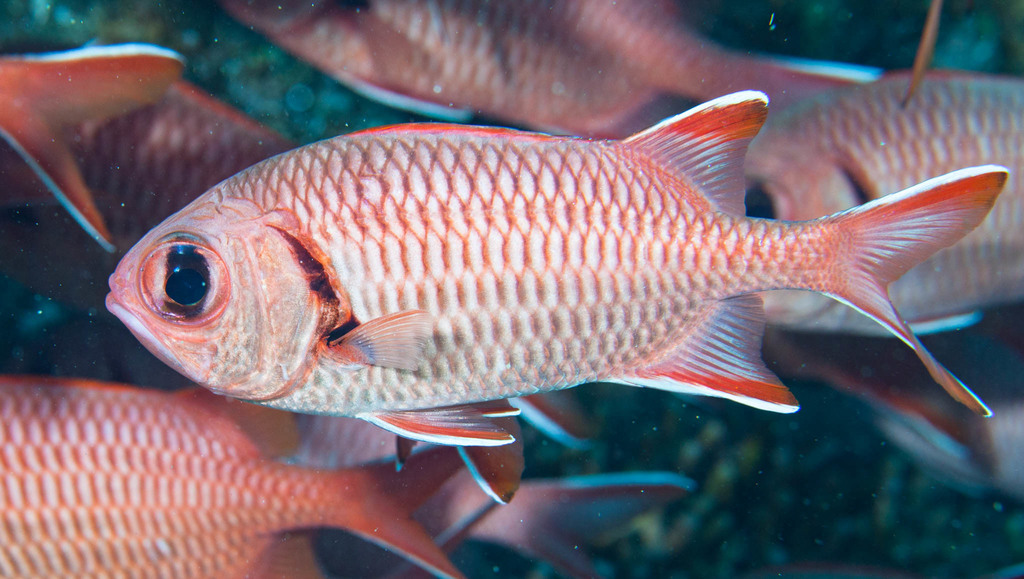
Big-eye Squirrelfish
Myripristis sp.
In Stock
Common stock
Wild Caught
Moderate care
With Caution
SKU: CB-MF-0266
Discover the vibrant Big-eye Squirrelfish, a stunning gem of coral reefs.
Pricing for Verified Importers
Log in to see wholesale prices and order.
Export Size
up to 30.0 cm
Origin
Indo-Pacific
Temperature
24.0–28.0°C
Min. Tank Size
150 L
Salinity
1.020–1.025 ppt
pH
8.10–8.40
Diet
carnivore
The Big-eye Squirrelfish (Myripristis sp.) is a striking marine fish known for its large, expressive eyes and vibrant coloration, which can range from deep red to bright orange. This species is primarily found in the coral reefs of the Indo-Pacific region, where it plays a crucial role in the ecosystem. With its distinctive body shape and nocturnal behavior, the Big-eye Squirrelfish is a favorite among aquarium enthusiasts and collectors alike.
In terms of appearance, the Big-eye Squirrelfish exhibits a laterally compressed body with a pronounced dorsal fin and sharp, needle-like teeth. Its large eyes are adapted for low-light conditions, allowing it to hunt effectively during the night. The coloration serves both as camouflage in the coral reefs and as a warning to potential predators. These fish are often seen in small schools, darting quickly in and out of crevices within the reef structure.
Behaviorally, the Big-eye Squirrelfish is known for its territoriality and can often be observed defending its chosen hiding spots among the rocks and corals. These fish are primarily nocturnal, becoming active at dusk and hunting for small invertebrates and crustaceans. Their social structure typically involves small groups, but they can also be solitary, especially during spawning periods.
The natural habitat of the Big-eye Squirrelfish includes shallow coral reefs, rocky substrates, and lagoon environments. They prefer areas with abundant hiding spots, such as crevices and overhangs, which provide protection from larger predatory fish. This adaptability to various reef habitats makes them a resilient species in the ever-changing marine environment.
In terms of appearance, the Big-eye Squirrelfish exhibits a laterally compressed body with a pronounced dorsal fin and sharp, needle-like teeth. Its large eyes are adapted for low-light conditions, allowing it to hunt effectively during the night. The coloration serves both as camouflage in the coral reefs and as a warning to potential predators. These fish are often seen in small schools, darting quickly in and out of crevices within the reef structure.
Behaviorally, the Big-eye Squirrelfish is known for its territoriality and can often be observed defending its chosen hiding spots among the rocks and corals. These fish are primarily nocturnal, becoming active at dusk and hunting for small invertebrates and crustaceans. Their social structure typically involves small groups, but they can also be solitary, especially during spawning periods.
The natural habitat of the Big-eye Squirrelfish includes shallow coral reefs, rocky substrates, and lagoon environments. They prefer areas with abundant hiding spots, such as crevices and overhangs, which provide protection from larger predatory fish. This adaptability to various reef habitats makes them a resilient species in the ever-changing marine environment.
For importers and retailers, ensuring optimal care for Big-eye Squirrelfish is essential for their health and well-being. The ideal water parameters include a temperature range of 24-28°C, salinity levels between 1.020 and 1.025 ppt, and a pH of 8.1-8.4. Regular monitoring of these parameters is crucial to maintain a stable environment for these lively fish.
Feeding Big-eye Squirrelfish involves a diet rich in protein, typically consisting of small crustaceans, zooplankton, and prepared meaty foods. It's essential to provide a varied diet to ensure their nutritional needs are met. Compatibility-wise, these fish can coexist with other reef fish but may exhibit territorial behavior, especially in smaller tanks. Therefore, ample space and hiding spots are necessary to reduce aggression.
Acclimation should be done gradually, using the drip method to ensure a smooth transition to the new environment. Quarantine is highly recommended before introducing them to a display tank, as it helps prevent the spread of potential diseases. Keeping them in a separate, controlled environment for 2-4 weeks can help ensure they are healthy and stress-free before being introduced to a community tank.
Feeding Big-eye Squirrelfish involves a diet rich in protein, typically consisting of small crustaceans, zooplankton, and prepared meaty foods. It's essential to provide a varied diet to ensure their nutritional needs are met. Compatibility-wise, these fish can coexist with other reef fish but may exhibit territorial behavior, especially in smaller tanks. Therefore, ample space and hiding spots are necessary to reduce aggression.
Acclimation should be done gradually, using the drip method to ensure a smooth transition to the new environment. Quarantine is highly recommended before introducing them to a display tank, as it helps prevent the spread of potential diseases. Keeping them in a separate, controlled environment for 2-4 weeks can help ensure they are healthy and stress-free before being introduced to a community tank.
The Big-eye Squirrelfish is suitable for shipping due to its hardy nature, but care must be taken to provide adequate oxygen and minimize stress. Packing density should allow for ample space to avoid injury during transit. These fish are sensitive to temperature fluctuations; therefore, maintaining a stable temperature between 24-26°C during shipping is crucial. As of now, there are no specific CITES restrictions for this species.
Species Parameters
Max Adult Size
30.0 cm
Origin
Indo-Pacific
Diet
carnivore
Temp Min
24.0 °C
Temp Max
28.0 °C
Salinity Min
1.020
Salinity Max
1.025
pH Min
8.10
pH Max
8.40
Min Tank
150 L