Catfish
Plotosus lineatus
In Stock
Common stock
Wild Caught
Moderate care
With Caution
SKU: CB-MF-0428
The striped eel catfish is a striking marine species with venomous spines.
Pricing for Verified Importers
Log in to see wholesale prices and order.
Export Size
up to 40.0 cm
Origin
Indo-Pacific
Temperature
24.0–28.0°C
Min. Tank Size
200 L
Salinity
15.000–30.000 ppt
pH
7.50–8.50
Diet
carnivore
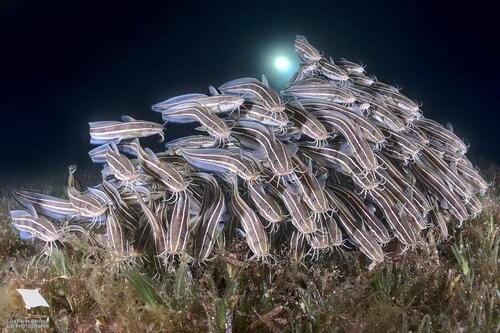
Plotosus lineatus, commonly referred to as the striped eel catfish, is a unique species native to the Indo-Pacific region. This fascinating catfish is characterized by its elongated, eel-like body and distinctive striped pattern, which can range from pale yellow to dark brown. They can grow up to 40 cm in length, making them a visually striking addition to marine aquariums. The striped eel catfish is also known for its highly venomous spines, which it uses defensively when threatened, capable of causing mild to severe symptoms in humans.
These fish are typically found in shallow coastal waters, including estuaries and lagoons, where they often inhabit sandy or muddy substrates. They are social creatures, usually found in groups, and their behavior often includes foraging for food in the substrate. Striped eel catfish are nocturnal, becoming more active at night as they hunt for crustaceans, worms, and small fish. This active foraging behavior and social nature make them a captivating species to observe in an aquarium setting.
In terms of reproduction, striped eel catfish are known to spawn in brackish waters, where the larvae can develop in the relative safety of estuaries before moving to marine environments. Their adaptability to various salinity levels contributes to their successful colonization of new regions, such as the Mediterranean Sea via the Suez Canal. This resilience is a testament to their evolutionary success within diverse aquatic environments.
Due to their unique appearance and behavior, striped eel catfish are increasingly popular among marine aquarium enthusiasts. However, caution is advised due to their venomous spines, which should be handled carefully to avoid injury. Proper education about their care and handling is essential for those interested in adding this species to their collection.
These fish are typically found in shallow coastal waters, including estuaries and lagoons, where they often inhabit sandy or muddy substrates. They are social creatures, usually found in groups, and their behavior often includes foraging for food in the substrate. Striped eel catfish are nocturnal, becoming more active at night as they hunt for crustaceans, worms, and small fish. This active foraging behavior and social nature make them a captivating species to observe in an aquarium setting.
In terms of reproduction, striped eel catfish are known to spawn in brackish waters, where the larvae can develop in the relative safety of estuaries before moving to marine environments. Their adaptability to various salinity levels contributes to their successful colonization of new regions, such as the Mediterranean Sea via the Suez Canal. This resilience is a testament to their evolutionary success within diverse aquatic environments.
Due to their unique appearance and behavior, striped eel catfish are increasingly popular among marine aquarium enthusiasts. However, caution is advised due to their venomous spines, which should be handled carefully to avoid injury. Proper education about their care and handling is essential for those interested in adding this species to their collection.
When caring for Plotosus lineatus, it is essential to maintain appropriate water parameters to ensure their health and well-being. The ideal temperature range for these catfish is between 24°C and 28°C, with a salinity level of 15-30 ppt. Regular monitoring of pH levels is crucial, aiming for a range of 7.5 to 8.5. A minimum tank size of 200 liters is recommended to provide adequate space for swimming and social interaction.
Feeding striped eel catfish is relatively straightforward, as they are primarily carnivorous. A varied diet consisting of high-quality pellets, frozen or live food such as shrimp and small fish will ensure they receive the necessary nutrients. It is best to feed them in the evening when they are most active, mimicking their natural foraging habits.
Compatibility is another important consideration; while they can coexist with other marine species, it’s advisable to avoid keeping them with smaller fish that may be seen as prey. Acclimation should be done gradually, introducing them to the new environment slowly to reduce stress. Quarantine new arrivals for at least two weeks before introducing them to the main tank to prevent the spread of potential diseases.
Feeding striped eel catfish is relatively straightforward, as they are primarily carnivorous. A varied diet consisting of high-quality pellets, frozen or live food such as shrimp and small fish will ensure they receive the necessary nutrients. It is best to feed them in the evening when they are most active, mimicking their natural foraging habits.
Compatibility is another important consideration; while they can coexist with other marine species, it’s advisable to avoid keeping them with smaller fish that may be seen as prey. Acclimation should be done gradually, introducing them to the new environment slowly to reduce stress. Quarantine new arrivals for at least two weeks before introducing them to the main tank to prevent the spread of potential diseases.
Shipping Plotosus lineatus requires careful consideration of temperature and packing density. They should be shipped in well-oxygenated bags, ideally at temperatures between 24°C and 28°C. It is crucial to ensure that they are not overcrowded during transport to minimize stress and potential injury. This species is not listed under CITES, facilitating easier export. However, always check local regulations for compliance.
Species Parameters
Max Adult Size
40.0 cm
Origin
Indo-Pacific
Diet
carnivore
Temp Min
24.0 °C
Temp Max
28.0 °C
Salinity Min
15.000
Salinity Max
30.000
pH Min
7.50
pH Max
8.50
Min Tank
200 L