Swell Shark
Cephaloscyllium ventriosum
In Stock
Common stock
Wild Caught
Moderate care
With Caution
SKU: CB-MF-0424
Discover the unique swell shark, a fascinating marine fish with incredible defensive adaptations.
Pricing for Verified Importers
Log in to see wholesale prices and order.
Export Size
up to 80.0 cm
Origin
Indo-Pacific
Temperature
20.0–24.0°C
Min. Tank Size
200 L
Salinity
30.000–34.000 ppt
pH
7.50–8.50
Diet
carnivore
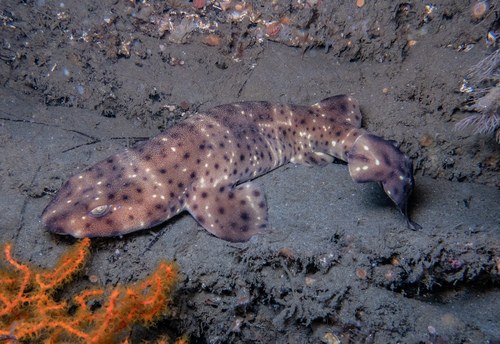
The swell shark (Cephaloscyllium ventriosum) is a remarkable species belonging to the family Scyliorhinidae, commonly found in the tropical and subtropical waters of the eastern Pacific Ocean, ranging from central California to southern Mexico and extending to the coast of Chile. This catshark is characterized by its distinct brown and white spotted skin, which aids in camouflage among rocky crevices, allowing it to blend seamlessly into its surroundings. Its broad head and relatively stout body contribute to its unique appearance, making it a captivating choice for aquarists.
One of the most intriguing features of the swell shark is its ability to expand its body size by swallowing water, effectively doubling its size as a defensive mechanism against predators. This adaptation not only deters potential threats but also allows the swell shark to occupy a variety of niches within its habitat, which primarily consists of rocky substrates and kelp forests. In these environments, the swell shark utilizes its keen sense of electroreception to locate prey, primarily consisting of small fish and invertebrates that dwell in the ocean floor.
Swell sharks are generally nocturnal, becoming more active during the night when they hunt for food. Their behavior is characterized by slow, deliberate movements, often remaining motionless to avoid detection. When threatened, they can quickly retreat to the safety of rocky crevices where they can hide from predators. Their unique swimming style and ability to remain still contribute to their survival in competitive marine ecosystems.
This species is not only fascinating due to its physical characteristics and behaviors but also plays an important role in maintaining the ecological balance of its habitat. By controlling the populations of smaller prey species, swell sharks contribute to the overall health of their marine environment, making them an essential part of the ocean's biodiversity.
One of the most intriguing features of the swell shark is its ability to expand its body size by swallowing water, effectively doubling its size as a defensive mechanism against predators. This adaptation not only deters potential threats but also allows the swell shark to occupy a variety of niches within its habitat, which primarily consists of rocky substrates and kelp forests. In these environments, the swell shark utilizes its keen sense of electroreception to locate prey, primarily consisting of small fish and invertebrates that dwell in the ocean floor.
Swell sharks are generally nocturnal, becoming more active during the night when they hunt for food. Their behavior is characterized by slow, deliberate movements, often remaining motionless to avoid detection. When threatened, they can quickly retreat to the safety of rocky crevices where they can hide from predators. Their unique swimming style and ability to remain still contribute to their survival in competitive marine ecosystems.
This species is not only fascinating due to its physical characteristics and behaviors but also plays an important role in maintaining the ecological balance of its habitat. By controlling the populations of smaller prey species, swell sharks contribute to the overall health of their marine environment, making them an essential part of the ocean's biodiversity.
When caring for the swell shark, it is essential to replicate their natural habitat to ensure their well-being. A minimum tank size of 200 liters is recommended to provide ample space for swimming and hiding. Optimal water parameters include a temperature range of 20-24°C, a salinity level between 30-34 ppt, and a pH level between 7.5 and 8.5. Regular monitoring and maintenance of these parameters are crucial for the health of this species.
Feeding should consist of a varied diet primarily focused on carnivorous options such as small fish, shrimp, and squid. Offering a mix of live and frozen foods will help mimic their natural diet and ensure proper nutrition. Swell sharks may exhibit territorial behavior, so it is important to choose compatible tank mates carefully, avoiding aggressive species that may stress them.
Acclimation should be done gradually; introduce the swell shark to its new environment slowly to minimize stress. Quarantine new arrivals for at least two weeks in a separate tank to prevent the spread of diseases. Providing hiding spots and shelters will help them feel secure in their new home, leading to a more successful adaptation.
Feeding should consist of a varied diet primarily focused on carnivorous options such as small fish, shrimp, and squid. Offering a mix of live and frozen foods will help mimic their natural diet and ensure proper nutrition. Swell sharks may exhibit territorial behavior, so it is important to choose compatible tank mates carefully, avoiding aggressive species that may stress them.
Acclimation should be done gradually; introduce the swell shark to its new environment slowly to minimize stress. Quarantine new arrivals for at least two weeks in a separate tank to prevent the spread of diseases. Providing hiding spots and shelters will help them feel secure in their new home, leading to a more successful adaptation.
Swell sharks are suitable for shipping, provided that appropriate measures are taken to ensure their health and safety during transit. Packing density should be moderate to reduce stress, and the shipping temperature must be maintained within the 20-24°C range. As a species not listed under CITES, they do not require special permits for international trade, making them a practical choice for importers and wholesalers.
Species Parameters
Max Adult Size
80.0 cm
Origin
Indo-Pacific
Diet
carnivore
Temp Min
20.0 °C
Temp Max
24.0 °C
Salinity Min
30.000
Salinity Max
34.000
pH Min
7.50
pH Max
8.50
Min Tank
200 L