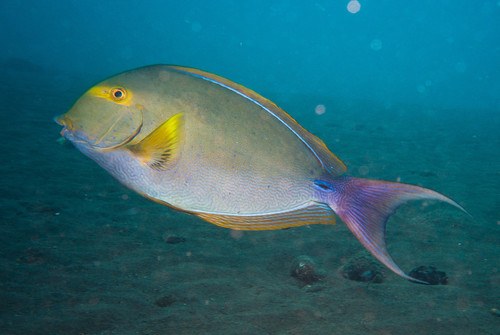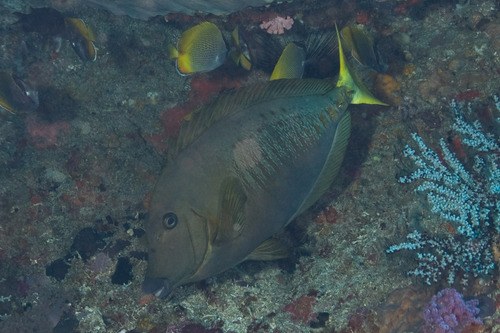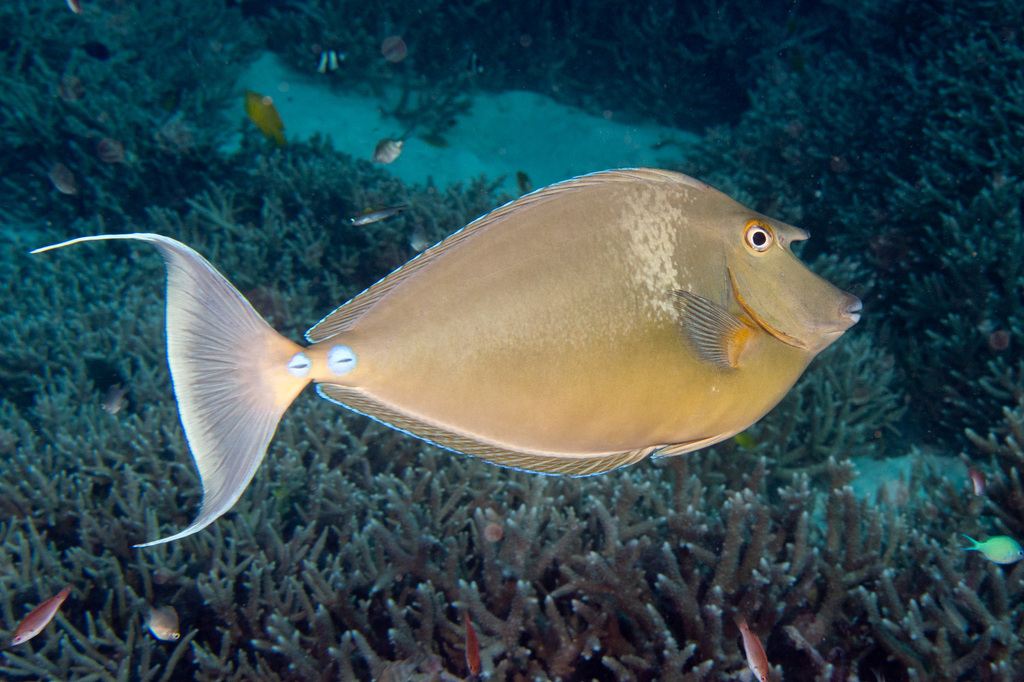
bluespine unicornfish
naso unicornis ad
In Stock
Common stock
Wild Caught
Moderate care
With Caution
SKU: ML-MF-0375
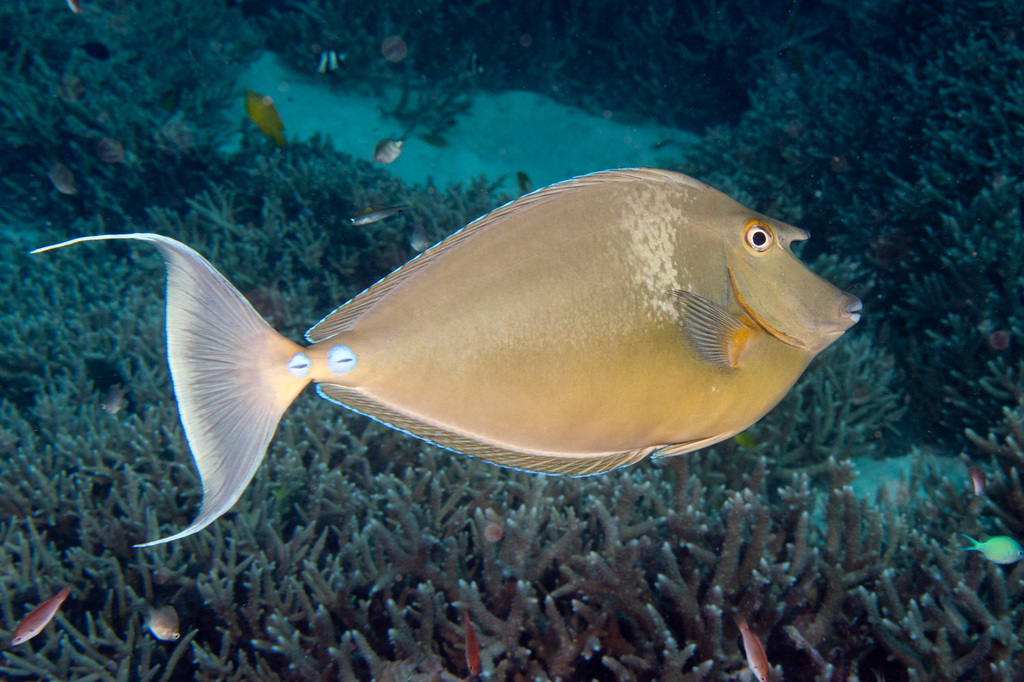
The bluespine unicornfish is a striking marine fish known for its vibrant colors and unique spines.
Pricing for Verified Importers
Log in to see wholesale prices and order.
Export Size
up to 40.0 cm
Origin
Indo-Pacific
Temperature
24.0–28.0°C
Min. Tank Size
500 L
Salinity
35.000–35.000 ppt
pH
8.10–8.40
Diet
herbivore
The bluespine unicornfish (Naso unicornis) is a captivating species found primarily in the coral reefs of the Indo-Pacific region. This marine fish is easily recognizable due to its elongated body and the impressive, elongated dorsal fin that resembles a horn, giving it a unicorn-like appearance. The bluespine unicornfish exhibits a stunning coloration, with a mix of blue and yellow hues that intensify during social interactions and mating displays. These vibrant colors not only serve as a visual delight but also play a crucial role in communication among individuals within their species.
In terms of behavior, the bluespine unicornfish is generally social and can often be found in small to large schools. They are herbivorous, primarily grazing on algae and other plant materials found on the reef substrates. Their grazing habits help maintain healthy reef ecosystems by preventing algae overgrowth, which can be detrimental to coral health. Bluespine unicornfish are known to exhibit territorial behavior, particularly during breeding seasons, which further emphasizes their role in the reef community.
Bluespine unicornfish prefer clear, shallow waters rich in coral and rocky substrates, often residing at depths between 1 to 50 meters. They are commonly spotted in areas with abundant vegetation, where they find their primary food sources. These fish thrive in well-oxygenated waters and are sensitive to environmental changes, making them important indicators of reef health. The bluespine unicornfish's habitat is crucial for its survival, as it relies on the health of coral reefs to provide food and shelter.
Overall, the bluespine unicornfish is an essential component of marine ecosystems, showcasing the beauty and complexity of marine life. Their unique characteristics and behaviors make them a favorite among aquarists and a valuable species for sustainable aquarium trade.
In terms of behavior, the bluespine unicornfish is generally social and can often be found in small to large schools. They are herbivorous, primarily grazing on algae and other plant materials found on the reef substrates. Their grazing habits help maintain healthy reef ecosystems by preventing algae overgrowth, which can be detrimental to coral health. Bluespine unicornfish are known to exhibit territorial behavior, particularly during breeding seasons, which further emphasizes their role in the reef community.
Bluespine unicornfish prefer clear, shallow waters rich in coral and rocky substrates, often residing at depths between 1 to 50 meters. They are commonly spotted in areas with abundant vegetation, where they find their primary food sources. These fish thrive in well-oxygenated waters and are sensitive to environmental changes, making them important indicators of reef health. The bluespine unicornfish's habitat is crucial for its survival, as it relies on the health of coral reefs to provide food and shelter.
Overall, the bluespine unicornfish is an essential component of marine ecosystems, showcasing the beauty and complexity of marine life. Their unique characteristics and behaviors make them a favorite among aquarists and a valuable species for sustainable aquarium trade.
For optimal care of the bluespine unicornfish, maintain water parameters that closely mimic their natural habitat. Ideal temperatures range from 24°C to 28°C, with a salinity of 35 ppt. The pH should be kept between 8.1 and 8.4. A minimum tank size of 500 liters is recommended to provide ample swimming space and to accommodate their social behavior.
Feeding should consist primarily of high-quality herbivore diets, including marine algae, spirulina, and specially formulated pellets. Regular feeding 2-3 times a day will ensure they receive adequate nutrition. Compatibility with other species is generally good, although they may exhibit territorial behavior, especially towards similar-shaped fish. Ensure a good mix of tank mates to minimize aggression.
Acclimation is crucial when introducing bluespine unicornfish to a new environment. Use a slow drip acclimation method to reduce stress. Quarantine new arrivals for at least two weeks to monitor for any signs of disease, as they can be susceptible to common marine ailments. Providing hiding spaces and maintaining stable water conditions will promote their health and well-being.
Feeding should consist primarily of high-quality herbivore diets, including marine algae, spirulina, and specially formulated pellets. Regular feeding 2-3 times a day will ensure they receive adequate nutrition. Compatibility with other species is generally good, although they may exhibit territorial behavior, especially towards similar-shaped fish. Ensure a good mix of tank mates to minimize aggression.
Acclimation is crucial when introducing bluespine unicornfish to a new environment. Use a slow drip acclimation method to reduce stress. Quarantine new arrivals for at least two weeks to monitor for any signs of disease, as they can be susceptible to common marine ailments. Providing hiding spaces and maintaining stable water conditions will promote their health and well-being.
The bluespine unicornfish is suitable for shipping, but care must be taken to ensure their well-being during transport. Packing density should be kept low to allow for adequate oxygen exchange. Maintain water temperature between 24°C and 28°C during shipping to reduce stress. Currently, this species is not listed under CITES, making it easier to export legally.
Species Parameters
Max Adult Size
40.0 cm
Origin
Indo-Pacific
Diet
herbivore
Temp Min
24.0 °C
Temp Max
28.0 °C
Salinity Min
35.000
Salinity Max
35.000
pH Min
8.10
pH Max
8.40
Min Tank
500 L