CITES App. II
Green Bird`s Nest Coral
Seriatopora hystrix
In Stock
Common stock
Aquacultured
Experienced care
Reef Safe ✓
SKU: CRSERIgree
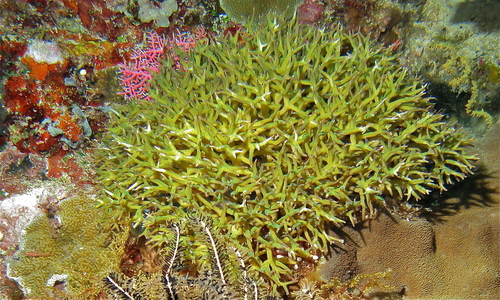
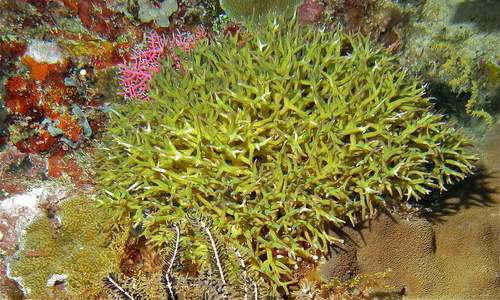
The Green Bird's Nest Coral showcases stunning branching formations, making it a favorite in reef aquariums.
Pricing for Verified Importers
Log in to see wholesale prices and order.
Export Size
up to 30.0 cm
Origin
Indo-Pacific
Temperature
24.0–28.0°C
Min. Tank Size
100 L
Salinity
32.000–35.000 ppt
pH
8.10–8.40
Seriatopora hystrix, commonly known as the Green Bird's Nest Coral, is a remarkable species of colonial stony coral belonging to the Pocilloporidae family. Its unique branching structure resembles a delicate nest, which not only adds aesthetic value to aquariums but also serves as a habitat for various marine organisms. This species thrives in shallow waters, typically found on fore-reef slopes and within sheltered lagoons, showcasing its adaptability in different marine environments. Its native range spans from East Africa to the Red Sea and the western Indo-Pacific region, with the type locality being the Fiji Islands.
The Green Bird's Nest Coral is characterized by its thin, closely spaced branches that form intricate clumps, often exhibiting a vibrant green coloration. This color is a result of the symbiotic relationship it maintains with zooxanthellae, photosynthetic algae that live within its tissues. These algae not only provide essential nutrients through photosynthesis but also contribute to the coral's vibrant appearance. As a common species, it plays a vital role in the reef ecosystem, providing shelter and food for small fish and invertebrates.
Behaviorally, Seriatopora hystrix exhibits a fascinating growth pattern, often expanding rapidly under optimal conditions. It has a relatively high tolerance for varying light levels but thrives best in moderate to high light environments. The coral’s feeding habits primarily rely on its symbiotic algae, but it can also capture plankton and other organic materials from the water column, enhancing its nutritional intake. Its resilience and adaptability make it a popular choice among aquarists, though care must be taken to ensure it is not overcrowded by more aggressive coral species.
In terms of habitat, the Green Bird's Nest Coral prefers warm, clear waters with good water movement, which helps in nutrient exchange and prevents sediment accumulation. Due to its vulnerable conservation status, it is essential for aquarium importers and wholesalers to source this species sustainably, ensuring that wild populations remain healthy and thriving.
The Green Bird's Nest Coral is characterized by its thin, closely spaced branches that form intricate clumps, often exhibiting a vibrant green coloration. This color is a result of the symbiotic relationship it maintains with zooxanthellae, photosynthetic algae that live within its tissues. These algae not only provide essential nutrients through photosynthesis but also contribute to the coral's vibrant appearance. As a common species, it plays a vital role in the reef ecosystem, providing shelter and food for small fish and invertebrates.
Behaviorally, Seriatopora hystrix exhibits a fascinating growth pattern, often expanding rapidly under optimal conditions. It has a relatively high tolerance for varying light levels but thrives best in moderate to high light environments. The coral’s feeding habits primarily rely on its symbiotic algae, but it can also capture plankton and other organic materials from the water column, enhancing its nutritional intake. Its resilience and adaptability make it a popular choice among aquarists, though care must be taken to ensure it is not overcrowded by more aggressive coral species.
In terms of habitat, the Green Bird's Nest Coral prefers warm, clear waters with good water movement, which helps in nutrient exchange and prevents sediment accumulation. Due to its vulnerable conservation status, it is essential for aquarium importers and wholesalers to source this species sustainably, ensuring that wild populations remain healthy and thriving.
When caring for Seriatopora hystrix, maintaining stable water parameters is crucial. The ideal temperature range is between 24°C to 28°C, with a salinity level of 32-35 ppt. pH levels should be kept between 8.1 and 8.4 to support optimal growth. A well-lit environment is essential, as this coral relies on photosynthesis from its symbiotic algae. Strong water flow can help to prevent detritus buildup and promote the health of the coral.
Feeding should include supplemental feeding with fine particulate foods or phytoplankton, especially in lower light conditions. The compatibility of Green Bird's Nest Coral with other tank inhabitants is generally good, but care should be taken to avoid aggressive corals that may outcompete it for space and resources. Acclimation should be done slowly to minimize stress, ideally over several hours. Quarantine procedures are recommended to prevent the introduction of pests or diseases into the main aquarium system, ensuring the health of your coral stock.
Overall, proper attention to water quality, feeding, and compatibility will ensure that Seriatopora hystrix thrives in any aquarium setting, making it a valuable addition to your coral inventory.
Feeding should include supplemental feeding with fine particulate foods or phytoplankton, especially in lower light conditions. The compatibility of Green Bird's Nest Coral with other tank inhabitants is generally good, but care should be taken to avoid aggressive corals that may outcompete it for space and resources. Acclimation should be done slowly to minimize stress, ideally over several hours. Quarantine procedures are recommended to prevent the introduction of pests or diseases into the main aquarium system, ensuring the health of your coral stock.
Overall, proper attention to water quality, feeding, and compatibility will ensure that Seriatopora hystrix thrives in any aquarium setting, making it a valuable addition to your coral inventory.
The Green Bird's Nest Coral is suitable for shipping, provided that it is packed carefully to prevent breakage of its delicate branches. It is best to use insulated containers with ample seawater to maintain stable temperatures during transit. Temperature sensitivity is moderate; shipments should ideally be kept between 24°C to 26°C. The coral is not listed under CITES, but exporters should always ensure compliance with local regulations regarding marine species.
Species Parameters
Max Adult Size
30.0 cm
Origin
Indo-Pacific
Habitat
reef
Temp Min
24.0 °C
Temp Max
28.0 °C
Salinity Min
32.000
Salinity Max
35.000
pH Min
8.10
pH Max
8.40
Min Tank
100 L