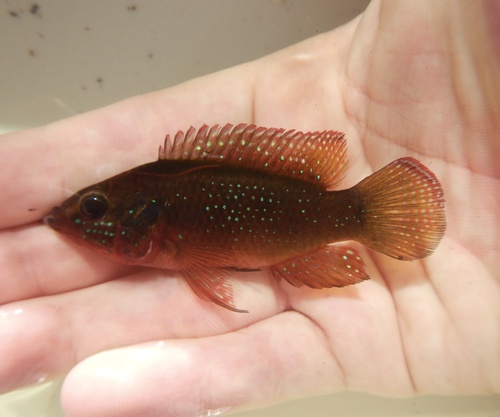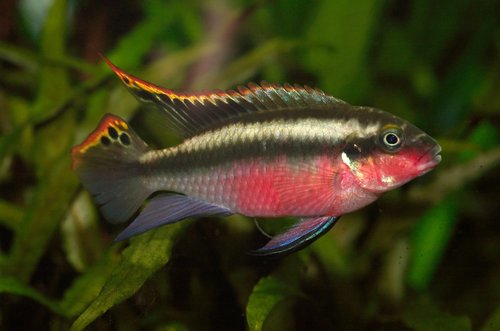
Kribensis
Pelvicachromis pulcher
In Stock
Common stock
Tank Bred
Moderate care
Not Reef Safe
SKU: 01-A-02-086-01
Kribensis is a vibrant freshwater fish known for its striking colors and fascinating behavior.
Pricing for Verified Importers
Log in to see wholesale prices and order.
Export Size
up to 8.0 cm
Origin
West Africa
Temperature
24.0–28.0°C
Min. Tank Size
100 L
pH
6.00–7.50
Diet
omnivore
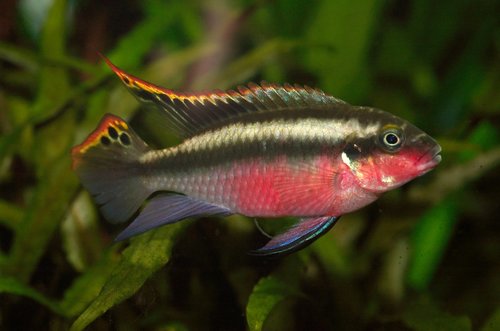
Kribensis, scientifically known as Pelvicachromis pulcher, is a captivating freshwater fish native to the slow-moving rivers and swamps of West Africa. This species is particularly celebrated for its vibrant coloration, which features a stunning combination of yellow, blue, and red hues. Adult Kribensis typically exhibit a bright yellow belly and a prominent purple spot on their flanks, making them a favorite among aquarists for community tanks and breeding projects alike.
In terms of behavior, Kribensis are known for their semi-aggressive nature, especially during breeding season. Males can become territorial, displaying vibrant colors and elaborate courtship behaviors to attract females. These fish are social creatures that thrive in pairs or small groups, forming strong bonds with their partners. In their natural habitat, they often inhabit dense vegetation, which provides shelter and breeding sites. This preference for cover translates well to aquarium settings, where they appreciate plenty of hiding spots.
Kribensis are bottom-dwellers that prefer to stay close to the substrate, foraging for food among the plants and rocks. They are often found in slightly acidic to neutral waters, where they can blend into their surroundings. As a result, replicating their natural environment in captivity is essential for their health and well-being. Providing a well-planted tank with gentle filtration and soft substrate will help mimic their habitat, encouraging natural behaviors and reducing stress.
Overall, the Kribensis is not only visually stunning but also offers intriguing behaviors that make it a popular choice for both novice and experienced aquarists. Their unique characteristics and adaptability to aquarium life make them a valuable addition to any freshwater collection.
In terms of behavior, Kribensis are known for their semi-aggressive nature, especially during breeding season. Males can become territorial, displaying vibrant colors and elaborate courtship behaviors to attract females. These fish are social creatures that thrive in pairs or small groups, forming strong bonds with their partners. In their natural habitat, they often inhabit dense vegetation, which provides shelter and breeding sites. This preference for cover translates well to aquarium settings, where they appreciate plenty of hiding spots.
Kribensis are bottom-dwellers that prefer to stay close to the substrate, foraging for food among the plants and rocks. They are often found in slightly acidic to neutral waters, where they can blend into their surroundings. As a result, replicating their natural environment in captivity is essential for their health and well-being. Providing a well-planted tank with gentle filtration and soft substrate will help mimic their habitat, encouraging natural behaviors and reducing stress.
Overall, the Kribensis is not only visually stunning but also offers intriguing behaviors that make it a popular choice for both novice and experienced aquarists. Their unique characteristics and adaptability to aquarium life make them a valuable addition to any freshwater collection.
To ensure the optimal health of Kribensis, maintain water parameters that closely resemble their native habitat. A temperature range of 24-28°C is ideal, with a pH level between 6.0 and 7.5. These fish prefer slightly acidic to neutral water conditions, so regular monitoring is essential. A minimum tank size of 100 liters is recommended, particularly if housing a breeding pair.
Feeding Kribensis is straightforward, as they are omnivorous and will accept a wide variety of foods. A balanced diet of high-quality pellets, frozen or live foods, and vegetable matter will keep them healthy and vibrant. It's important to provide them with a varied diet to encourage optimal coloration and health.
Compatibility is crucial when selecting tank mates for Kribensis. They generally do well with other peaceful species but may exhibit aggression during breeding. Avoid keeping them with overly aggressive fish or those that may outcompete them for food. When introducing new fish, allow for a proper acclimation period to reduce stress and territorial disputes.
Quarantine is highly advisable for new arrivals to prevent the introduction of diseases. A quarantine period of at least two weeks in a separate tank can help ensure the health of your existing fish and prevent outbreaks. By adhering to these care guidelines, importers and retailers can successfully maintain Kribensis in their collections.
Feeding Kribensis is straightforward, as they are omnivorous and will accept a wide variety of foods. A balanced diet of high-quality pellets, frozen or live foods, and vegetable matter will keep them healthy and vibrant. It's important to provide them with a varied diet to encourage optimal coloration and health.
Compatibility is crucial when selecting tank mates for Kribensis. They generally do well with other peaceful species but may exhibit aggression during breeding. Avoid keeping them with overly aggressive fish or those that may outcompete them for food. When introducing new fish, allow for a proper acclimation period to reduce stress and territorial disputes.
Quarantine is highly advisable for new arrivals to prevent the introduction of diseases. A quarantine period of at least two weeks in a separate tank can help ensure the health of your existing fish and prevent outbreaks. By adhering to these care guidelines, importers and retailers can successfully maintain Kribensis in their collections.
Kribensis are relatively hardy during transport but should be shipped at stable temperatures between 24-28°C. Using appropriate packing methods and density is crucial to ensure their well-being during transit. A CITES status check is not applicable for this species, making them easier to export. Careful monitoring during shipping will help minimize stress and ensure a healthy arrival.
Species Parameters
Max Adult Size
8.0 cm
Origin
West Africa
Diet
omnivore
Temp Min
24.0 °C
Temp Max
28.0 °C
pH Min
6.00
pH Max
7.50
Min Tank
100 L