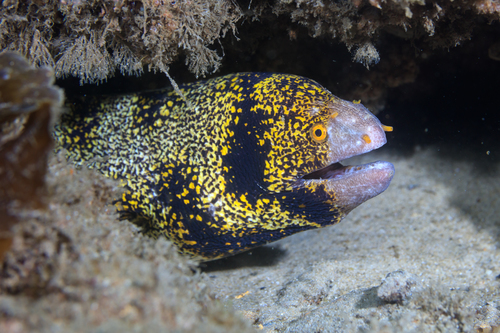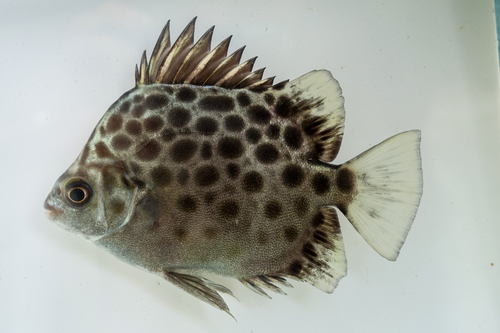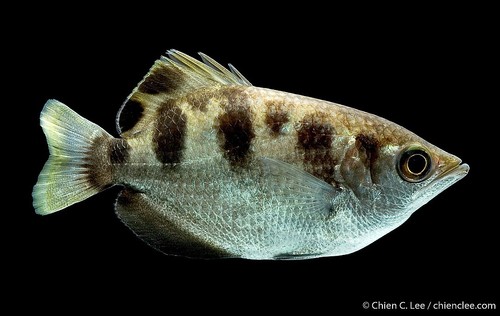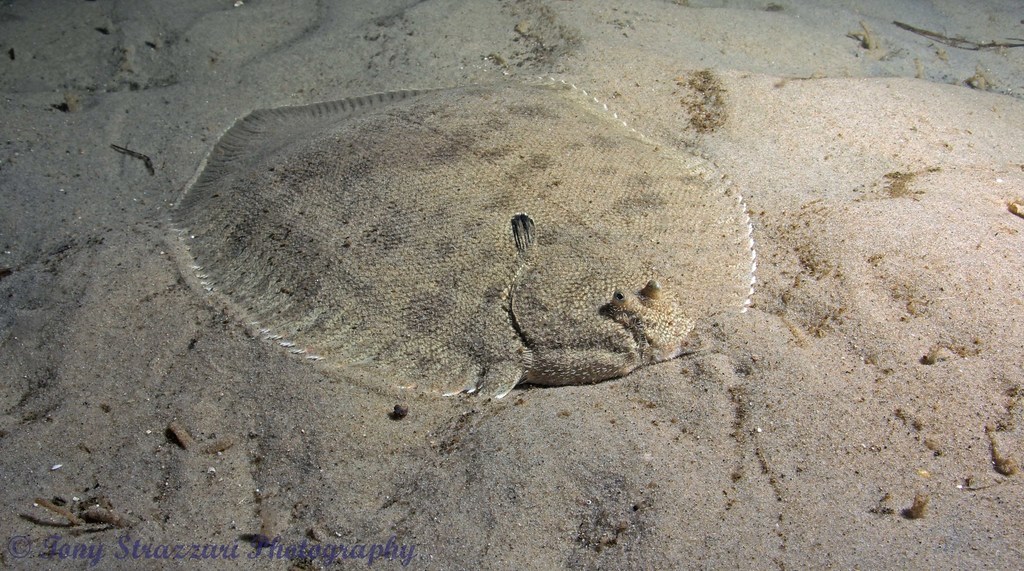
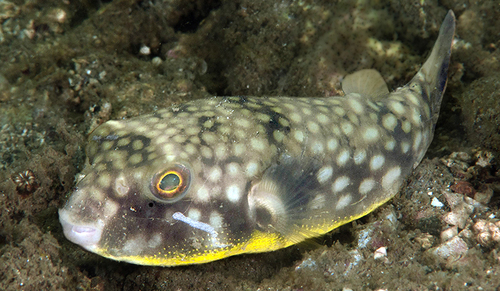
Milkspotted Puffer
Chelonodon patoca
Out of Stock
Scarce stock
Wild Caught
Moderate care
Not Reef Safe
SKU: 01-A-33-036-08
Discover the unique Milkspotted Puffer, a captivating species known for its striking appearance and intriguing behavior.
Pricing for Verified Importers
Log in to see wholesale prices and order.
Export Size
up to 38.0 cm
Origin
Indo-Pacific
Temperature
24.0–28.0°C
Min. Tank Size
200 L
pH
7.00–8.50
Diet
carnivore
The Milkspotted Puffer (Chelonodon patoca) is a fascinating species found predominantly in the coastal waters of the Indo-Pacific region. This pufferfish is renowned for its distinctive milk-spotted pattern and can grow up to 38 cm in length. It inhabits a variety of environments, including lagoons, estuaries, and rivers, often forming schools that may venture into freshwater streams, although they typically remain close to the ocean.
In terms of appearance, the Milkspotted Puffer showcases a rounded body covered in striking white spots against a darker background, providing it with effective camouflage among rocks and coral. This species is also known for its ability to inflate its body when threatened, a characteristic behavior that serves as a defense mechanism against predators. The Milkspotted Puffer primarily feeds on crustaceans and mollusks, using its strong beak-like teeth to crush hard shells.
Behaviorally, this species is social and often seen swimming in groups, which is advantageous for both feeding and protection. Milkspotted Puffers are generally peaceful towards other fish but can exhibit territorial behavior during breeding seasons. Their unique adaptations and behaviors make them an intriguing addition to any tropical aquarium setup, captivating both novice and experienced aquarists alike.
The Milkspotted Puffer thrives in warm waters, with a preference for depths ranging from 4 to 60 meters. Its habitat is characterized by a mix of saltwater and brackish environments, highlighting its adaptability to varying salinities while still relying on the proximity to the ocean for optimal health.
In terms of appearance, the Milkspotted Puffer showcases a rounded body covered in striking white spots against a darker background, providing it with effective camouflage among rocks and coral. This species is also known for its ability to inflate its body when threatened, a characteristic behavior that serves as a defense mechanism against predators. The Milkspotted Puffer primarily feeds on crustaceans and mollusks, using its strong beak-like teeth to crush hard shells.
Behaviorally, this species is social and often seen swimming in groups, which is advantageous for both feeding and protection. Milkspotted Puffers are generally peaceful towards other fish but can exhibit territorial behavior during breeding seasons. Their unique adaptations and behaviors make them an intriguing addition to any tropical aquarium setup, captivating both novice and experienced aquarists alike.
The Milkspotted Puffer thrives in warm waters, with a preference for depths ranging from 4 to 60 meters. Its habitat is characterized by a mix of saltwater and brackish environments, highlighting its adaptability to varying salinities while still relying on the proximity to the ocean for optimal health.
When caring for the Milkspotted Puffer, it is essential to replicate their natural environment as closely as possible. Ideal water parameters include a temperature range of 24-28°C, a pH between 7.0 and 8.5, and moderate salinity, typically around 1.010 to 1.025 specific gravity if brackish conditions are desired. A minimum tank size of 200 liters is recommended to provide ample space for swimming and exploration.
Feeding should focus on a varied diet of high-quality pellets, frozen or live foods such as shrimp, clams, and snails to mimic their natural diet. It is crucial to ensure proper nutrition, as these puffers require a diet rich in calcium to maintain their beaks. Compatibility with other species can vary; while they are generally non-aggressive, caution should be exercised when introducing them to smaller or more docile fish.
Acclimation is critical; use a slow drip method to introduce them to their new environment, minimizing stress and shock. A quarantine period of at least two weeks is advisable before introducing them to a community tank, allowing for monitoring of any potential health issues. Regular water quality checks and maintenance will help ensure their health and longevity in captivity.
Feeding should focus on a varied diet of high-quality pellets, frozen or live foods such as shrimp, clams, and snails to mimic their natural diet. It is crucial to ensure proper nutrition, as these puffers require a diet rich in calcium to maintain their beaks. Compatibility with other species can vary; while they are generally non-aggressive, caution should be exercised when introducing them to smaller or more docile fish.
Acclimation is critical; use a slow drip method to introduce them to their new environment, minimizing stress and shock. A quarantine period of at least two weeks is advisable before introducing them to a community tank, allowing for monitoring of any potential health issues. Regular water quality checks and maintenance will help ensure their health and longevity in captivity.
The Milkspotted Puffer is suitable for shipping, provided that proper precautions are taken. They should be packed in secure, insulated containers with adequate oxygen supply to maintain their well-being during transit. It is crucial to monitor temperatures, keeping them stable between 24-28°C, as they are sensitive to extreme fluctuations. Currently, this species is not listed under CITES, simplifying export regulations.
Species Parameters
Max Adult Size
38.0 cm
Origin
Indo-Pacific
Diet
carnivore
Temp Min
24.0 °C
Temp Max
28.0 °C
pH Min
7.00
pH Max
8.50
Min Tank
200 L