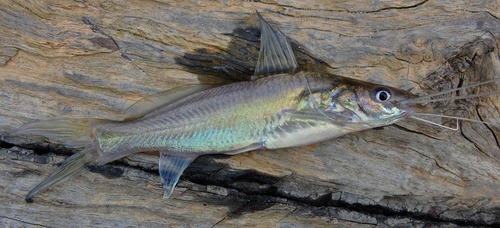
Royal Whiptail
Sturisoma panamese
In Stock
Common stock
Wild Caught
Moderate care
Not Reef Safe
SKU: 01-A-08-053-02
The Royal Whiptail is a unique freshwater fish known for its striking appearance and peaceful nature.
Pricing for Verified Importers
Log in to see wholesale prices and order.
Export Size
up to 15.0 cm
Origin
South America
Temperature
24.0–28.0°C
Min. Tank Size
100 L
pH
6.50–7.50
Diet
herbivore
The Royal Whiptail (Sturisoma panamese) is a fascinating freshwater species native to the rivers and streams of South America. This elongated fish features a distinctive flattened body, adorned with intricate patterns and colors that range from browns to greens, making it an attractive addition to any aquarium. They possess a long, whip-like tail that adds to their unique profile, allowing for graceful movements in the water. Adult Royal Whiptails can reach lengths of up to 15 cm (6 inches), making them a perfect choice for both small and large aquariums.
In their natural habitat, Royal Whiptails are often found in slow-moving waters, typically among submerged logs and dense vegetation. They thrive in environments rich in organic material, where they can feed on detritus and algae. Their natural behavior includes grazing on surfaces and hiding among plants or substrates, which provides them with both sustenance and protection from predators. Royal Whiptails are known for their peaceful disposition, making them suitable companions for community tanks.
Behaviorally, these fish are relatively social and can often be seen interacting with each other, especially in groups. They are primarily nocturnal, displaying more activity during the night. This species is also known to be a strong swimmer, capable of navigating through various water currents, although they prefer calmer waters. Their unique feeding habits and gentle nature make them an interesting species for aquarists looking to diversify their freshwater collections.
Overall, the Royal Whiptail's striking appearance and unique behavior, combined with its peaceful nature, make it a desirable choice for aquarium enthusiasts seeking an eye-catching centerpiece in their freshwater setups.
In their natural habitat, Royal Whiptails are often found in slow-moving waters, typically among submerged logs and dense vegetation. They thrive in environments rich in organic material, where they can feed on detritus and algae. Their natural behavior includes grazing on surfaces and hiding among plants or substrates, which provides them with both sustenance and protection from predators. Royal Whiptails are known for their peaceful disposition, making them suitable companions for community tanks.
Behaviorally, these fish are relatively social and can often be seen interacting with each other, especially in groups. They are primarily nocturnal, displaying more activity during the night. This species is also known to be a strong swimmer, capable of navigating through various water currents, although they prefer calmer waters. Their unique feeding habits and gentle nature make them an interesting species for aquarists looking to diversify their freshwater collections.
Overall, the Royal Whiptail's striking appearance and unique behavior, combined with its peaceful nature, make it a desirable choice for aquarium enthusiasts seeking an eye-catching centerpiece in their freshwater setups.
To successfully care for Royal Whiptails, it's essential to replicate their natural habitat as closely as possible. Ideal water parameters include a temperature range of 24-28°C (75-82°F) and a pH of 6.5-7.5. These fish prefer soft to moderately hard water, with a dH of 2-15. A minimum tank size of 100 liters is recommended to provide ample swimming space and hiding spots.
Feeding Royal Whiptails is straightforward; they are primarily herbivores, so a diet rich in plant-based foods, such as algae wafers, spirulina, and blanched vegetables, should be provided. They will also accept high-quality flake or pellet foods designed for herbivorous fish. It's important to ensure a varied diet to maintain their health and vibrant coloration.
When it comes to tank mates, Royal Whiptails do well with other peaceful species, including tetras, rasboras, and other small community fish. Avoid aggressive or territorial species that may stress them. Acclimation should be done slowly to minimize shock; float the bag in the tank for about 15 minutes before introducing the fish. Quarantine new arrivals for at least two weeks to prevent the spread of disease.
Feeding Royal Whiptails is straightforward; they are primarily herbivores, so a diet rich in plant-based foods, such as algae wafers, spirulina, and blanched vegetables, should be provided. They will also accept high-quality flake or pellet foods designed for herbivorous fish. It's important to ensure a varied diet to maintain their health and vibrant coloration.
When it comes to tank mates, Royal Whiptails do well with other peaceful species, including tetras, rasboras, and other small community fish. Avoid aggressive or territorial species that may stress them. Acclimation should be done slowly to minimize shock; float the bag in the tank for about 15 minutes before introducing the fish. Quarantine new arrivals for at least two weeks to prevent the spread of disease.
Royal Whiptails are well-suited for shipping due to their hardy nature. They should be packed with adequate oxygen and water to withstand transport. A packing density of 1-2 fish per liter is recommended to minimize stress. They are sensitive to temperature fluctuations, so maintaining a stable temperature during shipping is crucial. Currently, there are no CITES restrictions applicable to this species.
Species Parameters
Max Adult Size
15.0 cm
Origin
South America
Diet
herbivore
Temp Min
24.0 °C
Temp Max
28.0 °C
pH Min
6.50
pH Max
7.50
Min Tank
100 L