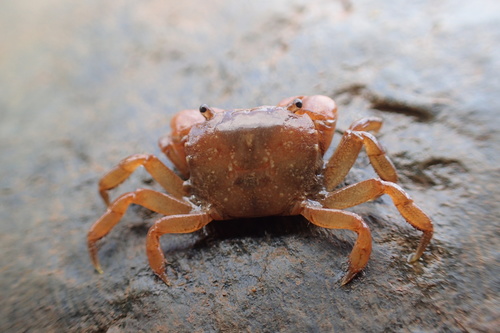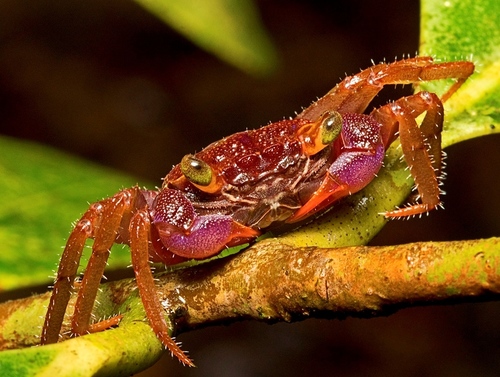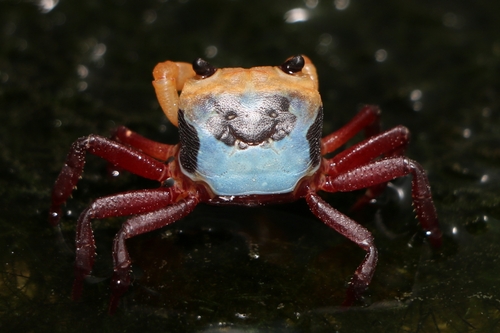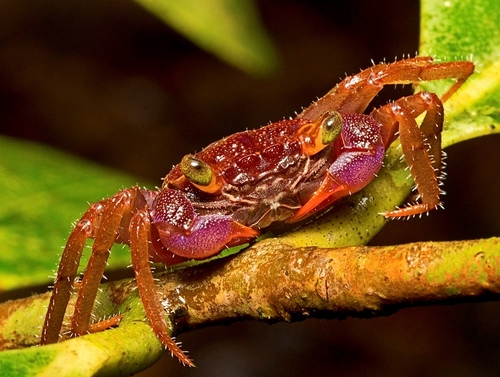
Bogorensis Crab / Purple Vampire Crab
Geosesarma sp.
In Stock
Common stock
Wild Caught
Moderate care
Not Reef Safe
SKU: 01-F-01-030-20
Discover the striking Bogorensis Crab, a captivating freshwater invertebrate with vibrant colors.
Pricing for Verified Importers
Log in to see wholesale prices and order.
Export Size
up to 5.0 cm
Origin
Southeast Asia
Temperature
24.0–28.0°C
Min. Tank Size
30 L
pH
6.50–7.50
Diet
omnivore
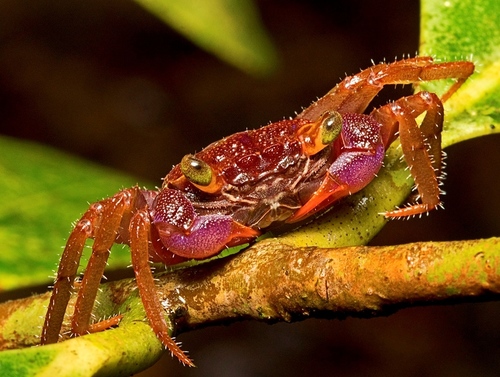
The Bogorensis Crab, also known as the Purple Vampire Crab (Geosesarma sp.), is a stunning freshwater invertebrate native to the lush waterways of Indonesia, particularly in the Bogor region. This species is highly sought after for its vibrant coloration, featuring shades of deep purple and striking yellow-orange highlights, making it a visually appealing addition to any freshwater aquarium. Adult crabs typically reach sizes of around 5 cm, showcasing their unique features such as large claws and a robust exoskeleton.
In terms of behavior, Bogorensis Crabs are known for their intriguing and somewhat territorial nature. They are primarily nocturnal, often hiding among rocks and foliage during the day to avoid predators. These crabs are social creatures, often seen interacting with one another, although males can exhibit aggressive behaviors when competing for territory or mates. Their natural habitat consists of slow-moving freshwater streams and swamps rich in vegetation, providing ample hiding spots and foraging opportunities.
The ecological role of the Bogorensis Crab is significant, as they contribute to the health of their environment by scavenging organic debris and helping to maintain the balance of their aquatic ecosystem. Their vibrant colors and active behavior make them an exciting species for aquarists, particularly those interested in biotope setups that mimic their natural habitats.
To ensure their well-being, understanding their specific environmental needs is crucial for aquarium enthusiasts and wholesalers alike. The Bogorensis Crab thrives in lush, densely planted tanks that mimic their natural habitat, offering both hiding spots and areas for exploration.
In terms of behavior, Bogorensis Crabs are known for their intriguing and somewhat territorial nature. They are primarily nocturnal, often hiding among rocks and foliage during the day to avoid predators. These crabs are social creatures, often seen interacting with one another, although males can exhibit aggressive behaviors when competing for territory or mates. Their natural habitat consists of slow-moving freshwater streams and swamps rich in vegetation, providing ample hiding spots and foraging opportunities.
The ecological role of the Bogorensis Crab is significant, as they contribute to the health of their environment by scavenging organic debris and helping to maintain the balance of their aquatic ecosystem. Their vibrant colors and active behavior make them an exciting species for aquarists, particularly those interested in biotope setups that mimic their natural habitats.
To ensure their well-being, understanding their specific environmental needs is crucial for aquarium enthusiasts and wholesalers alike. The Bogorensis Crab thrives in lush, densely planted tanks that mimic their natural habitat, offering both hiding spots and areas for exploration.
When caring for Bogorensis Crabs, it is essential to maintain optimal water parameters to ensure their health and longevity. Ideal water temperature ranges from 24°C to 28°C, with a pH level between 6.5 and 7.5. These crabs prefer soft, slightly acidic to neutral water. A minimum tank size of 30 liters is recommended to provide ample space for territorial behavior and hiding spots.
Feeding Bogorensis Crabs is relatively straightforward; they are omnivorous and enjoy a varied diet that includes high-quality pellets, algae wafers, and occasional protein sources such as brine shrimp or bloodworms. It is important to avoid overfeeding, as uneaten food can pollute the water.
Compatibility is key; while they can cohabit with other peaceful freshwater species, care should be taken to avoid housing them with aggressive fish that may harm them. Acclimation should be conducted slowly to reduce stress, ideally over several hours. Quarantine new arrivals for at least two weeks before introducing them to an established tank to prevent the spread of diseases.
Feeding Bogorensis Crabs is relatively straightforward; they are omnivorous and enjoy a varied diet that includes high-quality pellets, algae wafers, and occasional protein sources such as brine shrimp or bloodworms. It is important to avoid overfeeding, as uneaten food can pollute the water.
Compatibility is key; while they can cohabit with other peaceful freshwater species, care should be taken to avoid housing them with aggressive fish that may harm them. Acclimation should be conducted slowly to reduce stress, ideally over several hours. Quarantine new arrivals for at least two weeks before introducing them to an established tank to prevent the spread of diseases.
The Bogorensis Crab is suitable for shipping due to its hard exoskeleton, which provides some protection during transit. However, it is crucial to maintain a stable temperature range of 24°C to 28°C. The recommended packing density is one crab per liter to ensure their comfort and reduce stress during transportation. As a non-CITES species, export regulations are less stringent, but adherence to local wildlife laws is essential.
Species Parameters
Max Adult Size
5.0 cm
Origin
Southeast Asia
Diet
omnivore
Temp Min
24.0 °C
Temp Max
28.0 °C
pH Min
6.50
pH Max
7.50
Min Tank
30 L