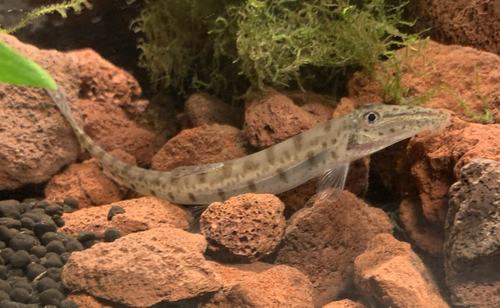
Horseface Loach
Acantopsis choirorhynchos
Out of Stock
Scarce stock
Wild Caught
Moderate care
Not Reef Safe
SKU: 01-A-29-003-09
The Horseface Loach is a unique freshwater fish known for its elongated snout and captivating behavior.
Pricing for Verified Importers
Log in to see wholesale prices and order.
Export Size
up to 30.0 cm
Origin
Southeast Asia
Temperature
24.0–28.0°C
Min. Tank Size
100 L
pH
6.50–7.50
Diet
omnivore
The Horseface Loach (Acantopsis choirorhynchos) is a distinctive freshwater fish native to the rivers and streams of Southeast Asia, particularly in Indonesia. This species is characterized by its elongated body and unique, horse-like snout, which it uses to probe the substrate for food. Typically reaching a maximum size of about 30 cm, the Horseface Loach exhibits a beautiful coloration of brown to olive-green with lighter speckles, providing excellent camouflage among riverbed substrates.
In terms of natural history, Horseface Loaches are primarily benthic feeders, scavenging for insects, crustaceans, and detritus. Their unique feeding habits and behavior make them interesting additions to aquariums, as they actively search for food and spend much of their time foraging on the bottom of the tank. In their natural habitat, they prefer slow-moving waters with plenty of hiding spots, such as rocky crevices and dense aquatic vegetation, which provide both shelter and breeding grounds.
Socially, Horseface Loaches are generally peaceful but can exhibit territorial behavior, especially during breeding. They thrive in group settings, so it is beneficial to keep them in small schools to reduce stress and encourage natural behavior. Their active and playful nature adds dynamism to community tanks, making them a favorite among aquarists looking for engaging species.
This species is not only popular in the aquarium trade but also plays a crucial role in its ecosystem as a scavenger, helping maintain water quality by consuming organic matter. Understanding their natural habitat can help importers and retailers provide the best care for these beautiful fish.
In terms of natural history, Horseface Loaches are primarily benthic feeders, scavenging for insects, crustaceans, and detritus. Their unique feeding habits and behavior make them interesting additions to aquariums, as they actively search for food and spend much of their time foraging on the bottom of the tank. In their natural habitat, they prefer slow-moving waters with plenty of hiding spots, such as rocky crevices and dense aquatic vegetation, which provide both shelter and breeding grounds.
Socially, Horseface Loaches are generally peaceful but can exhibit territorial behavior, especially during breeding. They thrive in group settings, so it is beneficial to keep them in small schools to reduce stress and encourage natural behavior. Their active and playful nature adds dynamism to community tanks, making them a favorite among aquarists looking for engaging species.
This species is not only popular in the aquarium trade but also plays a crucial role in its ecosystem as a scavenger, helping maintain water quality by consuming organic matter. Understanding their natural habitat can help importers and retailers provide the best care for these beautiful fish.
To successfully maintain Horseface Loaches in an aquarium, it is essential to replicate their natural habitat as closely as possible. They thrive in freshwater with a temperature range of 24°C to 28°C and a pH level between 6.5 and 7.5. Regular water changes and filtration are crucial to keep the water clean and well-oxygenated.
Feeding these loaches is relatively straightforward, as they are omnivorous and will accept a variety of foods. High-quality sinking pellets, frozen or live foods such as bloodworms, and blanched vegetables will provide a balanced diet. It is important to feed them multiple times a day in small amounts to ensure they are receiving adequate nutrition without overloading the system with excess food.
Compatibility-wise, the Horseface Loach can coexist peacefully with other non-aggressive species. However, they may show territorial behavior towards their own kind, especially in smaller tanks, so it is recommended to keep them in groups of 3-5 individuals. Acclimation is vital; slowly introduce them to the aquarium environment using the drip acclimation method to prevent shock.
Quarantine new arrivals for a minimum of two weeks to monitor for any signs of disease before introducing them to the main tank. This practice helps maintain a healthy environment and reduces the risk of introducing pathogens to established systems.
Feeding these loaches is relatively straightforward, as they are omnivorous and will accept a variety of foods. High-quality sinking pellets, frozen or live foods such as bloodworms, and blanched vegetables will provide a balanced diet. It is important to feed them multiple times a day in small amounts to ensure they are receiving adequate nutrition without overloading the system with excess food.
Compatibility-wise, the Horseface Loach can coexist peacefully with other non-aggressive species. However, they may show territorial behavior towards their own kind, especially in smaller tanks, so it is recommended to keep them in groups of 3-5 individuals. Acclimation is vital; slowly introduce them to the aquarium environment using the drip acclimation method to prevent shock.
Quarantine new arrivals for a minimum of two weeks to monitor for any signs of disease before introducing them to the main tank. This practice helps maintain a healthy environment and reduces the risk of introducing pathogens to established systems.
The Horseface Loach is well-suited for shipping due to its hardy nature. They should be packed in breathable bags with adequate water and oxygen to ensure their well-being during transit. Maintaining a stable temperature between 24°C and 28°C is crucial, as they are sensitive to drastic temperature changes. Importers should be aware that this species is not listed under CITES, simplifying export regulations.
Species Parameters
Max Adult Size
30.0 cm
Origin
Southeast Asia
Diet
omnivore
Temp Min
24.0 °C
Temp Max
28.0 °C
pH Min
6.50
pH Max
7.50
Min Tank
100 L