Gilded Catfish
Zungaro zungaro
In Stock
Scarce stock
Wild Caught
Moderate care
Not Reef Safe
SKU: 01-A-34-337-01
Discover the stunning Gilded Catfish, a jewel of freshwater aquatics.
Pricing for Verified Importers
Log in to see wholesale prices and order.
Export Size
up to 150.0 cm
Origin
Amazon Basin
Temperature
24.0–28.0°C
Min. Tank Size
400 L
pH
6.50–7.50
Diet
carnivore
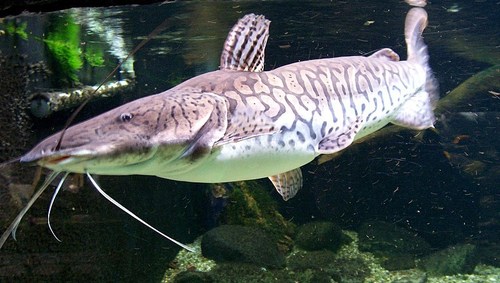
The Gilded Catfish (Zungaro zungaro) is a captivating species native to the Amazon Basin and its tributaries. Known for its shimmering golden scales and sleek body, this fish can reach impressive lengths of up to 1.5 meters in the wild, making it a striking addition to any large aquarium. Typically, the fish exhibits a dark, almost black coloration on its dorsal side, which transitions to a beautiful golden hue on its flanks, especially under proper lighting conditions. Their elongated bodies and whisker-like barbels give them a characteristic catfish appearance, enhancing their allure for aquarists.
In terms of behavior, Gilded Catfish are generally peaceful but can display territorial tendencies, especially as they mature. They are primarily nocturnal and prefer to explore their environment during the night. In their natural habitat, these fish often inhabit slow-moving rivers and flooded forests, where they feed on smaller fish and invertebrates. Their social nature makes them more comfortable in groups, so it is advisable to keep them in schools when possible, although they can also coexist with other large, non-aggressive species.
The Gilded Catfish thrives in warm, freshwater environments rich in organic material. They prefer areas with plenty of hiding spots provided by submerged logs and dense vegetation. This species plays a vital role in its ecosystem by helping to control smaller fish populations and contributing to nutrient cycling within its habitat. Understanding their natural history enhances our ability to replicate similar conditions in captivity, ensuring their health and well-being in aquarium settings.
In terms of behavior, Gilded Catfish are generally peaceful but can display territorial tendencies, especially as they mature. They are primarily nocturnal and prefer to explore their environment during the night. In their natural habitat, these fish often inhabit slow-moving rivers and flooded forests, where they feed on smaller fish and invertebrates. Their social nature makes them more comfortable in groups, so it is advisable to keep them in schools when possible, although they can also coexist with other large, non-aggressive species.
The Gilded Catfish thrives in warm, freshwater environments rich in organic material. They prefer areas with plenty of hiding spots provided by submerged logs and dense vegetation. This species plays a vital role in its ecosystem by helping to control smaller fish populations and contributing to nutrient cycling within its habitat. Understanding their natural history enhances our ability to replicate similar conditions in captivity, ensuring their health and well-being in aquarium settings.
To maintain healthy Gilded Catfish, water quality is crucial. Ideal parameters include temperatures between 24°C to 28°C, a pH range of 6.5 to 7.5, and minimal salinity, as they are freshwater fish. Regular water changes are recommended to keep nitrate levels low, which can help prevent stress-related diseases.
Feeding these catfish requires a balanced diet high in protein. They thrive on a diet of quality pellets, live or frozen foods such as shrimp, and fish fillets. It's important to feed them in moderation to prevent overfeeding, which can lead to water quality issues. Compatibility-wise, they do best with other large, peaceful species; avoid smaller fish that may be seen as prey.
Acclimation should be done gradually to reduce stress. When introducing them to a new tank, it's best to float the bag in the aquarium for about 30 minutes before releasing them. Quarantine new arrivals for at least two weeks to monitor for any signs of disease, ensuring the health of your main aquarium. This proactive approach will help minimize the risk of introducing pathogens into established setups.
Feeding these catfish requires a balanced diet high in protein. They thrive on a diet of quality pellets, live or frozen foods such as shrimp, and fish fillets. It's important to feed them in moderation to prevent overfeeding, which can lead to water quality issues. Compatibility-wise, they do best with other large, peaceful species; avoid smaller fish that may be seen as prey.
Acclimation should be done gradually to reduce stress. When introducing them to a new tank, it's best to float the bag in the aquarium for about 30 minutes before releasing them. Quarantine new arrivals for at least two weeks to monitor for any signs of disease, ensuring the health of your main aquarium. This proactive approach will help minimize the risk of introducing pathogens into established setups.
Gilded Catfish are relatively robust and can be shipped in appropriate conditions. They should be packed with sufficient water volume and oxygen to ensure their comfort during transit. A packing density of 1-2 fish per liter is recommended to minimize stress. Temperature stability is essential; maintain a shipping temperature between 24°C to 26°C. There are no CITES restrictions for this species, simplifying the export process.
Species Parameters
Max Adult Size
150.0 cm
Origin
Amazon Basin
Diet
carnivore
Temp Min
24.0 °C
Temp Max
28.0 °C
pH Min
6.50
pH Max
7.50
Min Tank
400 L