Mexican Walking Fish 'AXOLOTL'- PURE BLACK
Ambystoma mexicanum
Out of Stock
Scarce stock
Wild Caught
Moderate care
Not Reef Safe
SKU: 01-A-34-075-05
Discover the unique allure of the Pure Black Axolotl, a captivating aquatic marvel.
Pricing for Verified Importers
Log in to see wholesale prices and order.
Export Size
up to 30.0 cm
Origin
Southeast Asia
Temperature
16.0–20.0°C
Min. Tank Size
80 L
pH
6.50–7.50
Diet
carnivore
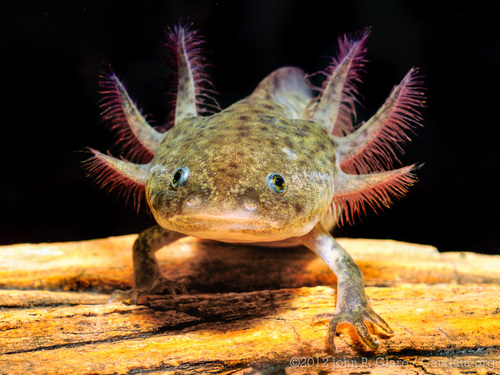
The Mexican Walking Fish, or Axolotl (Ambystoma mexicanum), is a remarkable neotenic salamander native to the lakes of Mexico, particularly Lake Xochimilco. Unlike many amphibians, axolotls do not undergo metamorphosis, retaining their juvenile features throughout their lives, including external gills and a finned tail. Their striking pure black coloration makes them a sought-after addition to any aquarium, captivating both novice and experienced enthusiasts alike.
Axolotls are characterized by their soft, gelatinous bodies and feathery external gills that protrude from the sides of their heads, giving them a distinct appearance. They exhibit a range of colors in the wild, but the pure black variant is especially prized for its aesthetic appeal. These creatures can grow up to 30 cm in length, and their unique appearance is often complemented by their playful behavior, as they explore their aquatic environment with curiosity.
In terms of behavior, axolotls are generally solitary and can be territorial, especially when they reach maturity. They are most active during the evening and night, preferring to hunt and forage for food during these hours. Their natural habitat consists of freshwater lakes and canals, where they thrive in cooler temperatures and abundant vegetation, which provides cover and hunting grounds for their prey.
The axolotl's diet consists mainly of small invertebrates, including worms and insects. In captivity, they can be fed a diet of high-quality pellets, live food, and frozen options to ensure optimal health and growth. Providing a suitable environment that mimics their natural habitat is crucial for their well-being and longevity.
Axolotls are characterized by their soft, gelatinous bodies and feathery external gills that protrude from the sides of their heads, giving them a distinct appearance. They exhibit a range of colors in the wild, but the pure black variant is especially prized for its aesthetic appeal. These creatures can grow up to 30 cm in length, and their unique appearance is often complemented by their playful behavior, as they explore their aquatic environment with curiosity.
In terms of behavior, axolotls are generally solitary and can be territorial, especially when they reach maturity. They are most active during the evening and night, preferring to hunt and forage for food during these hours. Their natural habitat consists of freshwater lakes and canals, where they thrive in cooler temperatures and abundant vegetation, which provides cover and hunting grounds for their prey.
The axolotl's diet consists mainly of small invertebrates, including worms and insects. In captivity, they can be fed a diet of high-quality pellets, live food, and frozen options to ensure optimal health and growth. Providing a suitable environment that mimics their natural habitat is crucial for their well-being and longevity.
To successfully care for Pure Black Axolotls, maintain water temperatures between 16°C and 20°C, as they are sensitive to heat and can become stressed in warmer conditions. The pH level should be kept between 6.5 and 7.5, with a soft water hardness of 5-20 dGH. A minimum tank size of 80 liters is recommended to provide ample space for swimming and hiding.
Axolotls are carnivorous, requiring a diet rich in protein. Feed them a mix of high-quality pellets, live or frozen bloodworms, earthworms, and small feeder fish. It’s important to avoid overfeeding, which can lead to health issues. Compatibility-wise, axolotls should be housed with similar-sized species to prevent them from being eaten or bullied, as they can be territorial.
When introducing new axolotls to an aquarium, acclimate them slowly to reduce stress. Quarantine new arrivals for at least two weeks to prevent the spread of diseases. Monitoring water quality regularly is essential to ensure a stable environment, as axolotls are sensitive to ammonia and nitrite levels.
Axolotls are carnivorous, requiring a diet rich in protein. Feed them a mix of high-quality pellets, live or frozen bloodworms, earthworms, and small feeder fish. It’s important to avoid overfeeding, which can lead to health issues. Compatibility-wise, axolotls should be housed with similar-sized species to prevent them from being eaten or bullied, as they can be territorial.
When introducing new axolotls to an aquarium, acclimate them slowly to reduce stress. Quarantine new arrivals for at least two weeks to prevent the spread of diseases. Monitoring water quality regularly is essential to ensure a stable environment, as axolotls are sensitive to ammonia and nitrite levels.
Axolotls are suitable for shipping but require careful handling to ensure their safety. Packing density should be low to minimize stress during transit, and temperatures should be maintained between 16°C and 20°C. CITES status is not applicable for this species, simplifying export procedures.
Species Parameters
Max Adult Size
30.0 cm
Origin
Southeast Asia
Diet
carnivore
Temp Min
16.0 °C
Temp Max
20.0 °C
pH Min
6.50
pH Max
7.50
Min Tank
80 L