Young Emperor Angelfish
pomac.imperator juvenile
In Stock
Common stock
Wild Caught
Moderate care
With Caution
SKU: ML-MF-0008
Discover the vibrant Young Emperor Angelfish, a stunning addition to any marine aquarium.
Pricing for Verified Importers
Log in to see wholesale prices and order.
Export Size
up to 30.0 cm
Origin
Indo-Pacific
Temperature
24.0–28.0°C
Min. Tank Size
300 L
Salinity
1.020–1.025 ppt
pH
8.10–8.40
Diet
herbivore
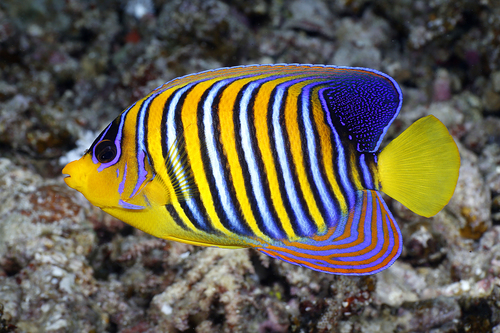
The Young Emperor Angelfish (Pomacanthus imperator juvenile) is a striking marine fish known for its vivid coloration and unique patterns. Juveniles exhibit bright blue and yellow stripes, providing a stunning contrast to their adult form, which develops a more muted palette with bold yellow and blue markings. This transformation showcases the remarkable adaptability of the species as it matures, making them an attractive choice for aquarists looking for a dynamic display in their tanks.
In their natural habitat, these fish are typically found in coral reefs across the Indo-Pacific region, where they inhabit shallow waters rich in coral growth. Young Emperor Angelfish are primarily herbivorous, grazing on algae and small invertebrates, which contributes to the ecological balance of their environment. Their ability to thrive in various reef structures allows them to play a critical role in maintaining the health of coral ecosystems.
Behaviorally, these fish are known for their inquisitive nature and can be quite social, often being seen interacting with other reef inhabitants. However, as they mature, they can become territorial, making proper tank conditions and compatible tank mates essential for successful husbandry. Observing their growth and behavior offers aquarists a unique opportunity to engage with the fascinating life cycle of this species.
Overall, the Young Emperor Angelfish is not only a beautiful fish but also an important species within its ecosystem, making it a favored choice for marine fish enthusiasts and professionals alike. Their dynamic appearance and engaging behavior make them a captivating centerpiece in any marine aquarium setup.
In their natural habitat, these fish are typically found in coral reefs across the Indo-Pacific region, where they inhabit shallow waters rich in coral growth. Young Emperor Angelfish are primarily herbivorous, grazing on algae and small invertebrates, which contributes to the ecological balance of their environment. Their ability to thrive in various reef structures allows them to play a critical role in maintaining the health of coral ecosystems.
Behaviorally, these fish are known for their inquisitive nature and can be quite social, often being seen interacting with other reef inhabitants. However, as they mature, they can become territorial, making proper tank conditions and compatible tank mates essential for successful husbandry. Observing their growth and behavior offers aquarists a unique opportunity to engage with the fascinating life cycle of this species.
Overall, the Young Emperor Angelfish is not only a beautiful fish but also an important species within its ecosystem, making it a favored choice for marine fish enthusiasts and professionals alike. Their dynamic appearance and engaging behavior make them a captivating centerpiece in any marine aquarium setup.
For optimal care of the Young Emperor Angelfish, maintain water parameters within specific ranges: a temperature of 24-28°C, pH levels between 8.1 and 8.4, and a salinity of 1.020-1.025 ppt. These parameters mimic their natural habitat, promoting better health and growth. Provide a stable environment with plenty of hiding spots and live rock to encourage natural behaviors and reduce stress.
Feeding should consist of a varied diet rich in marine algae, spirulina, and high-quality pellets or flakes designed for herbivorous fish. Regular feeding schedules, ideally 2-3 times a day, will support their nutritional needs and vibrant coloration. Young Emperor Angelfish may also benefit from occasional meaty treats, such as brine shrimp or mysis shrimp, to enhance their diet.
Compatibility is crucial; they generally do well with other peaceful tank mates but can display aggression towards similar-sized or shaped fish, particularly as they mature. Acclimation should be conducted slowly to ensure a smooth transition to their new environment, ideally over several hours to reduce stress.
Quarantine new arrivals for at least two weeks to monitor health and prevent the introduction of any diseases into the main tank. Regular water changes and monitoring for signs of stress or illness will help maintain their health and longevity in your care.
Feeding should consist of a varied diet rich in marine algae, spirulina, and high-quality pellets or flakes designed for herbivorous fish. Regular feeding schedules, ideally 2-3 times a day, will support their nutritional needs and vibrant coloration. Young Emperor Angelfish may also benefit from occasional meaty treats, such as brine shrimp or mysis shrimp, to enhance their diet.
Compatibility is crucial; they generally do well with other peaceful tank mates but can display aggression towards similar-sized or shaped fish, particularly as they mature. Acclimation should be conducted slowly to ensure a smooth transition to their new environment, ideally over several hours to reduce stress.
Quarantine new arrivals for at least two weeks to monitor health and prevent the introduction of any diseases into the main tank. Regular water changes and monitoring for signs of stress or illness will help maintain their health and longevity in your care.
The Young Emperor Angelfish is suitable for air shipping, provided they are packed securely to minimize movement. A packing density of 1-2 fish per liter is recommended to ensure adequate oxygen levels during transit. They are sensitive to temperature fluctuations; therefore, maintaining a stable temperature between 24-28°C during shipping is crucial. This species is not listed under CITES, simplifying export processes.
Species Parameters
Max Adult Size
30.0 cm
Origin
Indo-Pacific
Diet
herbivore
Temp Min
24.0 °C
Temp Max
28.0 °C
Salinity Min
1.020
Salinity Max
1.025
pH Min
8.10
pH Max
8.40
Min Tank
300 L