White-Tailed Damsel
Dascyllus aruanus
Limited
Occasional stock
Wild Caught
Easy care
Reef Safe ✓
SKU: D010
The White-Tailed Damsel is a vibrant marine fish known for its striking appearance and resilience.
Pricing for Verified Importers
Log in to see wholesale prices and order.
Export Size
up to 8.0 cm
Origin
Indo-Pacific
Temperature
24.0–28.0°C
Min. Tank Size
100 L
Salinity
1.020–1.025 ppt
pH
8.10–8.40
Diet
omnivore
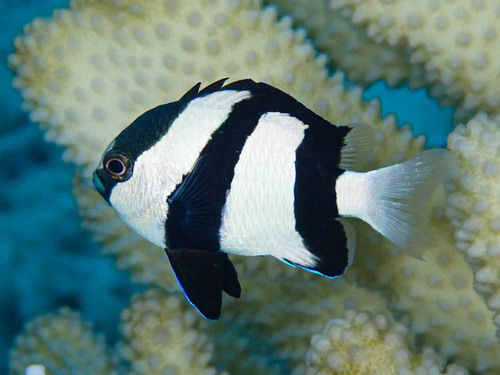
The White-Tailed Damsel (Dascyllus aruanus) is a small yet captivating marine fish that thrives in the warm, shallow waters of the Indo-Pacific region. Commonly found in coral reefs, this species is easily recognized by its distinctive white tail and dark body, which provides excellent camouflage among the corals. Typically growing to a maximum size of about 8 cm, the White-Tailed Damsel showcases an array of colors and patterns that vary slightly based on its specific habitat, making it a popular choice among aquarium enthusiasts and collectors.
In terms of behavior, the White-Tailed Damsel is known for its active and social nature, often seen darting around the reefs in small groups. This species exhibits a strong territorial instinct, especially during breeding seasons, when males will fiercely protect their nesting sites. Their diet primarily consists of zooplankton and small invertebrates, making them important contributors to the marine ecosystem as both predators and prey.
Habitat-wise, the White-Tailed Damsel prefers the safety of coral reefs and rocky substrates, where it can hide from larger predators. They are often found at depths ranging from 1 to 20 meters, favoring areas with abundant coral growth. This habitat provides not only food but also protection for their young, enhancing their survival rates in the wild. Their adaptability to various reef environments makes them a resilient species in the face of changing ocean conditions.
Overall, the White-Tailed Damsel is not only an attractive addition to marine aquariums but also plays a crucial role in the health of coral reef ecosystems. Its vibrant colors and lively behavior make it a favorite among aquarists looking to create dynamic and visually appealing displays.
In terms of behavior, the White-Tailed Damsel is known for its active and social nature, often seen darting around the reefs in small groups. This species exhibits a strong territorial instinct, especially during breeding seasons, when males will fiercely protect their nesting sites. Their diet primarily consists of zooplankton and small invertebrates, making them important contributors to the marine ecosystem as both predators and prey.
Habitat-wise, the White-Tailed Damsel prefers the safety of coral reefs and rocky substrates, where it can hide from larger predators. They are often found at depths ranging from 1 to 20 meters, favoring areas with abundant coral growth. This habitat provides not only food but also protection for their young, enhancing their survival rates in the wild. Their adaptability to various reef environments makes them a resilient species in the face of changing ocean conditions.
Overall, the White-Tailed Damsel is not only an attractive addition to marine aquariums but also plays a crucial role in the health of coral reef ecosystems. Its vibrant colors and lively behavior make it a favorite among aquarists looking to create dynamic and visually appealing displays.
When caring for the White-Tailed Damsel, maintaining stable water parameters is crucial for their health and well-being. Ideal water temperature should range between 24°C to 28°C, with a pH level of 8.1 to 8.4. Salinity levels should be kept between 1.020 to 1.025 ppt to mimic their natural habitat. These fish thrive in well-filtered tanks with plenty of live rock and hiding spots, as they appreciate both open swimming space and secure areas.
Feeding the White-Tailed Damsel is relatively straightforward; they are omnivorous and will accept a variety of foods, including high-quality flake foods, frozen or live brine shrimp, and finely chopped seafood. It's essential to feed them multiple small meals throughout the day to ensure they receive adequate nutrition and maintain their vibrant coloration.
In terms of compatibility, White-Tailed Damsels can be semi-aggressive and may display territorial behavior, especially in smaller tanks. They can be housed with other reef-safe species, but caution is advised when adding new fish to the tank. Acclimation should be done slowly to minimize stress, ideally using drip acclimation methods. Quarantine for at least two weeks is recommended before introducing them to a display tank to prevent the spread of diseases.
Feeding the White-Tailed Damsel is relatively straightforward; they are omnivorous and will accept a variety of foods, including high-quality flake foods, frozen or live brine shrimp, and finely chopped seafood. It's essential to feed them multiple small meals throughout the day to ensure they receive adequate nutrition and maintain their vibrant coloration.
In terms of compatibility, White-Tailed Damsels can be semi-aggressive and may display territorial behavior, especially in smaller tanks. They can be housed with other reef-safe species, but caution is advised when adding new fish to the tank. Acclimation should be done slowly to minimize stress, ideally using drip acclimation methods. Quarantine for at least two weeks is recommended before introducing them to a display tank to prevent the spread of diseases.
The White-Tailed Damsel is suitable for shipping and can be packed in bags with oxygen for transport. A packing density of 1-2 fish per liter is recommended to ensure adequate space and oxygen levels. They are moderately temperature-sensitive, so maintaining a stable temperature between 24°C and 28°C during transport is crucial. Currently, this species is not listed under CITES, simplifying export regulations.
Species Parameters
Max Adult Size
8.0 cm
Origin
Indo-Pacific
Habitat
reef
Diet
omnivore
Temp Min
24.0 °C
Temp Max
28.0 °C
Salinity Min
1.020
Salinity Max
1.025
pH Min
8.10
pH Max
8.40
Min Tank
100 L