Twin-Spot Lionfish
Dendrochirus biocellatus
Limited
Rare stock
Wild Caught
Moderate care
With Caution
SKU: D159
The Twin-Spot Lionfish is a stunning marine fish known for its striking appearance and unique adaptations.
Pricing for Verified Importers
Log in to see wholesale prices and order.
Export Size
up to 15.0 cm
Origin
Indo-Pacific
Temperature
24.0–28.0°C
Min. Tank Size
200 L
Salinity
1.020–1.025 ppt
pH
7.80–8.40
Diet
carnivore
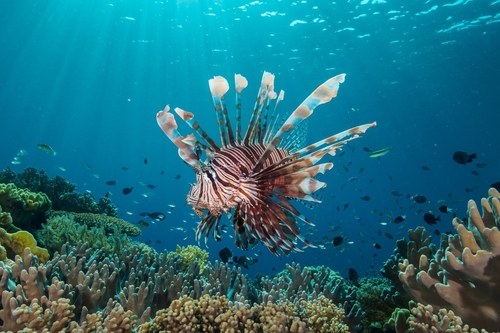
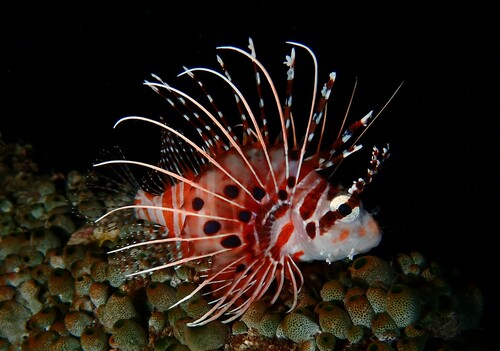
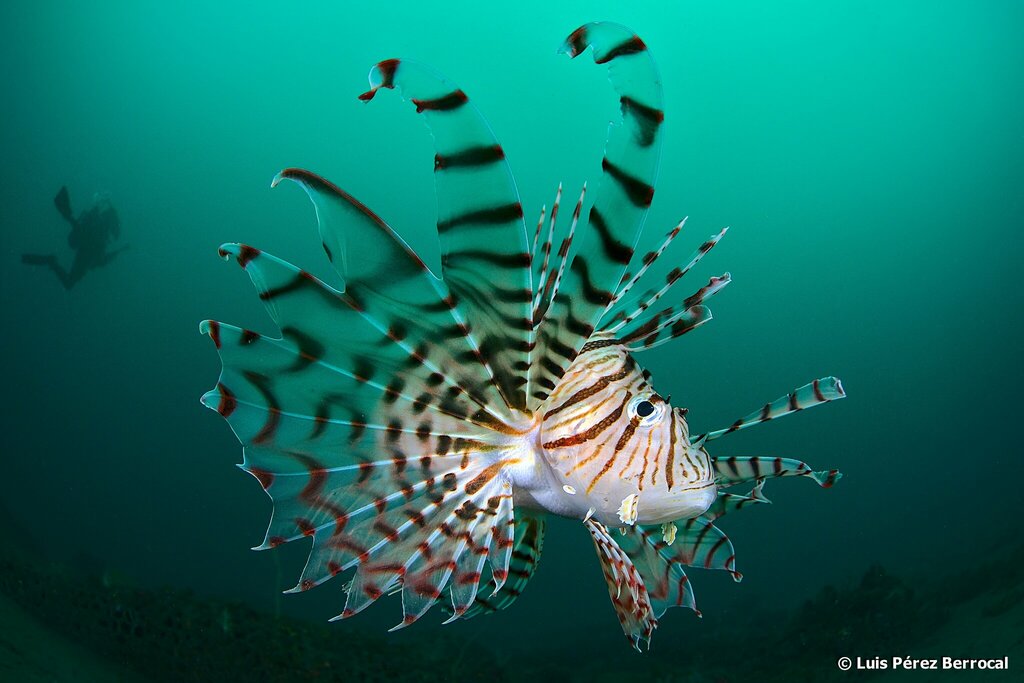
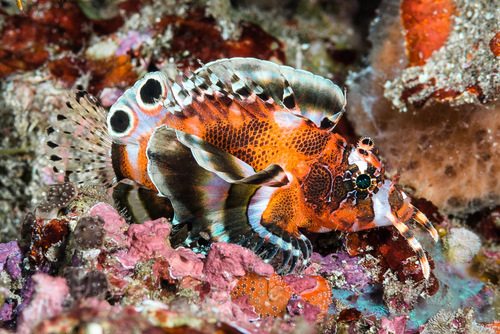
The Twin-Spot Lionfish (Dendrochirus biocellatus) is a captivating species native to the coral reefs of the Indo-Pacific region. Recognized by its vibrant coloration, which includes a mix of red, white, and black stripes, this fish features distinctive twin spots on its dorsal fins that add to its allure. Measuring up to 15 cm in length, the Twin-Spot Lionfish is not only a visual spectacle but also possesses venomous spines that deter potential predators, making it a fascinating addition to marine aquariums.
In the wild, Twin-Spot Lionfish inhabit shallow waters, often found hiding among rocky crevices and coral formations. They are primarily nocturnal hunters, employing their excellent camouflage to ambush prey such as small fish and crustaceans. Their unique hunting strategy and territorial behavior make them interesting to observe in an aquarium setting. Socially, they are often solitary but can be seen in small groups during mating seasons, showcasing a complex array of behaviors.
The Twin-Spot Lionfish plays a crucial role in its ecosystem by helping to maintain the balance of fish populations within its habitat. However, due to its invasive nature in some regions, it has garnered significant attention in marine biology and conservation discussions. Understanding their ecological impact is essential for importers and aquarists alike, ensuring responsible and sustainable practices in the trade of this species.
Given their striking appearance and fascinating behavior, Twin-Spot Lionfish are increasingly popular among aquarium enthusiasts. Their ability to thrive in a well-maintained marine environment makes them a desirable choice for both commercial and private aquariums, contributing to the biodiversity and visual appeal of aquatic displays.
In the wild, Twin-Spot Lionfish inhabit shallow waters, often found hiding among rocky crevices and coral formations. They are primarily nocturnal hunters, employing their excellent camouflage to ambush prey such as small fish and crustaceans. Their unique hunting strategy and territorial behavior make them interesting to observe in an aquarium setting. Socially, they are often solitary but can be seen in small groups during mating seasons, showcasing a complex array of behaviors.
The Twin-Spot Lionfish plays a crucial role in its ecosystem by helping to maintain the balance of fish populations within its habitat. However, due to its invasive nature in some regions, it has garnered significant attention in marine biology and conservation discussions. Understanding their ecological impact is essential for importers and aquarists alike, ensuring responsible and sustainable practices in the trade of this species.
Given their striking appearance and fascinating behavior, Twin-Spot Lionfish are increasingly popular among aquarium enthusiasts. Their ability to thrive in a well-maintained marine environment makes them a desirable choice for both commercial and private aquariums, contributing to the biodiversity and visual appeal of aquatic displays.
To successfully care for Twin-Spot Lionfish, importers should provide a stable marine environment with a temperature range of 24-28°C and a pH level between 7.8 and 8.4. Salinity levels should be maintained between 1.020 and 1.025 ppt. A minimum tank size of 200 liters is recommended to allow ample space for swimming and hiding, as they appreciate a well-structured environment with plenty of rockwork and caves.
Feeding these carnivorous fish requires a diet rich in meaty foods. Offer a variety of high-quality frozen or live foods such as shrimp, small fish, and crustaceans to ensure their dietary needs are met. Regular feedings 2-3 times a week are advisable to maintain their health and vibrancy. Compatibility with other species can be tricky; it is best to house them with similarly sized fish that are not overly aggressive, as their venomous spines can pose a risk to smaller or more timid tank mates.
Acclimation should be done gradually to minimize stress after importation. Allow the fish to acclimate to the new water conditions over several hours before introducing them to the main tank. Quarantine new arrivals for at least two weeks to monitor for any signs of illness, ensuring the health of both the new fish and the existing tank inhabitants.
Feeding these carnivorous fish requires a diet rich in meaty foods. Offer a variety of high-quality frozen or live foods such as shrimp, small fish, and crustaceans to ensure their dietary needs are met. Regular feedings 2-3 times a week are advisable to maintain their health and vibrancy. Compatibility with other species can be tricky; it is best to house them with similarly sized fish that are not overly aggressive, as their venomous spines can pose a risk to smaller or more timid tank mates.
Acclimation should be done gradually to minimize stress after importation. Allow the fish to acclimate to the new water conditions over several hours before introducing them to the main tank. Quarantine new arrivals for at least two weeks to monitor for any signs of illness, ensuring the health of both the new fish and the existing tank inhabitants.
Twin-Spot Lionfish are suitable for shipping provided that proper care is taken during transit. They should be packed with adequate water and oxygen supply to minimize stress. Optimal shipping temperatures should be maintained between 24-28°C to ensure their health upon arrival. Importers should be aware of local regulations regarding CITES status and ensure compliance before shipping.
Species Parameters
Max Adult Size
15.0 cm
Origin
Indo-Pacific
Habitat
reef
Diet
carnivore
Temp Min
24.0 °C
Temp Max
28.0 °C
Salinity Min
1.020
Salinity Max
1.025
pH Min
7.80
pH Max
8.40
Min Tank
200 L