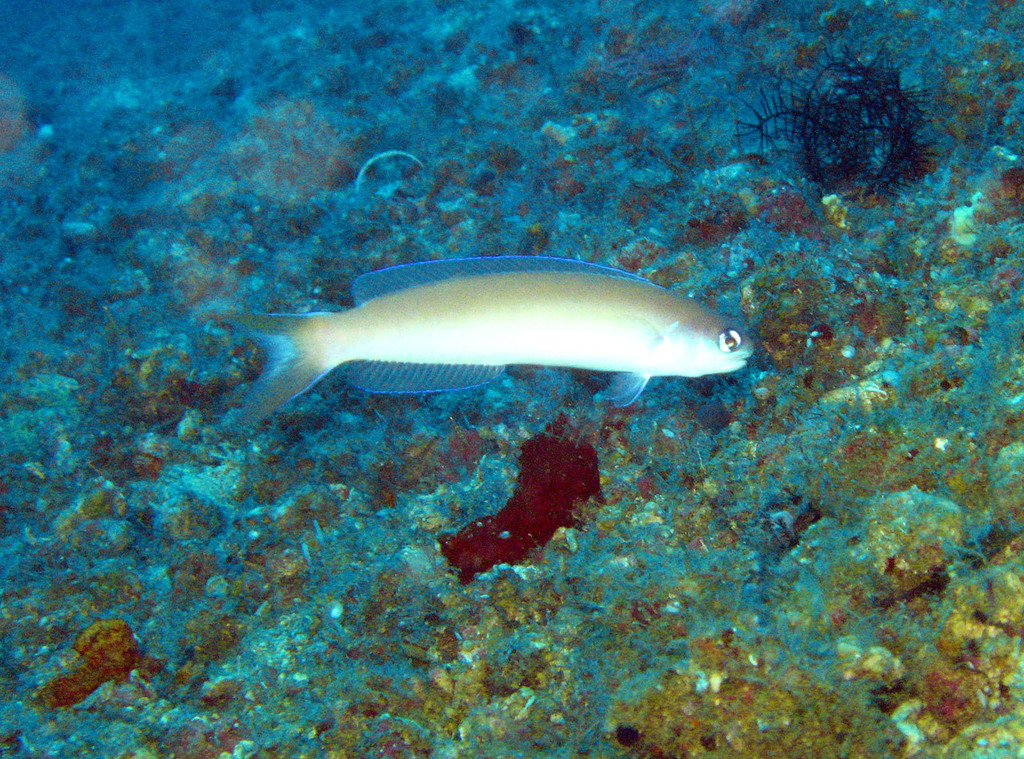
Chameleon sand/flashing tilefish
hoplolatilus chlupatyi
In Stock
Common stock
Wild Caught
Moderate care
With Caution
SKU: ML-MF-0204
Vibrant and unique, the Chameleon sand/flashing tilefish captivates with its color-changing abilities.
Pricing for Verified Importers
Log in to see wholesale prices and order.
Export Size
up to 20.0 cm
Origin
Indo-Pacific
Temperature
24.0–28.0°C
Min. Tank Size
200 L
Salinity
34.000–36.000 ppt
pH
8.10–8.40
Diet
carnivore
The Chameleon sand/flashing tilefish (Hoplolatilus chlupatyi) is a stunning marine species that thrives in the warm, shallow waters of coral reefs across the Indo-Pacific region. Known for its remarkable color-changing abilities, this tilefish can shift its hues dramatically, making it a fascinating addition to any marine aquarium. With its elongated body and vibrant coloration, it can display shades ranging from bright yellow to deep blue, depending on its mood and environment.
In terms of natural history, the Chameleon sand/flashing tilefish is often found in sandy substrates near reef edges where it burrows into the sand for shelter. It exhibits a unique behavior where it flashes its colors as a form of communication with other fish, especially during mating displays or when threatened. This species primarily feeds on small invertebrates, utilizing its keen eyesight to spot prey in the substrate.
Behaviorally, the Chameleon sand/flashing tilefish is relatively shy and prefers to hide among rocks and sand during the day, becoming more active at dusk. As a social fish, it can often be seen in small groups, displaying hierarchical behaviors within their communities. Their adaptability to various reef environments allows them to thrive in diverse habitats.
The ideal habitat for this species includes well-maintained aquariums that replicate their natural environment, featuring sandy bottoms and ample hiding spots. Providing a stable and clean environment is crucial for the health and wellbeing of the Chameleon sand/flashing tilefish, making it an intriguing species for marine aquarists to observe and care for.
In terms of natural history, the Chameleon sand/flashing tilefish is often found in sandy substrates near reef edges where it burrows into the sand for shelter. It exhibits a unique behavior where it flashes its colors as a form of communication with other fish, especially during mating displays or when threatened. This species primarily feeds on small invertebrates, utilizing its keen eyesight to spot prey in the substrate.
Behaviorally, the Chameleon sand/flashing tilefish is relatively shy and prefers to hide among rocks and sand during the day, becoming more active at dusk. As a social fish, it can often be seen in small groups, displaying hierarchical behaviors within their communities. Their adaptability to various reef environments allows them to thrive in diverse habitats.
The ideal habitat for this species includes well-maintained aquariums that replicate their natural environment, featuring sandy bottoms and ample hiding spots. Providing a stable and clean environment is crucial for the health and wellbeing of the Chameleon sand/flashing tilefish, making it an intriguing species for marine aquarists to observe and care for.
For successful care of the Chameleon sand/flashing tilefish, maintaining optimal water parameters is essential. The ideal temperature range is between 24°C to 28°C, with a salinity level of 34 to 36 ppt. A pH range of 8.1 to 8.4 is recommended to mimic their natural habitat. It is advisable to provide a minimum tank size of 200 liters to ensure ample swimming space and hiding spots.
Feeding should consist of a varied diet, primarily focusing on high-quality pellets, frozen foods, and live food such as brine shrimp and mysis shrimp. This species is a carnivore, and a diet rich in protein is vital for their health. Compatibility with other species is generally good, but they may exhibit territorial behavior, especially during breeding.
Acclimation should be done slowly to reduce stress, ideally over several hours with gradual introduction to tank conditions. A quarantine period of at least two weeks is recommended before introducing them to a community tank. This ensures that any potential diseases are identified and treated, promoting a healthier aquarium environment.
Feeding should consist of a varied diet, primarily focusing on high-quality pellets, frozen foods, and live food such as brine shrimp and mysis shrimp. This species is a carnivore, and a diet rich in protein is vital for their health. Compatibility with other species is generally good, but they may exhibit territorial behavior, especially during breeding.
Acclimation should be done slowly to reduce stress, ideally over several hours with gradual introduction to tank conditions. A quarantine period of at least two weeks is recommended before introducing them to a community tank. This ensures that any potential diseases are identified and treated, promoting a healthier aquarium environment.
The Chameleon sand/flashing tilefish is suitable for shipping due to its hardiness under proper conditions. It should be packed in breathable bags with adequate oxygen and minimal packing density to allow for movement. Temperature sensitivity should be monitored closely, keeping it within the optimal range of 24°C to 28°C during transit. This species is not listed under CITES, simplifying export regulations.
Species Parameters
Max Adult Size
20.0 cm
Origin
Indo-Pacific
Diet
carnivore
Temp Min
24.0 °C
Temp Max
28.0 °C
Salinity Min
34.000
Salinity Max
36.000
pH Min
8.10
pH Max
8.40
Min Tank
200 L