Coachwhip Ray
Himantura uarnak
In Stock
Common stock
Wild Caught
Moderate care
With Caution
SKU: CB-MF-0400
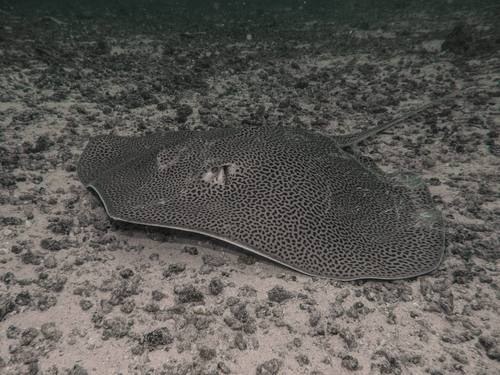
The Coachwhip Ray is renowned for its stunning reticulated pattern and impressive size.
Pricing for Verified Importers
Log in to see wholesale prices and order.
Export Size
up to 200.0 cm
Origin
Indo-Pacific
Temperature
24.0–28.0°C
Min. Tank Size
1,500 L
Salinity
30.000–35.000 ppt
pH
7.50–8.50
Diet
carnivore
The Coachwhip Ray, scientifically known as Himantura uarnak, is a striking species of stingray found primarily in coastal waters of the western Indian Ocean. This magnificent ray is characterized by its diamond-shaped pectoral fin disc, which can reach widths of up to 2 meters (6.6 feet). Its long, slender tail, devoid of fin folds, contributes to its unique appearance. The dorsal coloration features a distinctive pattern of small, dark spots against a lighter background, making it a visually captivating addition to any marine exhibit.
Inhabiting shallow waters near coral reefs, sandy bottoms, and estuaries, the Coachwhip Ray prefers environments where it can easily camouflage. As a benthic feeder, it primarily preys on mollusks, crustaceans, and small fish, using its specialized mouth to forage along the substrate. This behavior not only aids in its survival but also maintains the ecological balance within its habitat.
Socially, Coachwhip Rays are generally solitary or found in small groups, often resting on the seafloor during the day and becoming more active at night. Their behavior is influenced by environmental conditions, with variations noted in their activity levels based on geographic location and water temperature. As a species, they exhibit a degree of adaptability, which may contribute to their prevalence in various coastal regions.
Despite their beauty, Coachwhip Rays face threats from habitat degradation and fishing practices. Conservation efforts are crucial to ensure their populations remain stable, especially as demand for aquarium specimens increases. Awareness and responsible sourcing are essential for preserving this stunning species for future generations.
Inhabiting shallow waters near coral reefs, sandy bottoms, and estuaries, the Coachwhip Ray prefers environments where it can easily camouflage. As a benthic feeder, it primarily preys on mollusks, crustaceans, and small fish, using its specialized mouth to forage along the substrate. This behavior not only aids in its survival but also maintains the ecological balance within its habitat.
Socially, Coachwhip Rays are generally solitary or found in small groups, often resting on the seafloor during the day and becoming more active at night. Their behavior is influenced by environmental conditions, with variations noted in their activity levels based on geographic location and water temperature. As a species, they exhibit a degree of adaptability, which may contribute to their prevalence in various coastal regions.
Despite their beauty, Coachwhip Rays face threats from habitat degradation and fishing practices. Conservation efforts are crucial to ensure their populations remain stable, especially as demand for aquarium specimens increases. Awareness and responsible sourcing are essential for preserving this stunning species for future generations.
For successful care of the Coachwhip Ray, a minimum tank size of 1,500 liters is recommended due to its large adult size. The tank should maintain stable water parameters, ideally with a temperature range of 24-28°C, salinity levels between 30-35 ppt, and a pH of 7.5-8.5. Proper filtration and water movement are essential to replicate its natural habitat, ensuring optimal health and comfort.
Feeding should consist of a varied diet of high-quality carnivore pellets, live or frozen foods such as shrimp, squid, and small fish. Regular feeding schedules, ideally 2-3 times a week, will promote growth and health. Compatibility with other species should be carefully considered, as larger, more aggressive fish may pose a threat to the ray.
Acclimation should be gradual, utilizing a drip method to prevent shock from sudden changes in water parameters. A quarantine period of at least two weeks is advisable to monitor for any signs of disease before introducing the ray into a display system. Regular health checks and water quality assessments are crucial to ensure the wellbeing of this unique species.
Feeding should consist of a varied diet of high-quality carnivore pellets, live or frozen foods such as shrimp, squid, and small fish. Regular feeding schedules, ideally 2-3 times a week, will promote growth and health. Compatibility with other species should be carefully considered, as larger, more aggressive fish may pose a threat to the ray.
Acclimation should be gradual, utilizing a drip method to prevent shock from sudden changes in water parameters. A quarantine period of at least two weeks is advisable to monitor for any signs of disease before introducing the ray into a display system. Regular health checks and water quality assessments are crucial to ensure the wellbeing of this unique species.
The Coachwhip Ray is suitable for shipping, but care must be taken to maintain optimal conditions during transit. Packing density should allow for adequate space, and temperatures should be kept between 24-28°C to minimize stress. Being a CITES listed species, proper documentation is required for export to ensure compliance with international regulations.
Species Parameters
Max Adult Size
200.0 cm
Origin
Indo-Pacific
Diet
carnivore
Temp Min
24.0 °C
Temp Max
28.0 °C
Salinity Min
30.000
Salinity Max
35.000
pH Min
7.50
pH Max
8.50
Min Tank
1500 L