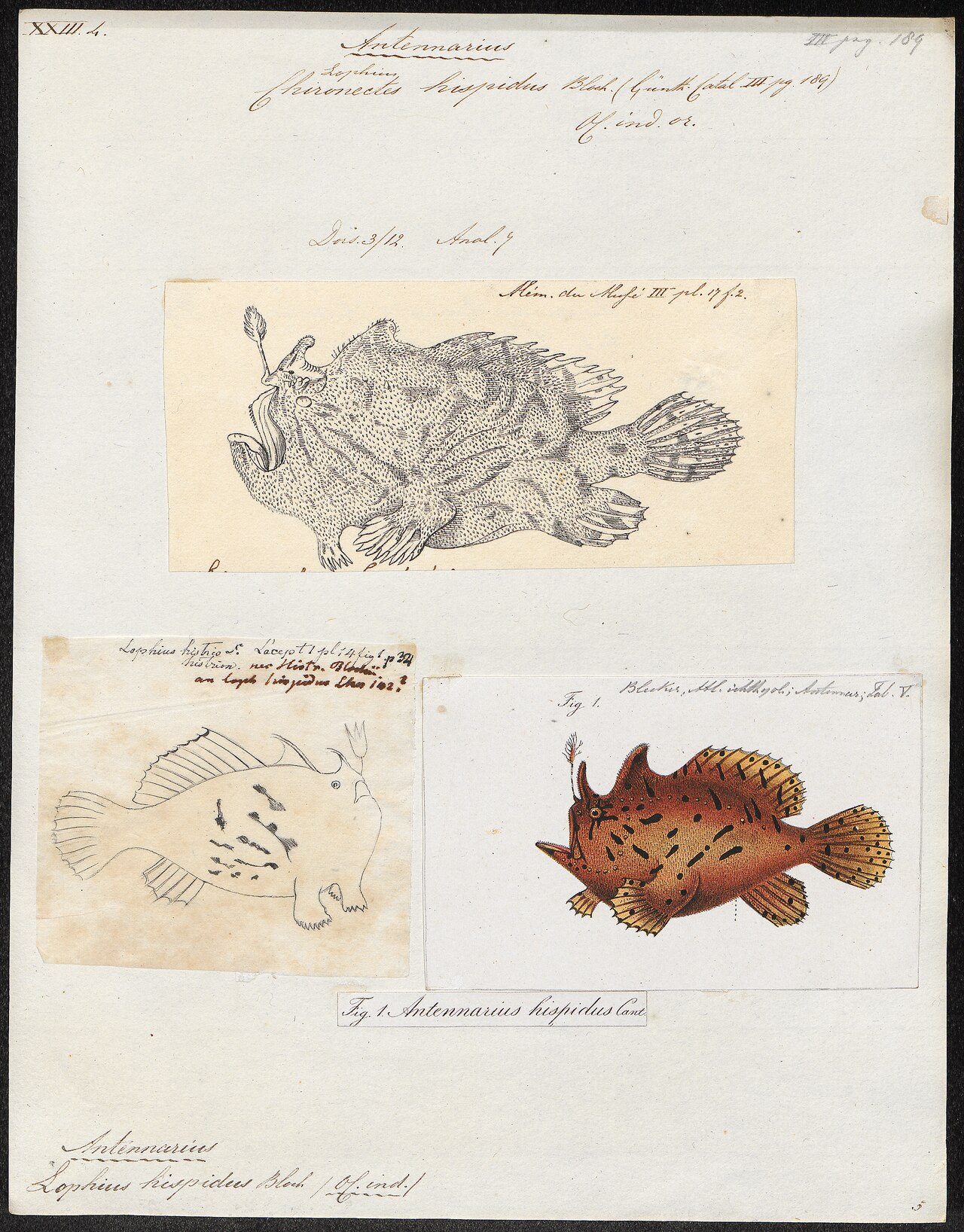
Hispid Anglerfisch
antennarius hispidus
In Stock
Common stock
Wild Caught
Moderate care
With Caution
SKU: ML-MF-0286
The Hispid Anglerfish is a captivating predator, renowned for its unique appearance and ambush hunting technique.
Pricing for Verified Importers
Log in to see wholesale prices and order.
Export Size
up to 25.0 cm
Origin
Indo-Pacific
Temperature
24.0–28.0°C
Min. Tank Size
200 L
Salinity
30.000–35.000 ppt
pH
8.10–8.40
Diet
carnivore
The Hispid Anglerfish (Antenarius hispidus) is a fascinating marine species found primarily in the shallow coastal waters of the Indo-Pacific region. This fish is easily recognizable due to its distinctive body shape and remarkable adaptations, including its camouflage that allows it to blend seamlessly with its surroundings. With a flattened body covered in spiny protrusions, the Hispid Anglerfish can reach a maximum length of about 25 cm. Its coloration typically ranges from brown to green, adorned with various patterns that mimic the rocky or coral environments it inhabits.
In terms of behavior, the Hispid Anglerfish is a solitary ambush predator that utilizes a unique lure located on its head to attract prey. This lure is a modified dorsal fin spine that can move, making it resemble a small fish or worm. Once a curious fish approaches, the Hispid Anglerfish strikes with impressive speed, capturing its meal with a rapid opening of its large mouth. This predatory strategy, combined with its ability to remain motionless for extended periods, makes it a highly effective hunter in its natural habitat.
Hispid Anglerfish are typically found in sandy or muddy substrates near coral reefs, where they can easily hide from both predators and prey. They prefer depths ranging from 10 to 50 meters, but can occasionally be found in shallower waters. Their natural habitat provides ample hiding spots and abundant food sources, primarily consisting of smaller fish and crustaceans. This species plays a crucial role in maintaining the ecological balance of its environment by controlling the population of prey species.
Due to their unique adaptations and intriguing behavior, Hispid Anglerfish are of great interest to aquarists and researchers alike. Their rarity in the aquarium trade adds to their allure, making them a sought-after species for marine displays. However, their specific care requirements must be considered to ensure their health and longevity in captivity.
In terms of behavior, the Hispid Anglerfish is a solitary ambush predator that utilizes a unique lure located on its head to attract prey. This lure is a modified dorsal fin spine that can move, making it resemble a small fish or worm. Once a curious fish approaches, the Hispid Anglerfish strikes with impressive speed, capturing its meal with a rapid opening of its large mouth. This predatory strategy, combined with its ability to remain motionless for extended periods, makes it a highly effective hunter in its natural habitat.
Hispid Anglerfish are typically found in sandy or muddy substrates near coral reefs, where they can easily hide from both predators and prey. They prefer depths ranging from 10 to 50 meters, but can occasionally be found in shallower waters. Their natural habitat provides ample hiding spots and abundant food sources, primarily consisting of smaller fish and crustaceans. This species plays a crucial role in maintaining the ecological balance of its environment by controlling the population of prey species.
Due to their unique adaptations and intriguing behavior, Hispid Anglerfish are of great interest to aquarists and researchers alike. Their rarity in the aquarium trade adds to their allure, making them a sought-after species for marine displays. However, their specific care requirements must be considered to ensure their health and longevity in captivity.
When caring for Hispid Anglerfish, it is essential to maintain stable water parameters to ensure their well-being. The ideal temperature range is between 24°C and 28°C, with a salinity level of 30-35 ppt. The pH should be maintained between 8.1 and 8.4. A minimum tank size of 200 liters is recommended to provide ample space for swimming and hiding.
Feeding Hispid Anglerfish requires a diet rich in meaty foods, as they are carnivorous. Offer a variety of live or frozen foods such as small fish, shrimp, and other crustaceans to mimic their natural diet. Regular feeding is important, but care should be taken not to overfeed, as this can lead to health issues. Compatibility with other species can be challenging due to their predatory nature; therefore, it is best to house them with larger fish that can withstand their hunting behavior.
Acclimation is crucial for successful introduction into a new environment. Gradually introduce the Hispid Anglerfish to the aquarium by floating the sealed bag in the tank for about 15 minutes and then slowly mixing tank water into the bag. This process reduces stress and helps them adjust to the new conditions. Additionally, it is advisable to quarantine new specimens for at least two weeks before adding them to the main tank to prevent the spread of diseases.
Feeding Hispid Anglerfish requires a diet rich in meaty foods, as they are carnivorous. Offer a variety of live or frozen foods such as small fish, shrimp, and other crustaceans to mimic their natural diet. Regular feeding is important, but care should be taken not to overfeed, as this can lead to health issues. Compatibility with other species can be challenging due to their predatory nature; therefore, it is best to house them with larger fish that can withstand their hunting behavior.
Acclimation is crucial for successful introduction into a new environment. Gradually introduce the Hispid Anglerfish to the aquarium by floating the sealed bag in the tank for about 15 minutes and then slowly mixing tank water into the bag. This process reduces stress and helps them adjust to the new conditions. Additionally, it is advisable to quarantine new specimens for at least two weeks before adding them to the main tank to prevent the spread of diseases.
Hispid Anglerfish are relatively sensitive to temperature fluctuations, so maintaining a stable environment during shipping is vital. It is recommended to pack them individually in insulated bags with sufficient oxygen and water. A shipping temperature of 25°C is ideal. Given their size and temperament, a packing density of one fish per bag is advisable. Currently, there are no CITES restrictions on this species, making them suitable for export.
Species Parameters
Max Adult Size
25.0 cm
Origin
Indo-Pacific
Diet
carnivore
Temp Min
24.0 °C
Temp Max
28.0 °C
Salinity Min
30.000
Salinity Max
35.000
pH Min
8.10
pH Max
8.40
Min Tank
200 L