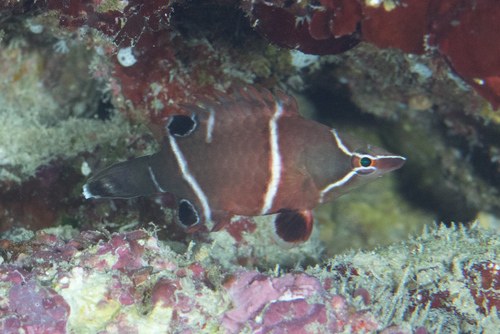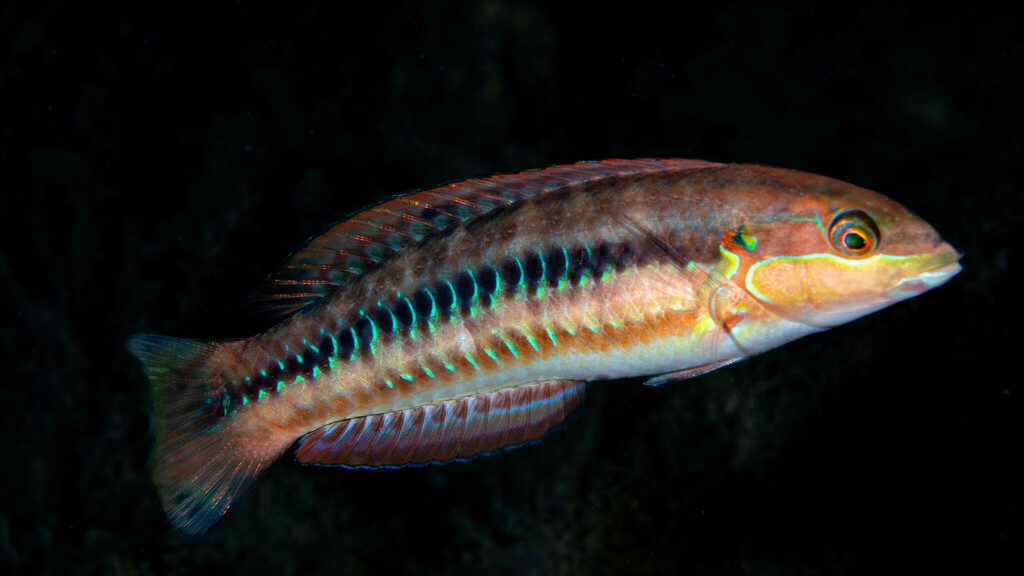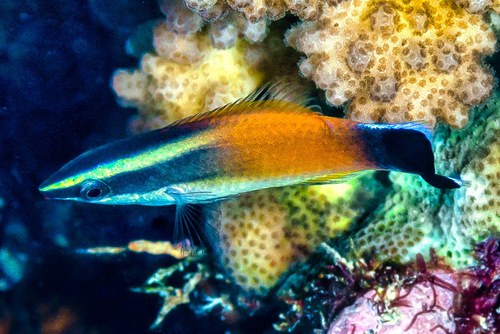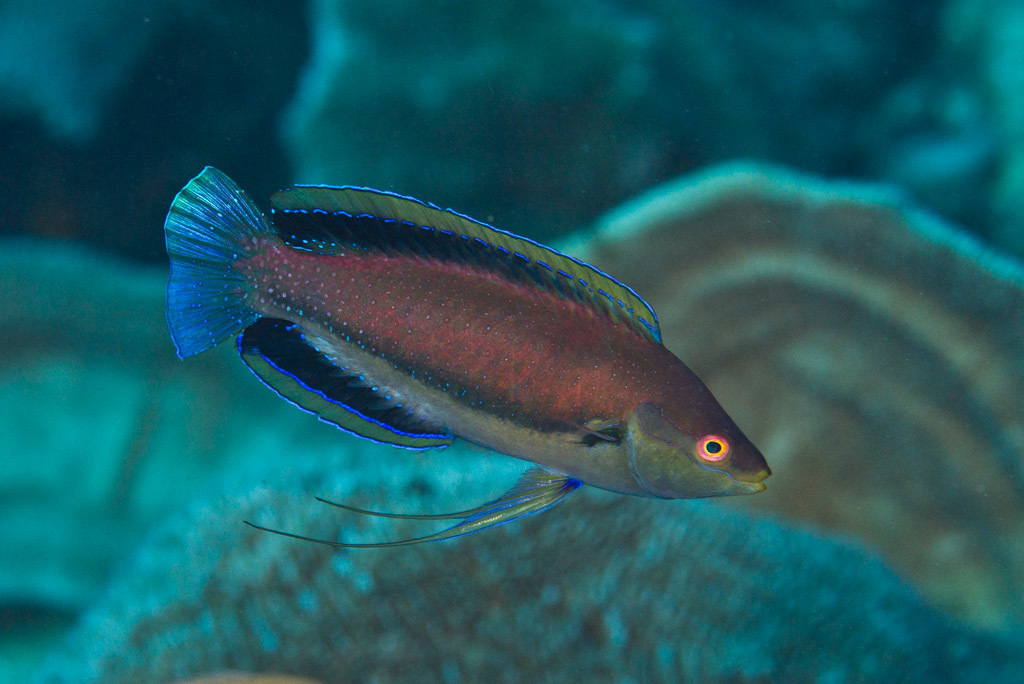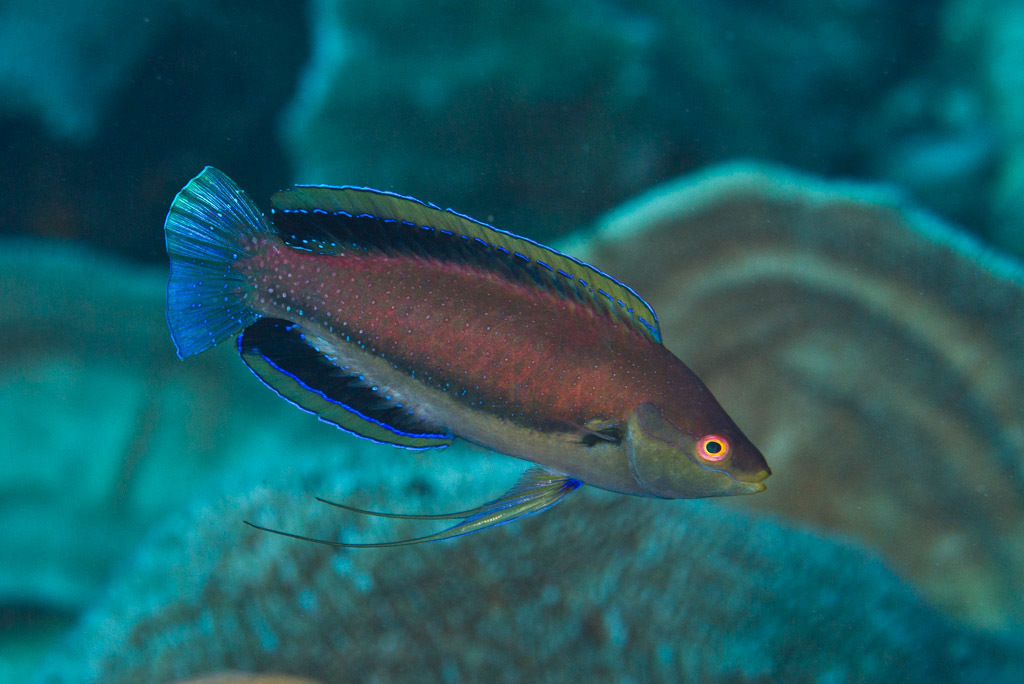
Longfin fairy wrasse/social wrasse
cirrhilabrus rubriventralis
In Stock
Common stock
Wild Caught
Moderate care
With Caution
SKU: ML-MF-0406
The Longfin fairy wrasse captivates with its vibrant colors and elegant fins.
Pricing for Verified Importers
Log in to see wholesale prices and order.
Export Size
up to 10.0 cm
Origin
Indo-Pacific
Temperature
24.0–28.0°C
Min. Tank Size
100 L
Salinity
1.020–1.025 ppt
pH
8.10–8.40
Diet
carnivore
The Longfin fairy wrasse (Cirrhilabrus rubriventralis) is a stunning marine fish native to the coral reefs of the Indo-Pacific region. Its striking coloration, featuring hues of pink, blue, and yellow, makes it a favorite among aquarium enthusiasts. This species is characterized by its elongated, flowing fins which enhance its graceful swimming style and add to its overall appeal. These wrasses are typically found in shallow waters, often residing among the crevices and ledges of coral reefs where they can easily hide from predators.
Longfin fairy wrasses exhibit a fascinating social behavior, often seen in small groups. They are known for their playful nature, darting in and out of coral structures as they forage for food. These fish are primarily diurnal, meaning they are most active during the day. Their diet mainly consists of small invertebrates and zooplankton, which they hunt with agility. Males are particularly vibrant and can display bright colors to attract females during mating rituals, showcasing their dominance and health.
In terms of habitat, the Longfin fairy wrasse thrives in warm, tropical waters with ample coral cover. They prefer environments with sandy substrates and plenty of hiding spots, which are critical for their survival against larger predators. The presence of live rock in their environment also supports their natural feeding habits, providing a rich source of food. Conservation efforts are important for maintaining their habitats, given the pressures on coral reef ecosystems.
Overall, the Longfin fairy wrasse is not only a visually stunning addition to any aquarium but also a fascinating species that exhibits unique behaviors and requires specific habitat conditions to thrive. Its social dynamics and vibrant appearance make it a captivating choice for both hobbyists and retailers alike.
Longfin fairy wrasses exhibit a fascinating social behavior, often seen in small groups. They are known for their playful nature, darting in and out of coral structures as they forage for food. These fish are primarily diurnal, meaning they are most active during the day. Their diet mainly consists of small invertebrates and zooplankton, which they hunt with agility. Males are particularly vibrant and can display bright colors to attract females during mating rituals, showcasing their dominance and health.
In terms of habitat, the Longfin fairy wrasse thrives in warm, tropical waters with ample coral cover. They prefer environments with sandy substrates and plenty of hiding spots, which are critical for their survival against larger predators. The presence of live rock in their environment also supports their natural feeding habits, providing a rich source of food. Conservation efforts are important for maintaining their habitats, given the pressures on coral reef ecosystems.
Overall, the Longfin fairy wrasse is not only a visually stunning addition to any aquarium but also a fascinating species that exhibits unique behaviors and requires specific habitat conditions to thrive. Its social dynamics and vibrant appearance make it a captivating choice for both hobbyists and retailers alike.
To ensure the health and vitality of Longfin fairy wrasses, it is crucial to maintain stable water parameters. The ideal temperature range is between 24°C to 28°C, with a salinity level of 1.020 to 1.025 ppt. The pH should be kept between 8.1 and 8.4. It's recommended to provide a minimum tank size of 100 liters to allow adequate swimming space and territorial behavior.
Feeding should consist of a varied diet, including high-quality flake foods, frozen or live brine shrimp, and other small marine invertebrates to meet their nutritional needs. These fish are typically peaceful but can be territorial, especially males, so it is advisable to keep them in a species-specific tank or with compatible tank mates such as other peaceful reef fish.
Acclimation is essential when introducing Longfin fairy wrasses to a new aquarium. Use a drip acclimation method to gradually adjust them to the new water conditions. Quarantine new arrivals for at least two weeks to monitor for diseases and to ensure they are healthy before introducing them to the main display tank. Regular water quality checks and maintenance are key to keeping these beautiful fish thriving in captivity.
Feeding should consist of a varied diet, including high-quality flake foods, frozen or live brine shrimp, and other small marine invertebrates to meet their nutritional needs. These fish are typically peaceful but can be territorial, especially males, so it is advisable to keep them in a species-specific tank or with compatible tank mates such as other peaceful reef fish.
Acclimation is essential when introducing Longfin fairy wrasses to a new aquarium. Use a drip acclimation method to gradually adjust them to the new water conditions. Quarantine new arrivals for at least two weeks to monitor for diseases and to ensure they are healthy before introducing them to the main display tank. Regular water quality checks and maintenance are key to keeping these beautiful fish thriving in captivity.
Longfin fairy wrasses are suitable for shipping and should be packed in well-oxygenated bags with proper temperature control. A packing density of 1 fish per 10-15 liters is recommended to minimize stress during transport. They are sensitive to temperature fluctuations, so maintaining a stable environment during shipping is crucial. As of now, there are no specific CITES restrictions on this species, but it’s essential to stay updated on regulations.
Species Parameters
Max Adult Size
10.0 cm
Origin
Indo-Pacific
Diet
carnivore
Temp Min
24.0 °C
Temp Max
28.0 °C
Salinity Min
1.020
Salinity Max
1.025
pH Min
8.10
pH Max
8.40
Min Tank
100 L