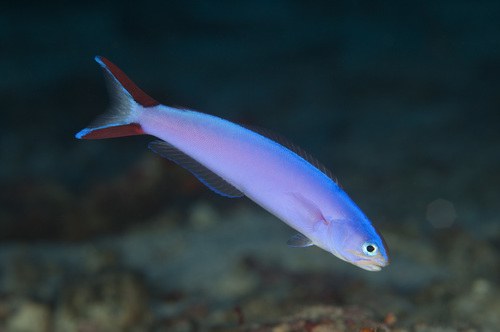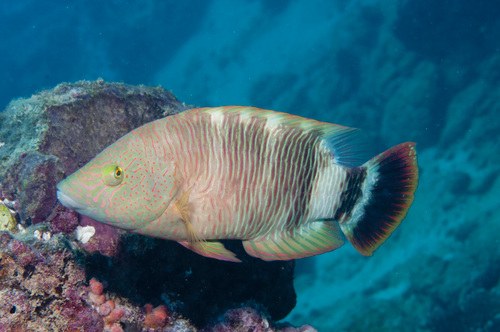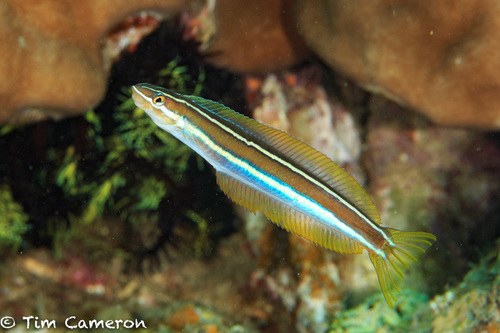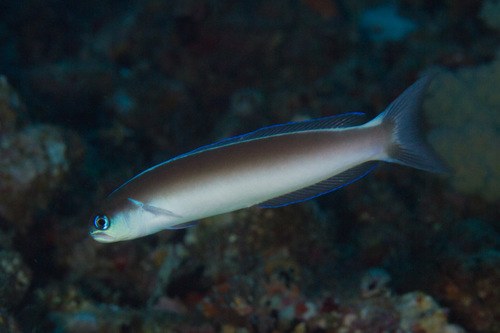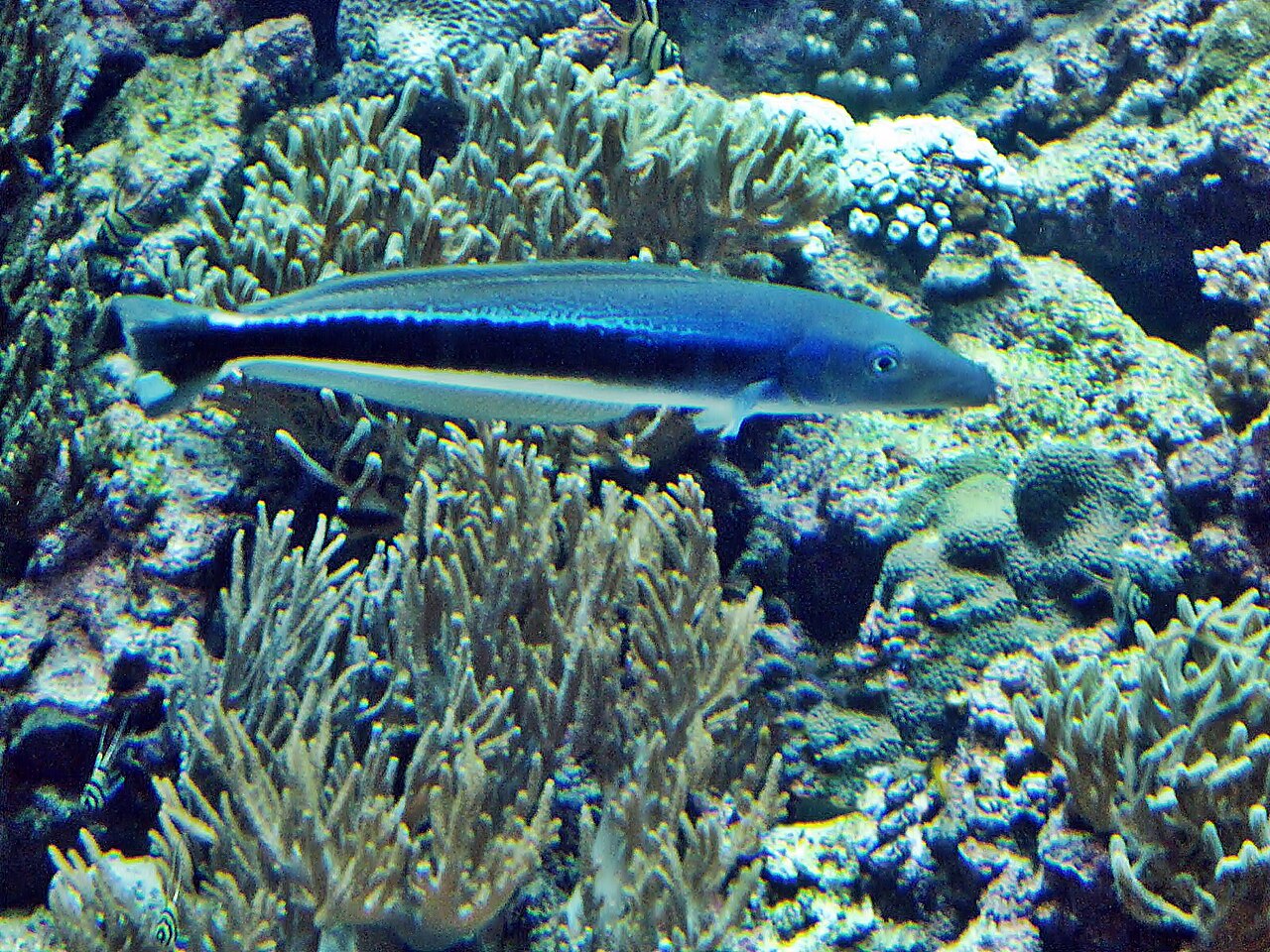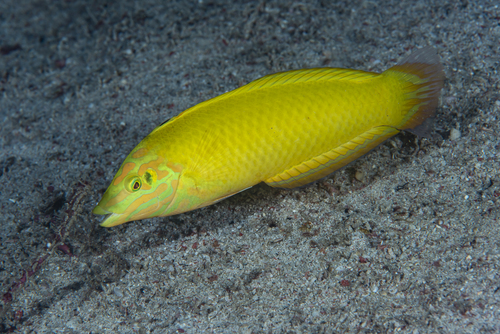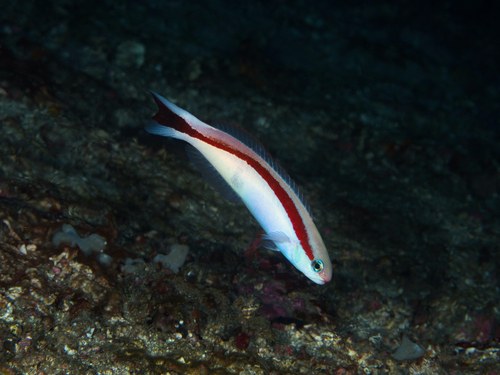
Redstripe Tilefish
Hoplolatilus marcosi
In Stock
Common stock
Wild Caught
Moderate care
With Caution
SKU: CB-MF-0159
The Redstripe Tilefish features striking colors and unique behaviors, making it a delightful addition to marine aquariums.
Pricing for Verified Importers
Log in to see wholesale prices and order.
Export Size
up to 25.0 cm
Origin
Indo-Pacific
Temperature
24.0–28.0°C
Min. Tank Size
200 L
Salinity
35.000–35.000 ppt
pH
8.10–8.40
Diet
carnivore
The Redstripe Tilefish (Hoplolatilus marcosi) is a captivating marine species known for its vibrant coloration and lively behavior. This species showcases a striking pattern of red stripes against a shimmering blue body, which not only enhances its aesthetic appeal but also serves as a form of communication among individuals in their natural habitat. Typically found in the depths of coral reefs, the Redstripe Tilefish exhibits a remarkable ability to blend into its surroundings, making it both a stunning display fish and a fascinating subject for observation.
In terms of natural history, the Redstripe Tilefish inhabits sandy and rubble areas near coral reefs across the Indo-Pacific region. They are primarily benthic dwellers, often seen hovering above the substrate while searching for prey. Their diet mainly consists of small crustaceans and invertebrates, which they expertly hunt using their keen eyesight and agility. Behavioral studies have shown that these fish are social creatures, often found in small groups, communicating through a series of body postures and color changes.
The Redstripe Tilefish is not just visually appealing; it also plays a crucial role in maintaining the ecological balance of its reef environment. By preying on various invertebrates, they help regulate populations and contribute to the overall health of coral ecosystems. Their presence in an aquarium not only enriches the visual experience but also mirrors the dynamics of natural reef communities.
As a marine species, the Redstripe Tilefish thrives in stable environments with ample hiding spots provided by live rocks and corals. Their active nature and social behavior make them a fascinating addition to community tanks, where they can interact with other species while showcasing their unique characteristics.
In terms of natural history, the Redstripe Tilefish inhabits sandy and rubble areas near coral reefs across the Indo-Pacific region. They are primarily benthic dwellers, often seen hovering above the substrate while searching for prey. Their diet mainly consists of small crustaceans and invertebrates, which they expertly hunt using their keen eyesight and agility. Behavioral studies have shown that these fish are social creatures, often found in small groups, communicating through a series of body postures and color changes.
The Redstripe Tilefish is not just visually appealing; it also plays a crucial role in maintaining the ecological balance of its reef environment. By preying on various invertebrates, they help regulate populations and contribute to the overall health of coral ecosystems. Their presence in an aquarium not only enriches the visual experience but also mirrors the dynamics of natural reef communities.
As a marine species, the Redstripe Tilefish thrives in stable environments with ample hiding spots provided by live rocks and corals. Their active nature and social behavior make them a fascinating addition to community tanks, where they can interact with other species while showcasing their unique characteristics.
Importers and retailers should provide optimal care for the Redstripe Tilefish to ensure its health and longevity. Ideal water parameters for this species include a temperature range of 24-28°C, a salinity of 1.020-1.025 ppt, and a pH between 8.1 and 8.4. Maintaining these conditions is crucial, as deviations can lead to stress and health issues.
Feeding the Redstripe Tilefish requires a varied diet rich in protein. High-quality frozen or live foods such as shrimp, small fish, and other marine invertebrates are highly recommended. It is essential to feed them multiple times a day in small portions to mimic their natural foraging behavior. As for compatibility, they generally do well in community tanks, but care should be taken when housing them with more aggressive species.
Acclimation should be conducted slowly to minimize stress; a drip acclimation method is ideal. Quarantine new arrivals for at least two weeks before introducing them to the main tank to prevent the spread of diseases. Providing plenty of hiding places and maintaining a calm tank environment will help the Redstripe Tilefish feel secure and thrive.
Feeding the Redstripe Tilefish requires a varied diet rich in protein. High-quality frozen or live foods such as shrimp, small fish, and other marine invertebrates are highly recommended. It is essential to feed them multiple times a day in small portions to mimic their natural foraging behavior. As for compatibility, they generally do well in community tanks, but care should be taken when housing them with more aggressive species.
Acclimation should be conducted slowly to minimize stress; a drip acclimation method is ideal. Quarantine new arrivals for at least two weeks before introducing them to the main tank to prevent the spread of diseases. Providing plenty of hiding places and maintaining a calm tank environment will help the Redstripe Tilefish feel secure and thrive.
The Redstripe Tilefish is suitable for shipping, provided that proper precautions are taken. It is recommended to use insulated boxes with adequate oxygen supply and maintain a shipping temperature of 24-26°C. A packing density of one fish per liter is ideal to reduce stress during transit. Ensure compliance with CITES regulations, though this species is not currently listed under CITES Appendix I or II.
Species Parameters
Max Adult Size
25.0 cm
Origin
Indo-Pacific
Diet
carnivore
Temp Min
24.0 °C
Temp Max
28.0 °C
Salinity Min
35.000
Salinity Max
35.000
pH Min
8.10
pH Max
8.40
Min Tank
200 L