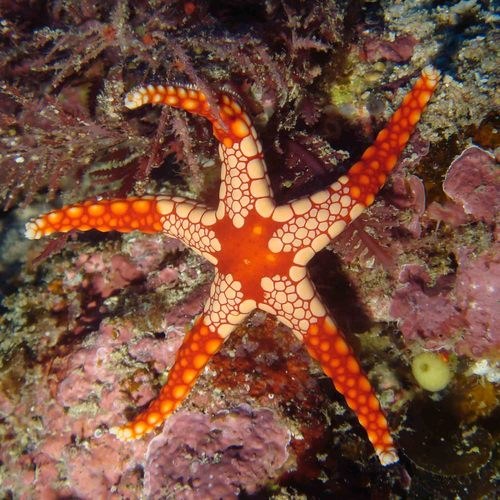
Feather star
comaster nobilis
In Stock
Common stock
Wild Caught
Moderate care
With Caution
SKU: ML-MF-0549
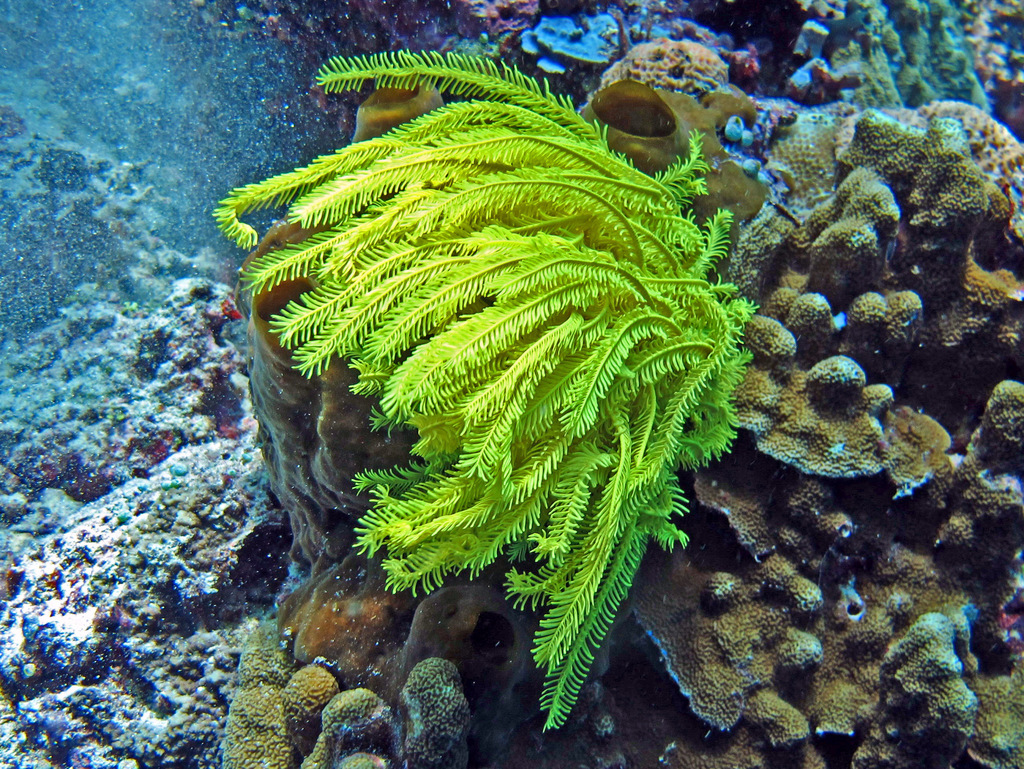
The Feather Star (Comaster nobilis) captivates with its vibrant appearance and unique feeding habits.
Pricing for Verified Importers
Log in to see wholesale prices and order.
Export Size
up to 50.0 cm
Origin
Indo-Pacific
Temperature
24.0–28.0°C
Min. Tank Size
200 L
Salinity
1.020–1.025 ppt
pH
8.10–8.40
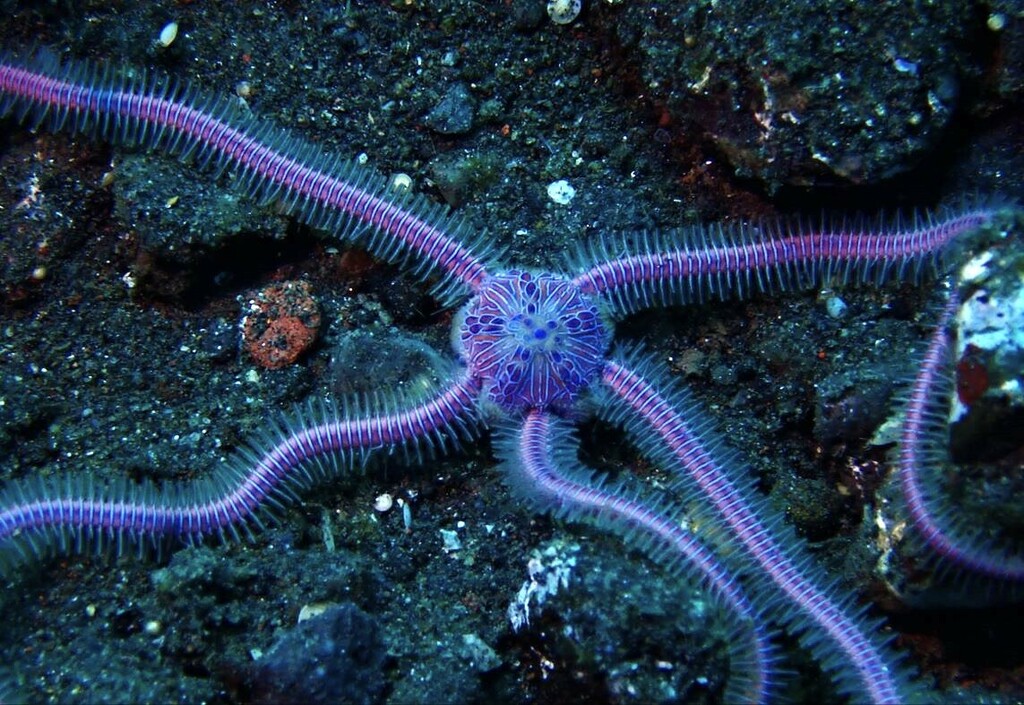
The Feather Star, scientifically known as Comaster nobilis, is a stunning marine echinoderm found predominantly in the warm waters of the Indo-Pacific region. Characterized by its vibrant coloration and intricate, feather-like arms, this species can be easily recognized and is often sought after for marine aquariums. The arms of the Feather Star are lined with tube feet that help in capturing food particles from the water, showcasing their remarkable adaptation to their environment.
In terms of natural history, Feather Stars inhabit shallow coral reefs and rocky substrates, typically at depths ranging from 1 to 30 meters. They thrive in areas with plenty of water movement, which is essential for their feeding mechanism. These echinoderms exhibit a unique behavior; they can cling to substrates using their central disc while extending their arms to filter-feed on plankton and organic debris. This feeding strategy not only highlights their ecological role but also contributes to the overall health of the reef ecosystem.
Visually, Feather Stars can be quite striking, displaying a variety of colors, including shades of red, orange, green, and blue. Their arms can extend up to 50 cm, allowing them to capture food over a larger area. Unlike many marine creatures, these stars can regenerate lost arms, a fascinating biological trait that enhances their survival in the wild. This regenerative capability makes them resilient despite potential predation or environmental changes.
In captivity, the Feather Star requires specific care and attention to thrive, making it a unique addition to marine aquariums. Their captivating appearance and behavior make them a favorite among aquarists, but proper understanding of their needs is essential for successful husbandry.
In terms of natural history, Feather Stars inhabit shallow coral reefs and rocky substrates, typically at depths ranging from 1 to 30 meters. They thrive in areas with plenty of water movement, which is essential for their feeding mechanism. These echinoderms exhibit a unique behavior; they can cling to substrates using their central disc while extending their arms to filter-feed on plankton and organic debris. This feeding strategy not only highlights their ecological role but also contributes to the overall health of the reef ecosystem.
Visually, Feather Stars can be quite striking, displaying a variety of colors, including shades of red, orange, green, and blue. Their arms can extend up to 50 cm, allowing them to capture food over a larger area. Unlike many marine creatures, these stars can regenerate lost arms, a fascinating biological trait that enhances their survival in the wild. This regenerative capability makes them resilient despite potential predation or environmental changes.
In captivity, the Feather Star requires specific care and attention to thrive, making it a unique addition to marine aquariums. Their captivating appearance and behavior make them a favorite among aquarists, but proper understanding of their needs is essential for successful husbandry.
For successful care of the Feather Star (Comaster nobilis), maintaining appropriate water parameters is vital. Ideal temperature ranges between 24°C to 28°C, with a salinity level of 1.020 to 1.025 ppt. The pH should be maintained between 8.1 and 8.4 to ensure optimal health. Due to their filter-feeding nature, it is crucial to provide a well-established system with ample planktonic food sources, such as microalgae and zooplankton. Regular feeding is essential, ideally several times a week, using high-quality liquid foods designed for filter feeders.
Compatibility with other marine species is generally favorable, as Feather Stars can coexist with a variety of peaceful reef inhabitants. However, caution should be taken when introducing aggressive species or large predatory fish that may view them as prey. During acclimation, it is recommended to use a slow drip method to minimize stress and ensure a smooth transition into the aquarium environment.
Quarantine procedures prior to introduction into the main display tank are strongly advised to prevent the introduction of pathogens. A quarantine period of at least two weeks will allow monitoring for any signs of illness, ensuring that the Feather Star is healthy and ready to thrive in its new home. Proper care and attention will help these stunning creatures flourish in both retail and home aquaria.
Compatibility with other marine species is generally favorable, as Feather Stars can coexist with a variety of peaceful reef inhabitants. However, caution should be taken when introducing aggressive species or large predatory fish that may view them as prey. During acclimation, it is recommended to use a slow drip method to minimize stress and ensure a smooth transition into the aquarium environment.
Quarantine procedures prior to introduction into the main display tank are strongly advised to prevent the introduction of pathogens. A quarantine period of at least two weeks will allow monitoring for any signs of illness, ensuring that the Feather Star is healthy and ready to thrive in its new home. Proper care and attention will help these stunning creatures flourish in both retail and home aquaria.
Feather Stars are sensitive to temperature fluctuations and should be shipped in insulated containers to maintain stable temperatures between 24°C and 26°C. Packing density should be minimal to avoid stress and damage during transportation. Given their delicate nature, it is crucial to handle them with care. Currently, there are no CITES restrictions on this species, which facilitates international trade. However, always ensure compliance with local regulations.
Species Parameters
Max Adult Size
50.0 cm
Origin
Indo-Pacific
Temp Min
24.0 °C
Temp Max
28.0 °C
Salinity Min
1.020
Salinity Max
1.025
pH Min
8.10
pH Max
8.40
Min Tank
200 L