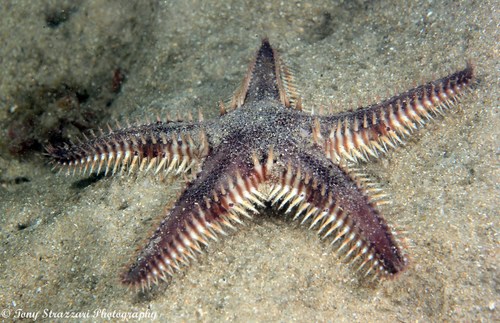
Sand Sifting Sea Star
Astropecten Polyacanthus
In Stock
Moderate stock
Wild Caught
Moderate care
Reef Safe ✓
SKU: E230
Discover the unique Sand Sifting Sea Star, an essential member of the marine ecosystem.
Pricing for Verified Importers
Log in to see wholesale prices and order.
Export Size
up to 30.0 cm
Origin
Indo-Pacific
Temperature
24.0–28.0°C
Min. Tank Size
150 L
pH
7.80–8.40
Diet
carnivore
The Sand Sifting Sea Star (Astropecten Polyacanthus) is a fascinating invertebrate that plays a crucial role in the health of marine ecosystems. This species is commonly found in sandy substrates of shallow coastal waters, where it thrives by sifting through the sand in search of food. Its remarkable ability to burrow allows it to blend seamlessly into its environment, making it a master of camouflage against predators.
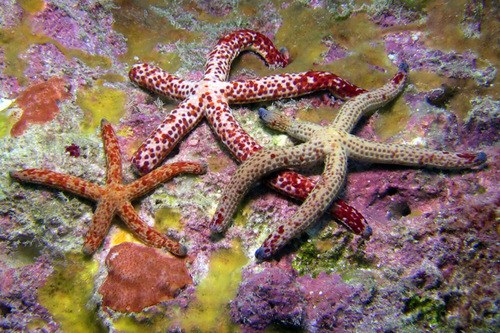
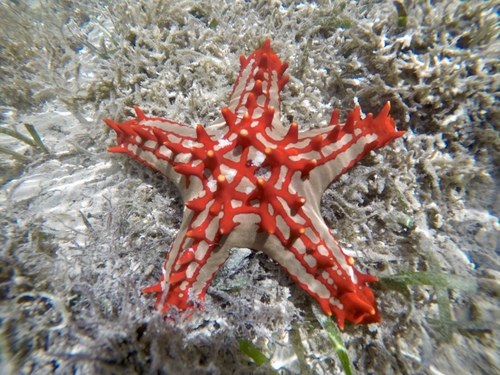
Physically, the Sand Sifting Sea Star is characterized by its distinctive shape and coloration. Typically, it features a star-like body with five elongated arms radiating from a central disc. The surface is adorned with small spines, giving it a rough texture. Its coloration varies from sandy beige to light brown, which helps it remain inconspicuous on the ocean floor. This adaptation not only aids in avoiding predators but also assists in its feeding strategy, allowing it to ambush unsuspecting prey.
Behaviorally, the Sand Sifting Sea Star is known for its unique feeding habits. It primarily feeds on small invertebrates and organic matter found within the sand. By using its tube feet, it can effectively sift through substrate, extracting nutrients while aerating the sand, contributing to the overall health of the marine environment. Additionally, this sea star exhibits a somewhat solitary nature, preferring to inhabit its own territory rather than forming large colonies.
In terms of habitat, the Sand Sifting Sea Star is predominantly found in the Indo-Pacific region, inhabiting sandy bottoms in shallow waters up to 20 meters deep. It prefers areas with ample food supply and minimal competition, making it an ideal candidate for marine aquariums focused on biodiversity and ecosystem representation.
Physically, the Sand Sifting Sea Star is characterized by its distinctive shape and coloration. Typically, it features a star-like body with five elongated arms radiating from a central disc. The surface is adorned with small spines, giving it a rough texture. Its coloration varies from sandy beige to light brown, which helps it remain inconspicuous on the ocean floor. This adaptation not only aids in avoiding predators but also assists in its feeding strategy, allowing it to ambush unsuspecting prey.
Behaviorally, the Sand Sifting Sea Star is known for its unique feeding habits. It primarily feeds on small invertebrates and organic matter found within the sand. By using its tube feet, it can effectively sift through substrate, extracting nutrients while aerating the sand, contributing to the overall health of the marine environment. Additionally, this sea star exhibits a somewhat solitary nature, preferring to inhabit its own territory rather than forming large colonies.
In terms of habitat, the Sand Sifting Sea Star is predominantly found in the Indo-Pacific region, inhabiting sandy bottoms in shallow waters up to 20 meters deep. It prefers areas with ample food supply and minimal competition, making it an ideal candidate for marine aquariums focused on biodiversity and ecosystem representation.
To ensure the health of the Sand Sifting Sea Star in a captive environment, maintain water parameters that closely mimic their natural habitat. Ideal temperatures range from 24°C to 28°C, with a pH level between 7.8 and 8.4. As a marine species, salinity levels should be kept between 30-35 ppt. When setting up the tank, a minimum volume of 150 liters is recommended to provide sufficient space and stability for the sea star's activities.
Feeding the Sand Sifting Sea Star requires a balanced diet consisting of small meaty foods such as frozen mysis shrimp, finely chopped seafood, or specialized sea star pellets. It is important to ensure that food particles are small enough for the sea star to consume effectively. Additionally, compatibility with other marine species should be considered; avoid keeping them with aggressive fish or species that might pose a threat to their well-being.
Acclimation is crucial when introducing Sand Sifting Sea Stars to a new environment. Utilize a slow drip acclimation method over several hours to reduce stress and ensure a successful transition. Quarantine new arrivals for at least two weeks to monitor for any signs of disease or stress before adding them to the main display tank.
Feeding the Sand Sifting Sea Star requires a balanced diet consisting of small meaty foods such as frozen mysis shrimp, finely chopped seafood, or specialized sea star pellets. It is important to ensure that food particles are small enough for the sea star to consume effectively. Additionally, compatibility with other marine species should be considered; avoid keeping them with aggressive fish or species that might pose a threat to their well-being.
Acclimation is crucial when introducing Sand Sifting Sea Stars to a new environment. Utilize a slow drip acclimation method over several hours to reduce stress and ensure a successful transition. Quarantine new arrivals for at least two weeks to monitor for any signs of disease or stress before adding them to the main display tank.
The Sand Sifting Sea Star is suitable for shipping and can be packed using a standard aquatic invertebrate shipping method. It is essential to maintain a stable temperature during transport, ideally between 24°C and 26°C. Packing density should allow for adequate space to prevent damage to the delicate limbs. This species is not listed under CITES, simplifying export regulations.
Species Parameters
Max Adult Size
30.0 cm
Origin
Indo-Pacific
Habitat
reef
Diet
carnivore
Temp Min
24.0 °C
Temp Max
28.0 °C
pH Min
7.80
pH Max
8.40
Min Tank
150 L