Cuttlefish
Sepia officinalis
In Stock
Common stock
Wild Caught
Moderate care
With Caution
SKU: CB-MF-0454
Discover the fascinating Cuttlefish, a master of camouflage and intelligent marine predator.
Pricing for Verified Importers
Log in to see wholesale prices and order.
Export Size
up to 49.0 cm
Origin
Indo-Pacific
Temperature
18.0–22.0°C
Min. Tank Size
300 L
Salinity
35.000–40.000 ppt
pH
7.80–8.50
Diet
carnivore
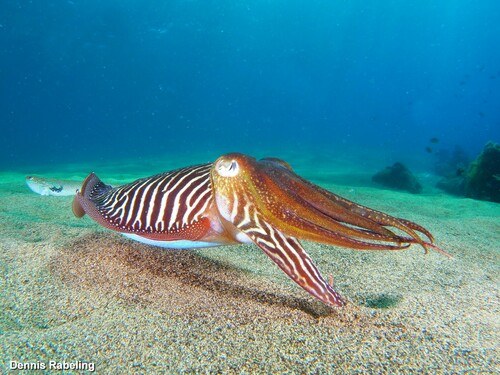
The common cuttlefish, scientifically known as Sepia officinalis, is one of the largest and most well-known species of cuttlefish. Found primarily in the waters of the eastern North Atlantic, this migratory species exhibits remarkable adaptability, spending the spring and summer months inshore for spawning. As the seasons change, they migrate to deeper waters, typically between 100 to 200 meters, during autumn and winter. This species can reach lengths of up to 49 centimeters and weights of 4 kilograms, although those from subtropical regions tend to be smaller, rarely exceeding 30 centimeters.
Cuttlefish are renowned for their unique body structure, characterized by a large, bulbous head, a distinct mantle, and a set of eight arms and two longer feeding tentacles. Their skin contains specialized cells known as chromatophores, enabling them to change color and patterns rapidly. This extraordinary ability not only aids in camouflage but also plays a crucial role in communication and mating displays. Cuttlefish exhibit complex behaviors, showcasing intelligence that rivals many vertebrates.
In terms of habitat, cuttlefish prefer sandy or muddy substrates where they can easily conceal themselves from predators and ambush prey. They are primarily found in coastal waters, thriving in environments rich in marine life, which supports their carnivorous diet. As active hunters, they primarily feed on crustaceans, mollusks, and fish, employing their incredible speed and agility to capture prey.
The common cuttlefish's unique life cycle includes a fascinating reproductive phase where females lay thousands of eggs in clusters, often attaching them to submerged structures. After a short incubation period, the hatchlings emerge as miniature versions of adults, ready to embark on their journey in the marine world, showcasing the continuation of this incredible species’ legacy.
Cuttlefish are renowned for their unique body structure, characterized by a large, bulbous head, a distinct mantle, and a set of eight arms and two longer feeding tentacles. Their skin contains specialized cells known as chromatophores, enabling them to change color and patterns rapidly. This extraordinary ability not only aids in camouflage but also plays a crucial role in communication and mating displays. Cuttlefish exhibit complex behaviors, showcasing intelligence that rivals many vertebrates.
In terms of habitat, cuttlefish prefer sandy or muddy substrates where they can easily conceal themselves from predators and ambush prey. They are primarily found in coastal waters, thriving in environments rich in marine life, which supports their carnivorous diet. As active hunters, they primarily feed on crustaceans, mollusks, and fish, employing their incredible speed and agility to capture prey.
The common cuttlefish's unique life cycle includes a fascinating reproductive phase where females lay thousands of eggs in clusters, often attaching them to submerged structures. After a short incubation period, the hatchlings emerge as miniature versions of adults, ready to embark on their journey in the marine world, showcasing the continuation of this incredible species’ legacy.
For importers and retailers, maintaining optimal conditions for Sepia officinalis is crucial for their health and longevity. Ideal water parameters include a temperature range of 18-22°C, with salinity levels between 35-40 ppt. The pH should be maintained between 7.8 and 8.5 to ensure a stable environment. Cuttlefish require a minimum tank size of 300 liters to accommodate their size and active nature.
Feeding is essential for the well-being of cuttlefish, as they are carnivores that thrive on a diet of live or frozen food such as shrimp, small fish, and mollusks. Regular feeding should occur multiple times a week to mimic their natural hunting behavior and ensure proper growth. Compatibility is vital; while cuttlefish can be kept with other marine species, aggressive tankmates should be avoided to reduce stress.
Acclimation should be gradual, using drip acclimation methods to avoid shock. Quarantine new arrivals for at least two weeks to monitor for any signs of disease before introducing them to the main display. Regular water quality checks and maintenance are essential to create a stable environment that promotes the health of these remarkable cephalopods.
Feeding is essential for the well-being of cuttlefish, as they are carnivores that thrive on a diet of live or frozen food such as shrimp, small fish, and mollusks. Regular feeding should occur multiple times a week to mimic their natural hunting behavior and ensure proper growth. Compatibility is vital; while cuttlefish can be kept with other marine species, aggressive tankmates should be avoided to reduce stress.
Acclimation should be gradual, using drip acclimation methods to avoid shock. Quarantine new arrivals for at least two weeks to monitor for any signs of disease before introducing them to the main display. Regular water quality checks and maintenance are essential to create a stable environment that promotes the health of these remarkable cephalopods.
Cuttlefish are sensitive to temperature fluctuations and should be shipped in insulated containers to maintain stable conditions. The recommended packing density is 1 cuttlefish per 10 liters of water. Ensure temperatures remain between 18-22°C during transit. CITES status is not applicable for this species, making it easier for export.
Species Parameters
Max Adult Size
49.0 cm
Origin
Indo-Pacific
Diet
carnivore
Temp Min
18.0 °C
Temp Max
22.0 °C
Salinity Min
35.000
Salinity Max
40.000
pH Min
7.80
pH Max
8.50
Min Tank
300 L