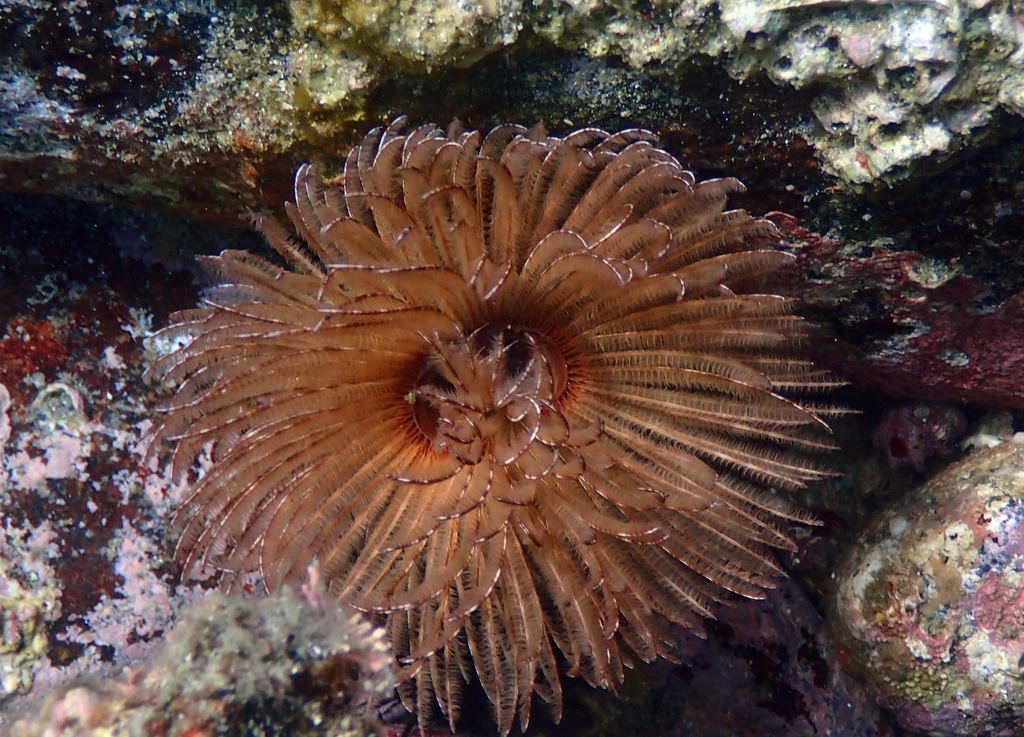
Japonica Worm
sabellastarte japonica
In Stock
Common stock
Wild Caught
Moderate care
With Caution
SKU: ML-MF-0482
The Japonica Worm is a fascinating marine species known for its vibrant colors and unique filter-feeding habits.
Pricing for Verified Importers
Log in to see wholesale prices and order.
Export Size
up to 15.0 cm
Origin
Indo-Pacific
Temperature
24.0–28.0°C
Min. Tank Size
100 L
Salinity
30.000–35.000 ppt
pH
7.80–8.50
The Japonica Worm, scientifically known as Sabellastarte japonica, is a captivating marine polychaete native to the Indo-Pacific region. These worms are often recognized for their strikingly colorful bristle-like appendages, which serve as both a means of locomotion and a filter-feeding apparatus. Their bodies are segmented and can vary in color, including shades of yellow, green, and orange, making them a visually appealing addition to marine aquariums.
In their natural habitat, Japonica Worms thrive in sandy substrates and are commonly found in shallow coastal waters, often nestled in burrows or tubes that they construct from sand and mucus. They prefer environments with moderate water movement, which helps to bring in food particles. These worms are primarily nocturnal, emerging at night to feed, although they can be seen during the day in well-lit tanks.
Behaviorally, Japonica Worms are peaceful and tend to coexist harmoniously with a variety of tank mates. They are not aggressive and do not pose a threat to other marine life, making them suitable for community tanks. Their feeding strategy involves using their feathery appendages to capture plankton and detritus from the water, playing an important role in the aquatic ecosystem by helping to filter and clean the water.
Overall, the Japonica Worm is not only a beautiful species but also a beneficial one, contributing to the health of marine environments and aquariums alike. Their unique adaptations and peaceful nature make them a desirable choice for both novice and experienced aquarists.
In their natural habitat, Japonica Worms thrive in sandy substrates and are commonly found in shallow coastal waters, often nestled in burrows or tubes that they construct from sand and mucus. They prefer environments with moderate water movement, which helps to bring in food particles. These worms are primarily nocturnal, emerging at night to feed, although they can be seen during the day in well-lit tanks.
Behaviorally, Japonica Worms are peaceful and tend to coexist harmoniously with a variety of tank mates. They are not aggressive and do not pose a threat to other marine life, making them suitable for community tanks. Their feeding strategy involves using their feathery appendages to capture plankton and detritus from the water, playing an important role in the aquatic ecosystem by helping to filter and clean the water.
Overall, the Japonica Worm is not only a beautiful species but also a beneficial one, contributing to the health of marine environments and aquariums alike. Their unique adaptations and peaceful nature make them a desirable choice for both novice and experienced aquarists.
To successfully care for Japonica Worms, it is essential to maintain stable water parameters. They thrive in a temperature range of 24-28°C and prefer a salinity of 30-35 ppt. The pH should be kept between 7.8 and 8.5. A minimum tank size of 100 liters is recommended to ensure adequate space and water quality.
Feeding Japonica Worms is relatively straightforward, as they are filter feeders. A varied diet of high-quality plankton, microalgae, and specially formulated marine foods will keep them healthy. It is crucial to provide a consistent source of food, as they rely on suspended particles in the water column.
In terms of compatibility, Japonica Worms are peaceful and can be kept with a variety of marine species, including corals and other invertebrates. When introducing them to a new tank, acclimation should be done slowly to minimize stress. A quarantine period of at least two weeks is recommended to ensure they are free from disease before being added to the main display.
Overall, with the right care and conditions, Japonica Worms can thrive and enhance the biodiversity of marine aquariums.
Feeding Japonica Worms is relatively straightforward, as they are filter feeders. A varied diet of high-quality plankton, microalgae, and specially formulated marine foods will keep them healthy. It is crucial to provide a consistent source of food, as they rely on suspended particles in the water column.
In terms of compatibility, Japonica Worms are peaceful and can be kept with a variety of marine species, including corals and other invertebrates. When introducing them to a new tank, acclimation should be done slowly to minimize stress. A quarantine period of at least two weeks is recommended to ensure they are free from disease before being added to the main display.
Overall, with the right care and conditions, Japonica Worms can thrive and enhance the biodiversity of marine aquariums.
Japonica Worms are suitable for shipping, provided they are packed carefully to minimize stress. A packing density of 1-2 worms per liter is advisable to ensure they have enough space. They are sensitive to temperature fluctuations, so maintaining a stable temperature between 24-26°C during transport is essential. There are no CITES restrictions for this species, simplifying the export process.
Species Parameters
Max Adult Size
15.0 cm
Origin
Indo-Pacific
Temp Min
24.0 °C
Temp Max
28.0 °C
Salinity Min
30.000
Salinity Max
35.000
pH Min
7.80
pH Max
8.50
Min Tank
100 L