Upside-down Jellyfish
cassiopea
In Stock
Common stock
Wild Caught
Moderate care
With Caution
SKU: ML-MF-0572
Discover the mesmerizing Upside-down Jellyfish, a unique marine species that captivates with its ethereal beauty.
Pricing for Verified Importers
Log in to see wholesale prices and order.
Export Size
up to 30.0 cm
Origin
Indo-Pacific
Temperature
24.0–28.0°C
Min. Tank Size
200 L
Salinity
30.000–35.000 ppt
pH
7.80–8.40
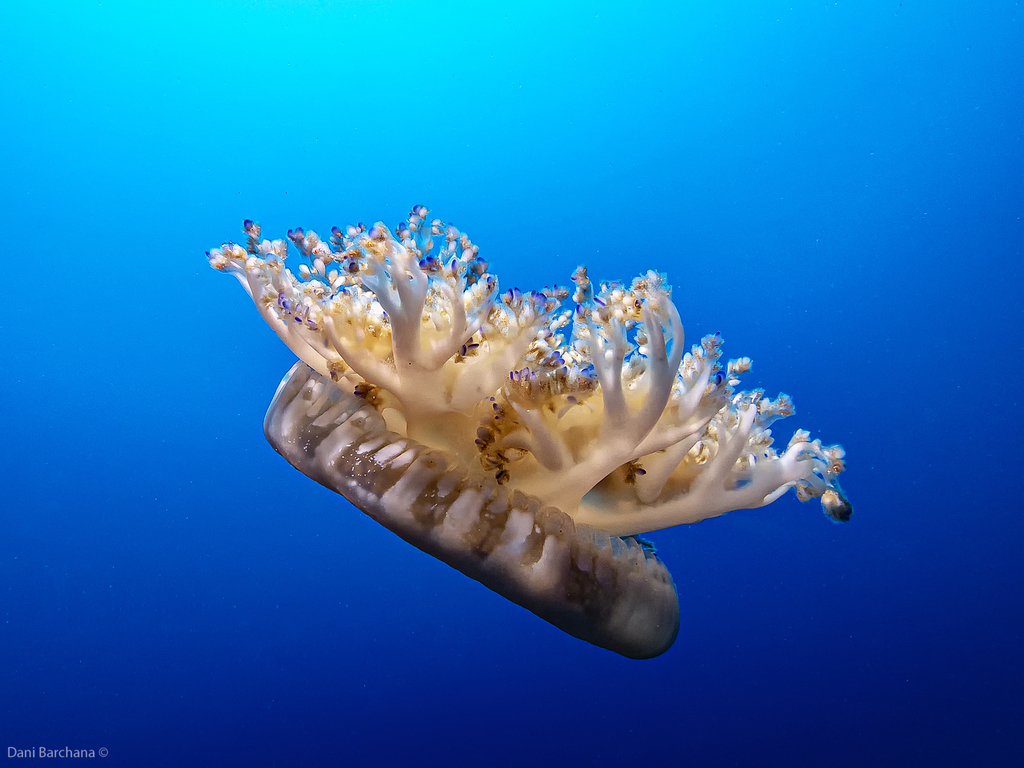
The Upside-down Jellyfish, scientifically known as Cassiopea, is a fascinating marine creature predominantly found in shallow waters of the Indo-Pacific region. This jellyfish is particularly notable for its unique behavior of resting on its bell, which is oriented upwards, allowing it to photosynthesize using symbiotic algae called zooxanthellae. This relationship not only provides energy for the jellyfish but also contributes to the vibrant colors of its bell, which can range from green to brownish hues, depending on the algae's density.
In terms of appearance, the Upside-down Jellyfish has a distinct saucer-shaped bell that can reach up to 30 cm in diameter. Its bell is adorned with numerous short, hair-like structures called tentacles that are responsible for capturing food and defending against predators. The jellyfish's unique flattened shape and behavior set it apart from other jellyfish species, making it a sought-after addition for aquarists and marine enthusiasts alike.
Behaviorally, the Upside-down Jellyfish is relatively peaceful and can often be found in groups on sandy or muddy substrates in lagoons and shallow coastal waters. Its ability to photosynthesize allows it to thrive in nutrient-poor environments, as it can derive a significant portion of its energy needs from sunlight. This adaptability makes it a resilient species in the wild, though it is still sensitive to changes in water quality.
In terms of habitat, the Upside-down Jellyfish thrives in warm, shallow waters, typically at depths of less than 10 meters. They prefer areas with good light penetration, as this promotes the growth of their symbiotic algae. Due to their unique ecological role, they contribute to the health of coastal ecosystems and are often indicators of environmental conditions in their habitats.
In terms of appearance, the Upside-down Jellyfish has a distinct saucer-shaped bell that can reach up to 30 cm in diameter. Its bell is adorned with numerous short, hair-like structures called tentacles that are responsible for capturing food and defending against predators. The jellyfish's unique flattened shape and behavior set it apart from other jellyfish species, making it a sought-after addition for aquarists and marine enthusiasts alike.
Behaviorally, the Upside-down Jellyfish is relatively peaceful and can often be found in groups on sandy or muddy substrates in lagoons and shallow coastal waters. Its ability to photosynthesize allows it to thrive in nutrient-poor environments, as it can derive a significant portion of its energy needs from sunlight. This adaptability makes it a resilient species in the wild, though it is still sensitive to changes in water quality.
In terms of habitat, the Upside-down Jellyfish thrives in warm, shallow waters, typically at depths of less than 10 meters. They prefer areas with good light penetration, as this promotes the growth of their symbiotic algae. Due to their unique ecological role, they contribute to the health of coastal ecosystems and are often indicators of environmental conditions in their habitats.
When caring for Upside-down Jellyfish in an aquarium setting, it is crucial to maintain specific water parameters to ensure their health and well-being. Ideal water temperature should range between 24°C and 28°C, with a salinity level of 30-35 ppt. Regular monitoring of pH is essential, keeping it within the range of 7.8 to 8.4. A minimum tank size of 200 liters is recommended to provide ample space for swimming and growth.
Feeding the Upside-down Jellyfish requires a mix of live and frozen foods, including brine shrimp, small planktonic organisms, and specially formulated jellyfish food. It is advisable to feed them several small portions throughout the day to mimic their natural feeding behavior. Additionally, it is critical to ensure compatibility with other species in the tank, as their tentacles can cause harm to smaller fish or invertebrates.
Acclimation is an important process when introducing Upside-down Jellyfish to a new environment. Slowly acclimate them to the new tank conditions over several hours to reduce stress. Quarantine is also recommended for new arrivals to prevent the introduction of pathogens into your main display tank. Overall, providing a stable and suitable environment will promote healthy growth and longevity for these unique marine creatures.
Feeding the Upside-down Jellyfish requires a mix of live and frozen foods, including brine shrimp, small planktonic organisms, and specially formulated jellyfish food. It is advisable to feed them several small portions throughout the day to mimic their natural feeding behavior. Additionally, it is critical to ensure compatibility with other species in the tank, as their tentacles can cause harm to smaller fish or invertebrates.
Acclimation is an important process when introducing Upside-down Jellyfish to a new environment. Slowly acclimate them to the new tank conditions over several hours to reduce stress. Quarantine is also recommended for new arrivals to prevent the introduction of pathogens into your main display tank. Overall, providing a stable and suitable environment will promote healthy growth and longevity for these unique marine creatures.
The Upside-down Jellyfish is suitable for shipping, but care must be taken to ensure optimal conditions during transit. Use insulated boxes with a suitable water-to-air ratio, ideally maintaining a packing density that allows for adequate space. Temperature during shipping should be kept between 24°C and 28°C to prevent stress. This species is not listed under CITES, making export easier, but always check local regulations before shipping.
Species Parameters
Max Adult Size
30.0 cm
Origin
Indo-Pacific
Temp Min
24.0 °C
Temp Max
28.0 °C
Salinity Min
30.000
Salinity Max
35.000
pH Min
7.80
pH Max
8.40
Min Tank
200 L