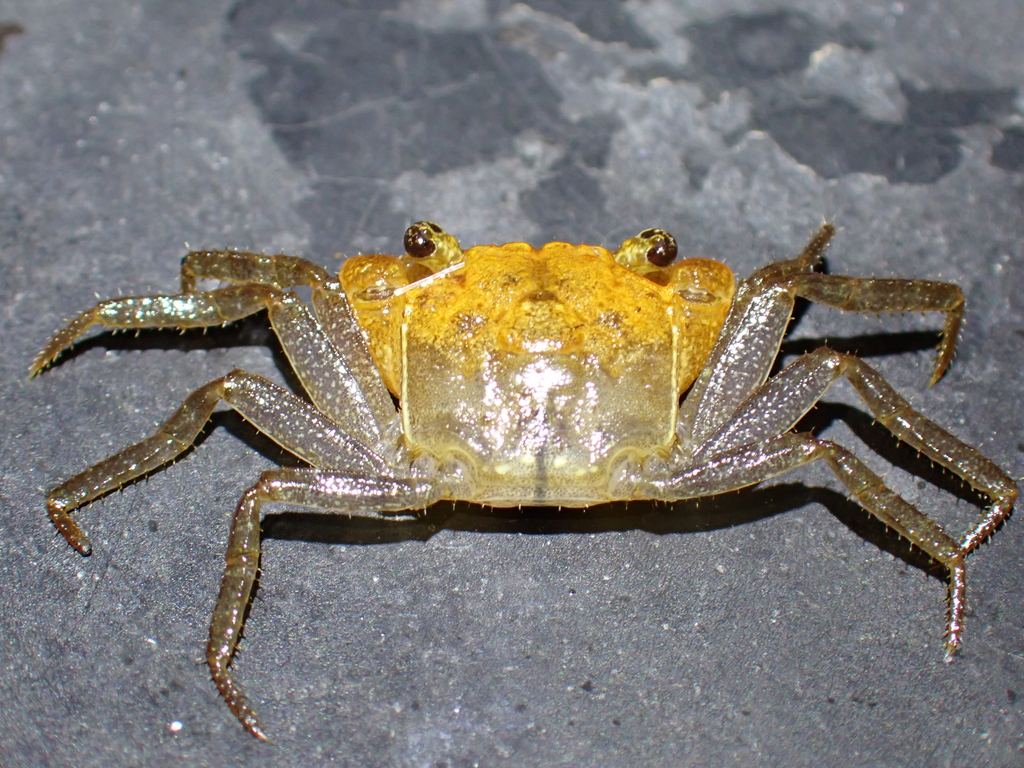

Hermit Crab Blue- Purple Leg
Coenobita brevimanus
Limited
Occasional stock
Wild Caught
Moderate care
Not Reef Safe
SKU: 01-F-01-019-03
Discover the vibrant Hermit Crab Blue-Purple Leg, a unique addition for aquarists.
Pricing for Verified Importers
Log in to see wholesale prices and order.
Export Size
up to 10.0 cm
Origin
Southeast Asia
Temperature
24.0–28.0°C
Min. Tank Size
50 L
pH
8.00–8.40
Diet
omnivore
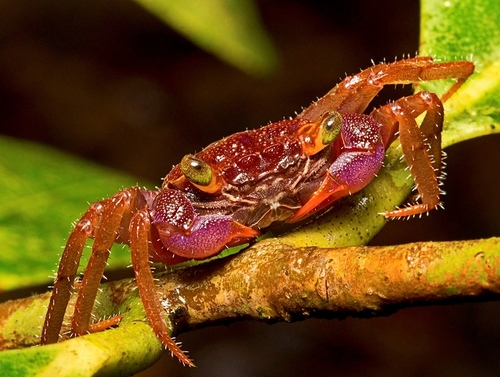
The Hermit Crab Blue-Purple Leg (Coenobita brevimanus) is a captivating invertebrate native to the tropical waters of Southeast Asia, particularly around Bali, Indonesia. Known for its striking blue and purple coloration on its legs, this species is often sought after for its aesthetic appeal and interesting behavior. Unlike many other crabs, Coenobita brevimanus is primarily terrestrial, requiring both marine and land environments to thrive, which makes it a fascinating choice for aquarium enthusiasts looking to mimic their natural habitat.
In the wild, these hermit crabs inhabit sandy shorelines, mangroves, and coral reefs, where they often scavenge for food. Their ability to adapt to various environments is notable, as they can switch between aquatic and terrestrial settings. They possess a soft abdomen which they protect by occupying empty shells, showcasing a unique symbiotic relationship with their habitat. Their behavior is highly social, often found in groups, and they display interesting interactions with each other, such as shell exchanges and cooperative feeding.
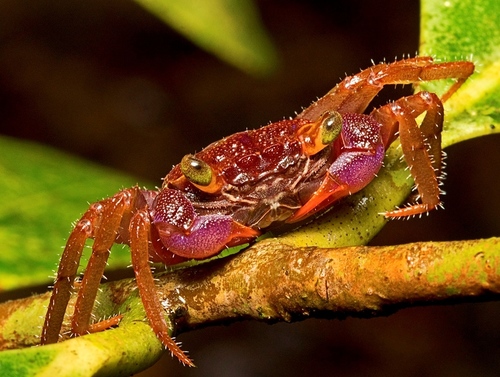
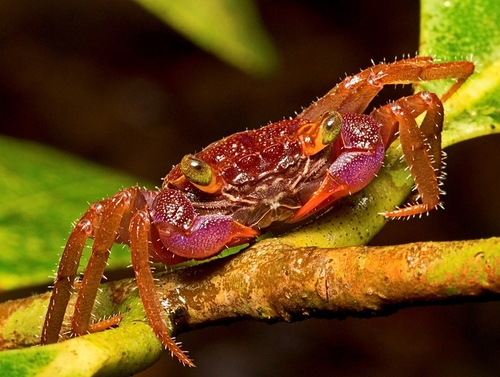
The appearance of the Hermit Crab Blue-Purple Leg is truly eye-catching. The vibrant hues of blue and purple contrast beautifully with the earthy tones of their shells, making them a colorful addition to any aquarium setup. Adult specimens can reach a maximum size of around 10 cm, and their distinctive coloration becomes more pronounced with age. This species is not only a visual delight but also an active participant in the marine ecosystem, playing a role in nutrient cycling and algal control.
Overall, the Hermit Crab Blue-Purple Leg is not just a pet; it's an engaging specimen that brings life and color to aquatic displays. Its unique adaptations and social behaviors make it a must-have for aquarists interested in exploring the wonders of marine invertebrates.
In the wild, these hermit crabs inhabit sandy shorelines, mangroves, and coral reefs, where they often scavenge for food. Their ability to adapt to various environments is notable, as they can switch between aquatic and terrestrial settings. They possess a soft abdomen which they protect by occupying empty shells, showcasing a unique symbiotic relationship with their habitat. Their behavior is highly social, often found in groups, and they display interesting interactions with each other, such as shell exchanges and cooperative feeding.
The appearance of the Hermit Crab Blue-Purple Leg is truly eye-catching. The vibrant hues of blue and purple contrast beautifully with the earthy tones of their shells, making them a colorful addition to any aquarium setup. Adult specimens can reach a maximum size of around 10 cm, and their distinctive coloration becomes more pronounced with age. This species is not only a visual delight but also an active participant in the marine ecosystem, playing a role in nutrient cycling and algal control.
Overall, the Hermit Crab Blue-Purple Leg is not just a pet; it's an engaging specimen that brings life and color to aquatic displays. Its unique adaptations and social behaviors make it a must-have for aquarists interested in exploring the wonders of marine invertebrates.
To successfully care for the Hermit Crab Blue-Purple Leg, it is essential to replicate its natural habitat as closely as possible. A minimum tank size of 50 liters is recommended to provide ample space for movement and exploration. Water parameters should be maintained with a temperature range of 24-28°C, a pH level of 8.0 to 8.4, and a salinity level between 1.020 and 1.025 ppt. Regular water changes and filtration are crucial to keeping the environment clean and healthy.
Feeding these crabs involves a varied diet consisting of high-quality pellets, algae wafers, and a mix of fresh fruits and vegetables. They are omnivorous scavengers and benefit from occasional protein sources like shrimp or fish flakes. Compatibility is generally good with other peaceful marine species; however, avoid aggressive tankmates that may pose a threat.
Acclimation is vital when introducing new specimens to an aquarium. It’s recommended to use a drip acclimation method over several hours to help them adjust to the new water conditions. Quarantine new arrivals for at least two weeks in a separate tank to monitor for any signs of disease and ensure their health before adding them to the main display. This practice helps maintain the overall health of your aquarium system.
Feeding these crabs involves a varied diet consisting of high-quality pellets, algae wafers, and a mix of fresh fruits and vegetables. They are omnivorous scavengers and benefit from occasional protein sources like shrimp or fish flakes. Compatibility is generally good with other peaceful marine species; however, avoid aggressive tankmates that may pose a threat.
Acclimation is vital when introducing new specimens to an aquarium. It’s recommended to use a drip acclimation method over several hours to help them adjust to the new water conditions. Quarantine new arrivals for at least two weeks in a separate tank to monitor for any signs of disease and ensure their health before adding them to the main display. This practice helps maintain the overall health of your aquarium system.
The Hermit Crab Blue-Purple Leg is suitable for shipping due to its robust nature. Ensure that they are packed with sufficient moisture and air to prevent stress during transit. Ideal packing density is 10-15 crabs per shipment, depending on the size of the individuals. Maintain a shipping temperature between 24-26°C to ensure their safety. This species is not listed under CITES, simplifying the export process.
Species Parameters
Max Adult Size
10.0 cm
Origin
Southeast Asia
Diet
omnivore
Temp Min
24.0 °C
Temp Max
28.0 °C
pH Min
8.00
pH Max
8.40
Min Tank
50 L