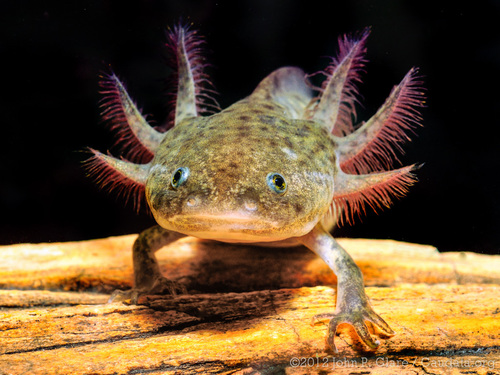
Mexican Walking Fish 'AXOLOTL' - Albino Black Eyed
Ambystoma mexicanum
Out of Stock
Scarce stock
Wild Caught
Moderate care
Not Reef Safe
SKU: 01-A-34-110-05
The unique axolotl captivates with its regenerative abilities and striking appearance.
Pricing for Verified Importers
Log in to see wholesale prices and order.
Export Size
up to 30.0 cm
Origin
North America
Temperature
15.0–20.0°C
Min. Tank Size
60 L
pH
6.50–7.50
Diet
carnivore
The Mexican Walking Fish, commonly known as the axolotl (Ambystoma mexicanum), is a fascinating neotenic salamander native to the lakes and canals of Mexico City. Unlike many amphibians, axolotls retain their larval features throughout their adult life, including external gills and a fully aquatic lifestyle. This remarkable adaptation allows them to thrive in their specific aquatic habitats while exhibiting vibrant colors, particularly the striking albino black-eyed variety, which showcases a pale body with striking dark eyes.
Axolotls are known for their unique regenerative capabilities, able to regrow limbs, spinal cord, and even parts of their heart and brain. This ability has made them a subject of extensive scientific research, highlighting their potential in regenerative medicine. In the wild, axolotls face threats from habitat loss and pollution, leading to their classification as critically endangered. Conservation efforts are crucial to protect their natural habitats and ensure their survival.
In terms of behavior, axolotls are generally docile and solitary creatures, preferring to inhabit the bottom of their aquatic environments. They exhibit a carnivorous diet, primarily feeding on small fish, worms, and other invertebrates. Their hunting strategy involves a slow and stealthy approach, using their keen sense of sight to detect prey. Axolotls are also known for their interesting social interactions when housed in groups, although care must be taken to avoid aggressive behaviors during feeding.
The habitat of the axolotl consists of freshwater lakes, canals, and slow-moving rivers, where they prefer a substrate of soft mud and plenty of hiding spots such as aquatic plants and rocks. Their unique adaptations to a fully aquatic life make them an enigmatic species that captivates both aquarium enthusiasts and researchers alike.
Axolotls are known for their unique regenerative capabilities, able to regrow limbs, spinal cord, and even parts of their heart and brain. This ability has made them a subject of extensive scientific research, highlighting their potential in regenerative medicine. In the wild, axolotls face threats from habitat loss and pollution, leading to their classification as critically endangered. Conservation efforts are crucial to protect their natural habitats and ensure their survival.
In terms of behavior, axolotls are generally docile and solitary creatures, preferring to inhabit the bottom of their aquatic environments. They exhibit a carnivorous diet, primarily feeding on small fish, worms, and other invertebrates. Their hunting strategy involves a slow and stealthy approach, using their keen sense of sight to detect prey. Axolotls are also known for their interesting social interactions when housed in groups, although care must be taken to avoid aggressive behaviors during feeding.
The habitat of the axolotl consists of freshwater lakes, canals, and slow-moving rivers, where they prefer a substrate of soft mud and plenty of hiding spots such as aquatic plants and rocks. Their unique adaptations to a fully aquatic life make them an enigmatic species that captivates both aquarium enthusiasts and researchers alike.
When caring for axolotls, it is essential to replicate their natural freshwater habitat as closely as possible. The ideal water temperature ranges between 16-18°C (60-64°F). pH levels should be maintained between 6.5 and 7.5, ensuring a stable environment for these sensitive creatures. A minimum tank size of 60 liters is recommended to provide adequate space for swimming and hiding, with a soft substrate to protect their delicate bodies.
Feeding axolotls is straightforward, as they are carnivorous and thrive on a diet of high-quality pellets, earthworms, and small live foods. It’s advisable to feed them several small meals per week rather than one large feeding to prevent overfeeding and potential health issues. Compatibility with other species should be approached with caution; it is generally best to keep axolotls alone or with similarly sized, non-aggressive tank mates to avoid stress or injury.
Acclimating axolotls to a new environment should be done gradually, allowing them to adjust to temperature and water conditions over a few hours. Quarantine new arrivals for at least two weeks to monitor for any signs of disease or stress. Regular water quality testing and maintenance are crucial to ensure a healthy living environment.
Feeding axolotls is straightforward, as they are carnivorous and thrive on a diet of high-quality pellets, earthworms, and small live foods. It’s advisable to feed them several small meals per week rather than one large feeding to prevent overfeeding and potential health issues. Compatibility with other species should be approached with caution; it is generally best to keep axolotls alone or with similarly sized, non-aggressive tank mates to avoid stress or injury.
Acclimating axolotls to a new environment should be done gradually, allowing them to adjust to temperature and water conditions over a few hours. Quarantine new arrivals for at least two weeks to monitor for any signs of disease or stress. Regular water quality testing and maintenance are crucial to ensure a healthy living environment.
Axolotls are sensitive to temperature changes and should be shipped in insulated boxes with temperature control measures. The recommended packing density is one axolotl per liter of water to provide adequate space and oxygen. They should be shipped at temperatures between 15-20°C. Currently, axolotls are not listed under CITES, but it is important to stay updated on any regulations concerning their export.
Species Parameters
Max Adult Size
30.0 cm
Origin
North America
Diet
carnivore
Temp Min
15.0 °C
Temp Max
20.0 °C
pH Min
6.50
pH Max
7.50
Min Tank
60 L