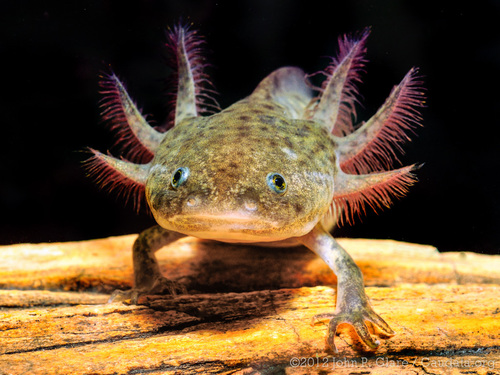
Mexican Walking Fish 'AXOLOTL' - Golden
Ambystoma mexicanum
Out of Stock
Scarce stock
Wild Caught
Moderate care
Not Reef Safe
SKU: 01-A-34-074-05
Discover the enchanting Golden Axolotl, a unique aquatic marvel from Mexico.
Pricing for Verified Importers
Log in to see wholesale prices and order.
Export Size
up to 30.0 cm
Origin
North America
Temperature
16.0–22.0°C
Min. Tank Size
60 L
pH
6.50–7.50
Diet
carnivore
The Golden Axolotl (Ambystoma mexicanum) is a captivating species of mole salamander known for its striking golden coloration and neotenic traits. Unlike many amphibians, axolotls retain their juvenile features throughout their lives, including their external gills and aquatic lifestyle. This remarkable adaptation allows them to thrive in freshwater environments, particularly in their native habitats of Lake Xochimilco and surrounding water bodies in Mexico.
In terms of appearance, the Golden Axolotl showcases a vibrant yellow hue, which can vary in intensity among individuals. These creatures are easily distinguishable by their feathery gills that protrude from the sides of their heads, providing them with a unique, otherworldly look. Adult axolotls can grow up to 30 centimeters in length, and their charm has made them popular among aquarium enthusiasts and researchers alike.
Axolotls are predominantly solitary animals and exhibit intriguing behaviors, such as a remarkable regeneration ability. They can regrow limbs, tails, and even parts of their hearts and brains, making them a subject of intense scientific study. In the wild, their diet consists mainly of small invertebrates, and they are known to be opportunistic feeders, utilizing their keen senses to locate food in murky waters.
Habitat-wise, Golden Axolotls prefer cool, freshwater environments rich in aquatic vegetation. They thrive in areas with plenty of hiding spots, such as rocks and plants, which help them feel secure. Due to habitat destruction and pollution, the axolotl's population in the wild has declined significantly, making conservation efforts critical for their survival.
In terms of appearance, the Golden Axolotl showcases a vibrant yellow hue, which can vary in intensity among individuals. These creatures are easily distinguishable by their feathery gills that protrude from the sides of their heads, providing them with a unique, otherworldly look. Adult axolotls can grow up to 30 centimeters in length, and their charm has made them popular among aquarium enthusiasts and researchers alike.
Axolotls are predominantly solitary animals and exhibit intriguing behaviors, such as a remarkable regeneration ability. They can regrow limbs, tails, and even parts of their hearts and brains, making them a subject of intense scientific study. In the wild, their diet consists mainly of small invertebrates, and they are known to be opportunistic feeders, utilizing their keen senses to locate food in murky waters.
Habitat-wise, Golden Axolotls prefer cool, freshwater environments rich in aquatic vegetation. They thrive in areas with plenty of hiding spots, such as rocks and plants, which help them feel secure. Due to habitat destruction and pollution, the axolotl's population in the wild has declined significantly, making conservation efforts critical for their survival.
For importers and retailers, providing optimal care for Golden Axolotls is essential. They thrive in temperatures between 16°C and 22°C, with stable water conditions being critical. The pH should be maintained between 6.5 and 7.5, and the water should be kept clean with a gentle filtration system to avoid strong currents that can stress the animals.
Feeding axolotls is relatively straightforward; they are carnivorous and should be offered a varied diet that includes high-quality pellets, bloodworms, and small feeder fish. It’s important to feed them in moderation to prevent overfeeding, which can lead to health issues.
When introducing axolotls to a new environment, acclimation is crucial. Gradually introduce them to the new water conditions over several hours to minimize stress. It is also advisable to quarantine new arrivals for at least two weeks to prevent the spread of potential diseases.
In terms of compatibility, axolotls should not be housed with small fish or aggressive species, as they may ingest them or be harmed. Providing a spacious tank of at least 60 liters is recommended to ensure they have enough room to swim and explore their environment.
Feeding axolotls is relatively straightforward; they are carnivorous and should be offered a varied diet that includes high-quality pellets, bloodworms, and small feeder fish. It’s important to feed them in moderation to prevent overfeeding, which can lead to health issues.
When introducing axolotls to a new environment, acclimation is crucial. Gradually introduce them to the new water conditions over several hours to minimize stress. It is also advisable to quarantine new arrivals for at least two weeks to prevent the spread of potential diseases.
In terms of compatibility, axolotls should not be housed with small fish or aggressive species, as they may ingest them or be harmed. Providing a spacious tank of at least 60 liters is recommended to ensure they have enough room to swim and explore their environment.
Golden Axolotls are suitable for shipping, provided that appropriate measures are taken to ensure their safety. They should be packed in insulated containers with adequate water volume to minimize stress. The ideal shipping temperature is between 18°C and 22°C. As axolotls are listed under CITES Appendix II, it is important to ensure compliance with all regulations regarding their export.
Species Parameters
Max Adult Size
30.0 cm
Origin
North America
Diet
carnivore
Temp Min
16.0 °C
Temp Max
22.0 °C
pH Min
6.50
pH Max
7.50
Min Tank
60 L