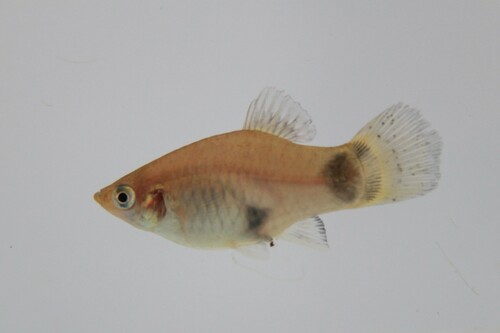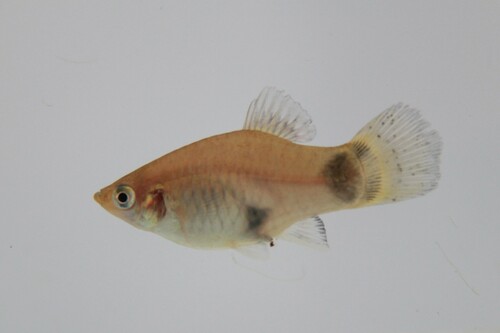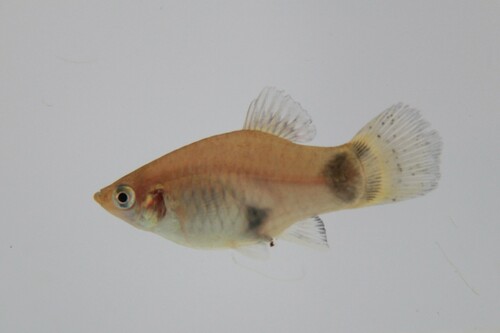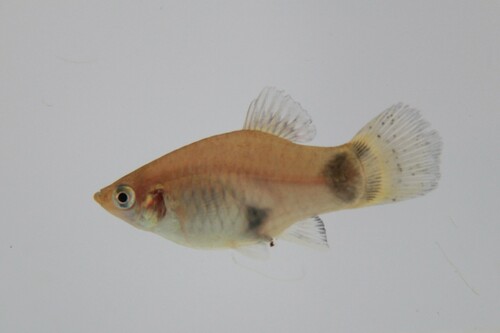
Sinterklas Platy
Xiphophorus maculatus
In Stock
Common stock
Wild Caught
Easy care
Not Reef Safe
SKU: 01-A-22-036-04
The Sinterklas Platy is a vibrant and hardy livebearer, perfect for community tanks.
Pricing for Verified Importers
Log in to see wholesale prices and order.
Export Size
up to 7.0 cm
Origin
North and Central America
Temperature
24.0–28.0°C
Min. Tank Size
100 L
pH
6.50–8.00
Diet
omnivore
The Sinterklas Platy (Xiphophorus maculatus) is a colorful freshwater fish belonging to the Poeciliidae family. Native to North and Central America, this species thrives in shallow streams, ponds, and marshes, where it can be found among dense vegetation. Its adaptability to various environments makes it a favorite among aquarists. The Sinterklas Platy is particularly noted for its lively behavior and peaceful nature, making it an excellent addition to community aquariums.
In terms of appearance, the Sinterklas Platy exhibits a wide range of colors and patterns, often showcasing vibrant hues of orange, yellow, and blue. These fish typically reach a maximum size of around 5-7 cm, with females being slightly larger than males. Their bodies are oval and laterally compressed, adorned with beautiful spots and patterns that can vary significantly among individuals. The Sinterklas Platy's striking coloration is not only aesthetically pleasing but also serves as a means of communication and mating displays within their natural habitats.
Behaviorally, Sinterklas Platies are social creatures that thrive in groups. They are known for their active swimming patterns and curious nature, often exploring their environment. In the wild, they exhibit live-bearing reproductive habits, with females giving birth to live young rather than laying eggs. This trait makes them particularly appealing for breeding projects in home aquariums. Their peaceful demeanor allows them to coexist harmoniously with other small fish species, enhancing the diversity of community tanks.
Habitat-wise, the Sinterklas Platy prefers warm waters with plenty of vegetation, which provides shelter and breeding grounds. In their natural environment, they often inhabit water with a moderate flow and are found in areas with abundant cover, such as submerged plants and driftwood. This species has adapted well to various water conditions, making it suitable for both beginner and experienced aquarists alike.
In terms of appearance, the Sinterklas Platy exhibits a wide range of colors and patterns, often showcasing vibrant hues of orange, yellow, and blue. These fish typically reach a maximum size of around 5-7 cm, with females being slightly larger than males. Their bodies are oval and laterally compressed, adorned with beautiful spots and patterns that can vary significantly among individuals. The Sinterklas Platy's striking coloration is not only aesthetically pleasing but also serves as a means of communication and mating displays within their natural habitats.
Behaviorally, Sinterklas Platies are social creatures that thrive in groups. They are known for their active swimming patterns and curious nature, often exploring their environment. In the wild, they exhibit live-bearing reproductive habits, with females giving birth to live young rather than laying eggs. This trait makes them particularly appealing for breeding projects in home aquariums. Their peaceful demeanor allows them to coexist harmoniously with other small fish species, enhancing the diversity of community tanks.
Habitat-wise, the Sinterklas Platy prefers warm waters with plenty of vegetation, which provides shelter and breeding grounds. In their natural environment, they often inhabit water with a moderate flow and are found in areas with abundant cover, such as submerged plants and driftwood. This species has adapted well to various water conditions, making it suitable for both beginner and experienced aquarists alike.
To successfully care for Sinterklas Platies, maintain a stable environment with temperatures between 24-28°C. The pH should range from 6.5 to 8.0, and since they are freshwater fish, salinity parameters are not applicable. A minimum tank size of 100 liters is recommended to provide ample swimming space for these active fish.
Feeding Sinterklas Platies is straightforward, as they are omnivorous and will accept a varied diet. High-quality flake food, frozen or live foods, and vegetable matter should be included in their diet to ensure optimal health. Regular feeding 2-3 times a day in small amounts will help maintain their vibrant colors and energy levels.
In terms of compatibility, Sinterklas Platies are peaceful and can be kept with a variety of other small fish species. However, avoid aggressive or larger fish that may pose a threat. Acclimation should be done slowly, introducing them to a new tank environment over a period of several hours to reduce stress. It’s also advisable to quarantine new arrivals for at least two weeks to monitor for any signs of disease before introducing them to the main tank.
Feeding Sinterklas Platies is straightforward, as they are omnivorous and will accept a varied diet. High-quality flake food, frozen or live foods, and vegetable matter should be included in their diet to ensure optimal health. Regular feeding 2-3 times a day in small amounts will help maintain their vibrant colors and energy levels.
In terms of compatibility, Sinterklas Platies are peaceful and can be kept with a variety of other small fish species. However, avoid aggressive or larger fish that may pose a threat. Acclimation should be done slowly, introducing them to a new tank environment over a period of several hours to reduce stress. It’s also advisable to quarantine new arrivals for at least two weeks to monitor for any signs of disease before introducing them to the main tank.
Sinterklas Platies are suitable for shipping due to their hardiness. They should be packed in breathable bags with adequate oxygen and water to minimize stress during transport. A temperature range of 24-28°C is ideal during shipping. Ensure that the packing density is appropriate to prevent overcrowding, which can lead to stress and injury. There are no CITES restrictions for this species.
Species Parameters
Max Adult Size
7.0 cm
Origin
North and Central America
Diet
omnivore
Temp Min
24.0 °C
Temp Max
28.0 °C
pH Min
6.50
pH Max
8.00
Min Tank
100 L