CITES App. II
Bubble Coral Cat Eye
Plerogyra sinuosa
In Stock
Common stock
Maricultured
Experienced care
Reef Safe ✓
SKU: CB-HC-0099
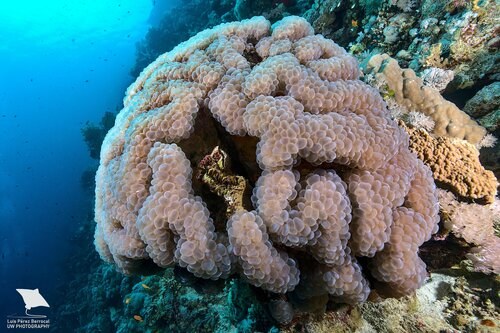
Bubble Coral Cat Eye is renowned for its unique bubbly appearance and vibrant colors.
Pricing for Verified Importers
Log in to see wholesale prices and order.
Export Size
up to 30.0 cm
Origin
Coral Triangle
Temperature
24.0–28.0°C
Min. Tank Size
100 L
Salinity
1.023–1.025 ppt
pH
8.10–8.40
Plerogyra sinuosa, commonly known as Bubble Coral or Grape Coral, is a fascinating species of coral from the phylum Cnidaria. This coral is distinguished by its characteristic grape-sized bubbles that form during the day, expanding in response to light availability. At night, these bubbles shrink, allowing tentacles to extend and capture planktonic food. The coral exhibits a stunning array of colors, ranging from greens and pinks to purples, making it a visually appealing addition to any aquarium.
The natural habitat of Bubble Coral spans across the western Indian Ocean, from the Red Sea and Madagascar to the Pacific regions like Okinawa and the Line Islands. It typically resides in shallow waters, often in protected reef areas where gentle water flow prevails. The unique structure of its bubbles not only enhances its surface area for photosynthesis but also provides shelter for small marine life, contributing to the biodiversity of its ecosystem.
Behaviorally, Plerogyra sinuosa demonstrates a fascinating adaptation to environmental changes. During the day, it relies heavily on sunlight for energy through photosynthesis, while at night, it becomes an active predator, utilizing its tentacles to feed on zooplankton and other small organisms. This dual feeding strategy is essential for its growth and health, highlighting the importance of maintaining proper light conditions in aquarium settings.
Overall, the Bubble Coral Cat Eye is not only a stunning visual asset to marine aquariums but also plays a significant role in its natural habitat's ecological balance, making it a valuable species for both hobbyists and professionals alike.
The natural habitat of Bubble Coral spans across the western Indian Ocean, from the Red Sea and Madagascar to the Pacific regions like Okinawa and the Line Islands. It typically resides in shallow waters, often in protected reef areas where gentle water flow prevails. The unique structure of its bubbles not only enhances its surface area for photosynthesis but also provides shelter for small marine life, contributing to the biodiversity of its ecosystem.
Behaviorally, Plerogyra sinuosa demonstrates a fascinating adaptation to environmental changes. During the day, it relies heavily on sunlight for energy through photosynthesis, while at night, it becomes an active predator, utilizing its tentacles to feed on zooplankton and other small organisms. This dual feeding strategy is essential for its growth and health, highlighting the importance of maintaining proper light conditions in aquarium settings.
Overall, the Bubble Coral Cat Eye is not only a stunning visual asset to marine aquariums but also plays a significant role in its natural habitat's ecological balance, making it a valuable species for both hobbyists and professionals alike.
To maintain the health of Plerogyra sinuosa in aquariums, it is essential to replicate its natural environment as closely as possible. The ideal water parameters include a temperature range of 24-28°C, a salinity level of 1.023-1.025 ppt, and a pH between 8.1 and 8.4. Gentle water flow is crucial, as strong currents can damage its delicate structure.
Feeding Bubble Coral is relatively straightforward; it thrives on a diet of zooplankton and other small food particles in addition to utilizing photosynthesis. It's beneficial to provide supplemental feeding during the night when the tentacles are fully extended. Compatibility with other reef inhabitants is generally good, but care should be taken to avoid aggressive species that may harm the coral.
Acclimation is vital for new arrivals. Gradually introduce the Bubble Coral to the aquarium environment over a few hours to prevent shock. A quarantine period of at least two weeks is recommended to monitor for diseases or pests before introducing it into the main display. Regular monitoring of water quality will ensure the long-term health of this beautiful coral species.
Feeding Bubble Coral is relatively straightforward; it thrives on a diet of zooplankton and other small food particles in addition to utilizing photosynthesis. It's beneficial to provide supplemental feeding during the night when the tentacles are fully extended. Compatibility with other reef inhabitants is generally good, but care should be taken to avoid aggressive species that may harm the coral.
Acclimation is vital for new arrivals. Gradually introduce the Bubble Coral to the aquarium environment over a few hours to prevent shock. A quarantine period of at least two weeks is recommended to monitor for diseases or pests before introducing it into the main display. Regular monitoring of water quality will ensure the long-term health of this beautiful coral species.
Bubble Coral Cat Eye is suitable for shipping, provided appropriate measures are taken. Use insulated packaging and ensure stable temperatures between 24-26°C during transit. The recommended packing density is one coral per 5-10 liters of water to minimize stress. As a CITES-listed species, ensure all export permits are secured prior to shipping to comply with international regulations.
Species Parameters
Max Adult Size
30.0 cm
Origin
Coral Triangle
Temp Min
24.0 °C
Temp Max
28.0 °C
Salinity Min
1.023
Salinity Max
1.025
pH Min
8.10
pH Max
8.40
Min Tank
100 L