Purplemask angelfish/Beautiful Angelfish
centropyge venusta
In Stock
Common stock
Wild Caught
Moderate care
With Caution
SKU: ML-MF-0045
The Purplemask angelfish is a stunning addition to any marine aquarium, known for its vibrant colors and unique patterns.
Pricing for Verified Importers
Log in to see wholesale prices and order.
Export Size
up to 10.0 cm
Origin
Indo-Pacific
Temperature
24.0–28.0°C
Min. Tank Size
150 L
Salinity
1.020–1.025 ppt
pH
8.10–8.40
Diet
herbivore
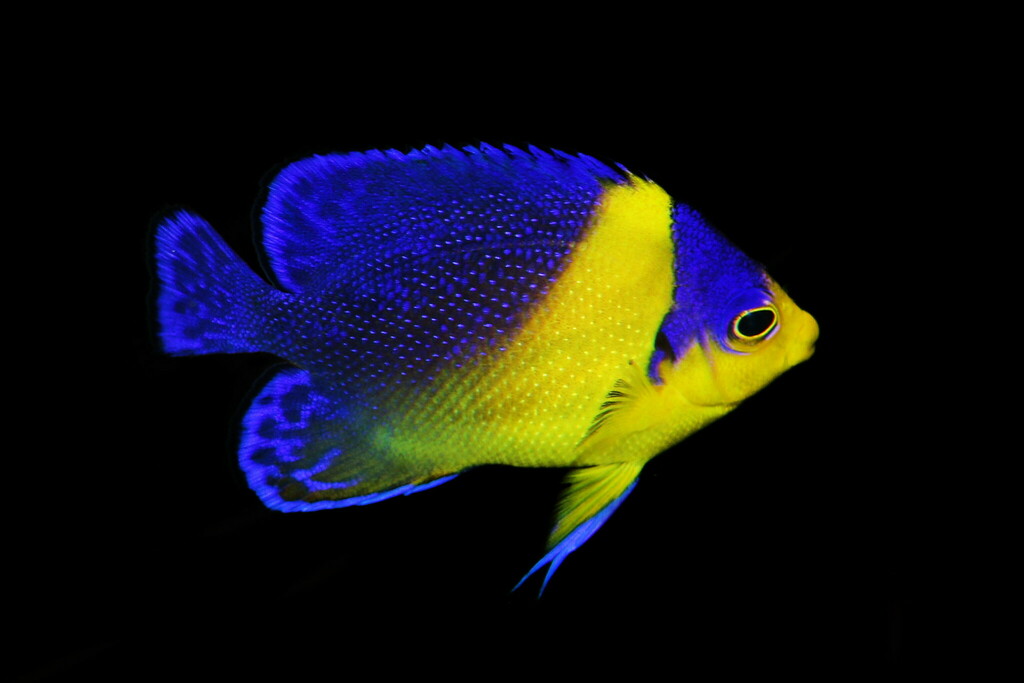
The Purplemask angelfish (Centropyge venusta) is a captivating marine species native to the coral reefs of the Indo-Pacific region. This small angelfish is renowned for its vivid coloration, featuring a striking combination of deep purple and blue hues with a distinctive yellow mask, which gives it its common name. Adult specimens can reach up to 10 cm in length and exhibit a unique morphology that allows them to thrive in their natural habitat.
In the wild, Purplemask angelfish are typically found in shallow, rocky areas of coral reefs, where they seek shelter among crevices and coral formations. They are primarily herbivorous, feeding on algae and small invertebrates, which helps maintain the health of the reef ecosystem. Their vibrant colors and patterns serve not only as a form of camouflage but also play a role in mating displays and territorial behaviors.
Behaviorally, these angelfish are known for their relatively peaceful nature, making them suitable for community tanks. However, they can exhibit territoriality, particularly during breeding seasons, and should be housed with compatible species to minimize aggression. They are more active during the day, often seen swimming in pairs or small groups, foraging for food among the coral.
In captivity, the Purplemask angelfish can adapt well to aquarium life, given the right conditions. They thrive in environments that mimic their natural habitat, with plenty of hiding spots and ample grazing areas. Their unique beauty and fascinating behaviors make them a prized species among marine aquarium enthusiasts.
In the wild, Purplemask angelfish are typically found in shallow, rocky areas of coral reefs, where they seek shelter among crevices and coral formations. They are primarily herbivorous, feeding on algae and small invertebrates, which helps maintain the health of the reef ecosystem. Their vibrant colors and patterns serve not only as a form of camouflage but also play a role in mating displays and territorial behaviors.
Behaviorally, these angelfish are known for their relatively peaceful nature, making them suitable for community tanks. However, they can exhibit territoriality, particularly during breeding seasons, and should be housed with compatible species to minimize aggression. They are more active during the day, often seen swimming in pairs or small groups, foraging for food among the coral.
In captivity, the Purplemask angelfish can adapt well to aquarium life, given the right conditions. They thrive in environments that mimic their natural habitat, with plenty of hiding spots and ample grazing areas. Their unique beauty and fascinating behaviors make them a prized species among marine aquarium enthusiasts.
To successfully care for Purplemask angelfish, it's essential to maintain stable water parameters. Ideal conditions include a temperature range of 24-28°C, a salinity level of 1.020-1.025 ppt, and a pH of 8.1-8.4. A well-filtered aquarium with excellent water quality is crucial for their health. These fish are best kept in a minimum tank size of 150 liters to provide sufficient space for swimming and grazing.
Feeding should consist of a balanced diet that includes high-quality pellets, flake foods, and plenty of fresh algae or seaweed. It is also beneficial to supplement their diet with occasional treats like brine shrimp or mysis shrimp to ensure optimal nutrition. Compatibility is generally good with other peaceful species, but caution should be taken when introducing them to tanks with larger or more aggressive fish.
Acclimation is a crucial step when introducing Purplemask angelfish to a new environment. A slow drip acclimation method is recommended to help them adjust to the new water conditions. Quarantine new arrivals for at least two weeks to monitor for any signs of disease before introducing them to the main display tank, ensuring a healthy and thriving aquarium.
Feeding should consist of a balanced diet that includes high-quality pellets, flake foods, and plenty of fresh algae or seaweed. It is also beneficial to supplement their diet with occasional treats like brine shrimp or mysis shrimp to ensure optimal nutrition. Compatibility is generally good with other peaceful species, but caution should be taken when introducing them to tanks with larger or more aggressive fish.
Acclimation is a crucial step when introducing Purplemask angelfish to a new environment. A slow drip acclimation method is recommended to help them adjust to the new water conditions. Quarantine new arrivals for at least two weeks to monitor for any signs of disease before introducing them to the main display tank, ensuring a healthy and thriving aquarium.
Purplemask angelfish are suitable for shipping due to their hardiness. Proper packing density is essential to minimize stress, with no more than 1-2 fish per liter of water. They are sensitive to temperature fluctuations, so maintaining a stable environment during transport is critical. These fish are not listed under CITES, making them easier to export.
Species Parameters
Max Adult Size
10.0 cm
Origin
Indo-Pacific
Diet
herbivore
Temp Min
24.0 °C
Temp Max
28.0 °C
Salinity Min
1.020
Salinity Max
1.025
pH Min
8.10
pH Max
8.40
Min Tank
150 L