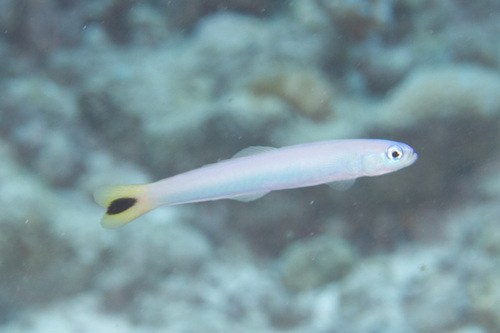
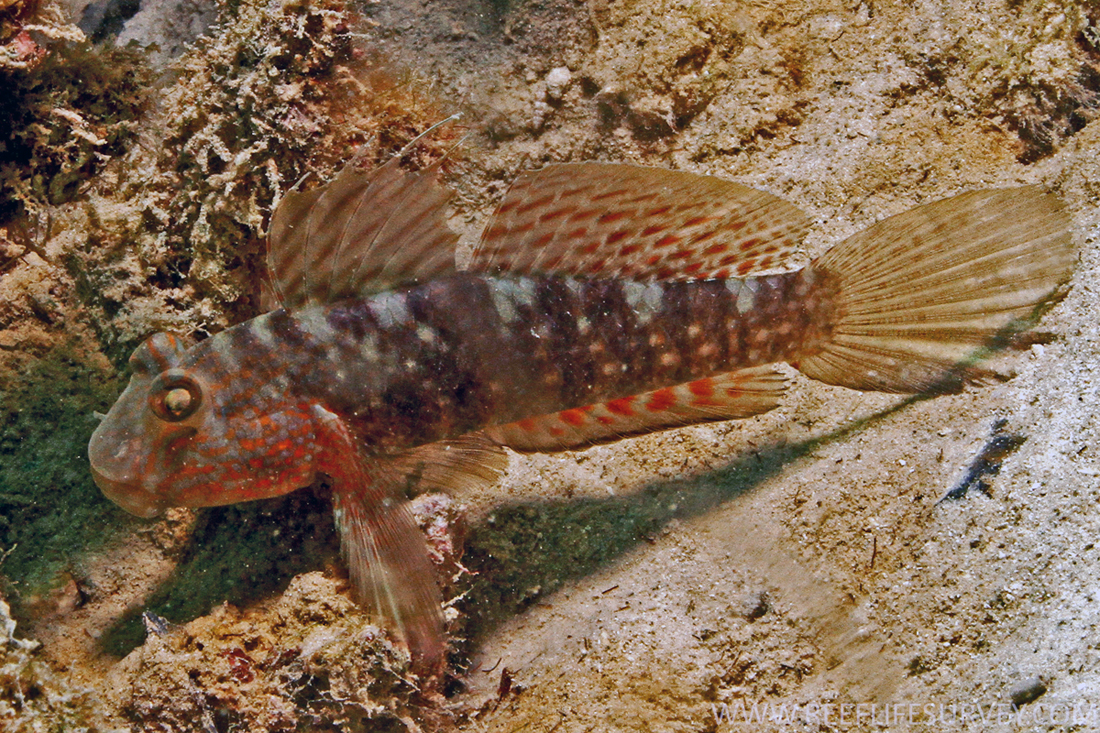
Flagtail Shrimpgoby
Amblyeleotris yanoi
Limited
Rare stock
Wild Caught
Moderate care
Reef Safe ✓
SKU: D120K
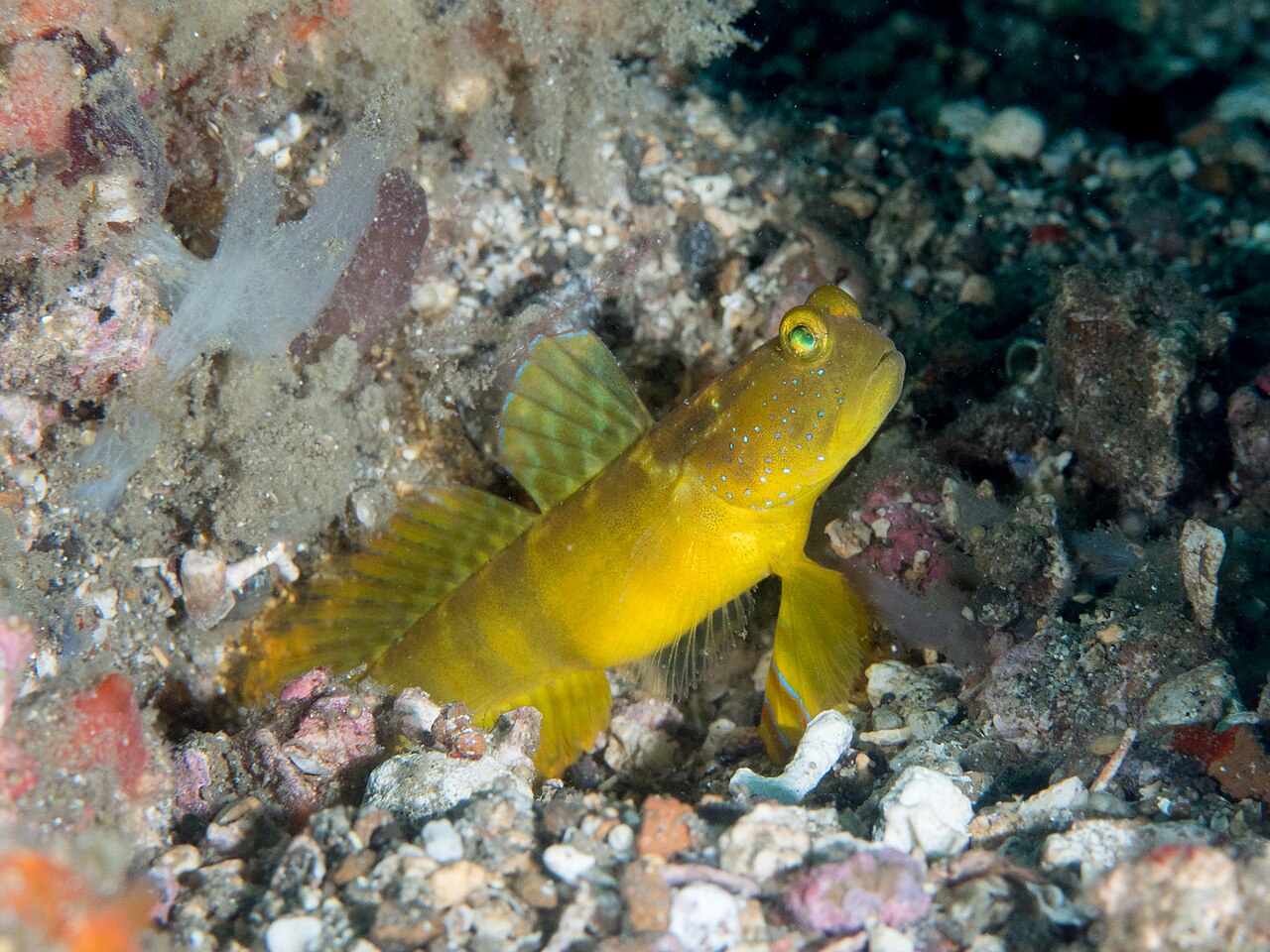
The Flagtail Shrimpgoby is renowned for its vibrant colors and fascinating symbiotic relationships.
Pricing for Verified Importers
Log in to see wholesale prices and order.
Export Size
up to 10.0 cm
Origin
Indo-Pacific
Temperature
24.0–28.0°C
Min. Tank Size
100 L
Salinity
1.020–1.025 ppt
pH
8.10–8.40
Diet
carnivore
The Flagtail Shrimpgoby (Amblyeleotris yanoi) is a striking marine fish native to the coral reefs of the Indo-Pacific region. This species is celebrated for its vivid coloration, typically featuring a blend of bright blues, yellows, and whites, which makes it a visually appealing addition to any marine aquarium. The Flagtail Shrimpgoby exhibits a streamlined body shape that aids in swift movements across the substrate, while its flag-like tail fin enhances its agility in navigating complex reef environments.
In its natural habitat, the Flagtail Shrimpgoby forms a unique symbiotic relationship with burrowing shrimp. These gobies rely on the shrimp for protection, as the shrimp excavate and maintain a burrow in the sand, providing a safe haven for the goby to retreat to when threatened. This partnership is not only fascinating to observe but also highlights the ecological importance of both species in maintaining healthy reef ecosystems. The goby acts as a sentinel, using its keen eyesight to watch for predators while the shrimp tirelessly work on their burrow.
Behaviorally, the Flagtail Shrimpgoby is known for its social nature, often seen in pairs or small groups. They display a combination of territoriality and communal living, where multiple individuals may inhabit adjacent burrows. This species is diurnal, actively foraging for food during the day and retreating to their burrows at night. Their diet primarily consists of small invertebrates and zooplankton, which they hunt in the sandy substrate.
The Flagtail Shrimpgoby thrives in shallow sandy areas, often found at depths of 5 to 30 meters. They prefer habitats with ample hiding spots, such as coral rubble and sandy bottoms, making them well-suited for aquariums that replicate these natural environments. Their adaptive behaviors and striking appearance make them a popular choice among marine aquarium enthusiasts and a valuable species for export.
In its natural habitat, the Flagtail Shrimpgoby forms a unique symbiotic relationship with burrowing shrimp. These gobies rely on the shrimp for protection, as the shrimp excavate and maintain a burrow in the sand, providing a safe haven for the goby to retreat to when threatened. This partnership is not only fascinating to observe but also highlights the ecological importance of both species in maintaining healthy reef ecosystems. The goby acts as a sentinel, using its keen eyesight to watch for predators while the shrimp tirelessly work on their burrow.
Behaviorally, the Flagtail Shrimpgoby is known for its social nature, often seen in pairs or small groups. They display a combination of territoriality and communal living, where multiple individuals may inhabit adjacent burrows. This species is diurnal, actively foraging for food during the day and retreating to their burrows at night. Their diet primarily consists of small invertebrates and zooplankton, which they hunt in the sandy substrate.
The Flagtail Shrimpgoby thrives in shallow sandy areas, often found at depths of 5 to 30 meters. They prefer habitats with ample hiding spots, such as coral rubble and sandy bottoms, making them well-suited for aquariums that replicate these natural environments. Their adaptive behaviors and striking appearance make them a popular choice among marine aquarium enthusiasts and a valuable species for export.
For successful care of the Flagtail Shrimpgoby, maintaining stable water parameters is crucial. Ideal temperature ranges between 24°C to 28°C, with a salinity of 1.020 to 1.025 ppt. pH levels should be maintained between 8.1 and 8.4 to mimic their natural reef environment. A minimum tank size of 100 liters is recommended to provide ample space for swimming and foraging.
Feeding the Flagtail Shrimpgoby can be achieved through a varied diet, comprising high-quality marine pellets, frozen or live foods such as brine shrimp, mysis shrimp, and other small invertebrates. It is important to ensure that they receive a balanced diet to promote health and vibrant coloration.
In terms of compatibility, the Flagtail Shrimpgoby can be kept with peaceful reef species, although caution should be taken with aggressive tank mates. Acclimation should be done slowly to reduce stress; a drip acclimation method is highly recommended. Quarantine procedures should be enforced for at least two weeks before introducing them to the main tank, as they can be susceptible to common marine diseases.
Feeding the Flagtail Shrimpgoby can be achieved through a varied diet, comprising high-quality marine pellets, frozen or live foods such as brine shrimp, mysis shrimp, and other small invertebrates. It is important to ensure that they receive a balanced diet to promote health and vibrant coloration.
In terms of compatibility, the Flagtail Shrimpgoby can be kept with peaceful reef species, although caution should be taken with aggressive tank mates. Acclimation should be done slowly to reduce stress; a drip acclimation method is highly recommended. Quarantine procedures should be enforced for at least two weeks before introducing them to the main tank, as they can be susceptible to common marine diseases.
The Flagtail Shrimpgoby is suitable for shipping, provided that proper precautions are taken to ensure their health during transit. Packing density should be moderate, allowing enough space for movement while minimizing stress. It is essential to maintain a stable temperature between 24°C to 26°C during shipping, as they are sensitive to temperature fluctuations. This species is not listed under CITES, simplifying export regulations.
Species Parameters
Max Adult Size
10.0 cm
Origin
Indo-Pacific
Habitat
reef
Diet
carnivore
Temp Min
24.0 °C
Temp Max
28.0 °C
Salinity Min
1.020
Salinity Max
1.025
pH Min
8.10
pH Max
8.40
Min Tank
100 L