Forktail Blenny
Meiacanthus atrodorsalis
Limited
Rare stock
Wild Caught
Moderate care
Reef Safe ✓
SKU: D096B
The Forktail Blenny, a venomous marine fish, captivates with its vibrant colors and unique adaptations.
Pricing for Verified Importers
Log in to see wholesale prices and order.
Export Size
up to 11.0 cm
Origin
Indo-Pacific
Temperature
24.0–28.0°C
Min. Tank Size
100 L
Salinity
1.020–1.025 ppt
pH
8.10–8.40
Diet
carnivore
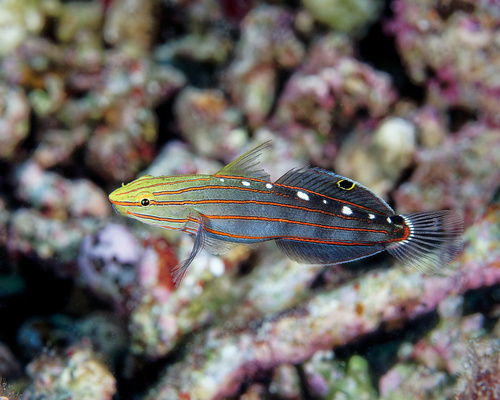
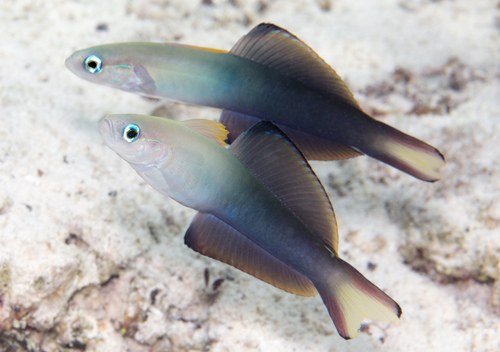
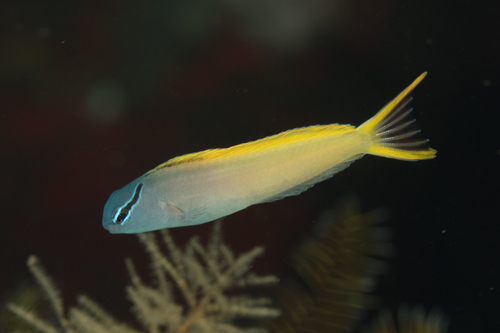
Meiacanthus atrodorsalis, commonly known as the Forktail Blenny, is a striking marine species native to coral reefs in the western Pacific Ocean. This species typically reaches a maximum length of 11 centimeters (4.3 inches) and is easily recognized by its elongated body and distinctive forked tail. The blenny exhibits a vibrant coloration that often includes shades of yellow and blue, making it a popular choice in the aquarium trade. Its common names also reflect its unique features, such as the eyelash harptail-blenny and yellowtail poison-fang blenny.
Forktail Blennies are known for their fascinating behavior and adaptations. They are primarily found in shallow, reef-associated environments where they inhabit crevices and holes among corals. Their diet consists mainly of small invertebrates and algae. Forktail Blennies possess venomous fangs that they use primarily for defense against predators, which adds an intriguing element to their natural history. Despite their venom, they are generally non-aggressive, often displaying a curious nature towards aquarists and tank mates.
In the wild, these blennies are usually found in pairs or small groups, showcasing social behaviors that are captivating to observe. Their ability to thrive in diverse reef habitats highlights their adaptability, making them a resilient species. In aquariums, they often engage in playful interactions with their surroundings and other tank inhabitants, providing an entertaining display for fish enthusiasts.
The Forktail Blenny's habitat is crucial to its survival, as it relies on healthy coral reefs for food and shelter. Protecting these ecosystems is vital, as they face threats from climate change and human activities. As a species that thrives in stable environments, the Forktail Blenny serves as an important indicator of reef health, making its conservation essential for marine biodiversity.
Forktail Blennies are known for their fascinating behavior and adaptations. They are primarily found in shallow, reef-associated environments where they inhabit crevices and holes among corals. Their diet consists mainly of small invertebrates and algae. Forktail Blennies possess venomous fangs that they use primarily for defense against predators, which adds an intriguing element to their natural history. Despite their venom, they are generally non-aggressive, often displaying a curious nature towards aquarists and tank mates.
In the wild, these blennies are usually found in pairs or small groups, showcasing social behaviors that are captivating to observe. Their ability to thrive in diverse reef habitats highlights their adaptability, making them a resilient species. In aquariums, they often engage in playful interactions with their surroundings and other tank inhabitants, providing an entertaining display for fish enthusiasts.
The Forktail Blenny's habitat is crucial to its survival, as it relies on healthy coral reefs for food and shelter. Protecting these ecosystems is vital, as they face threats from climate change and human activities. As a species that thrives in stable environments, the Forktail Blenny serves as an important indicator of reef health, making its conservation essential for marine biodiversity.
When caring for Forktail Blennies, it is essential to replicate their natural environment as closely as possible. The ideal water parameters include a temperature range of 24-28°C, a salinity of 1.020-1.025 ppt, and a pH level between 8.1 and 8.4. A minimum tank size of 100 liters is recommended to provide adequate space for swimming and hiding. These fish are primarily carnivorous and should be fed a varied diet that includes high-quality marine flakes, frozen brine shrimp, and finely chopped seafood.
Forktail Blennies are generally peaceful and can coexist with a variety of tank mates, though caution should be exercised with aggressive species. Acclimation to a new environment should be gradual, with a quarantine period of at least two weeks recommended to monitor for any signs of illness or stress before introducing them to the main tank. It is crucial to provide plenty of hiding spots using live rock or artificial structures, which will help reduce stress and allow these blennies to exhibit their natural behaviors.
Regular water changes and monitoring of water quality will ensure a healthy environment for Forktail Blennies. By providing proper care and attention to their needs, importers and retailers can successfully maintain these captivating fish in their aquarium systems.
Forktail Blennies are generally peaceful and can coexist with a variety of tank mates, though caution should be exercised with aggressive species. Acclimation to a new environment should be gradual, with a quarantine period of at least two weeks recommended to monitor for any signs of illness or stress before introducing them to the main tank. It is crucial to provide plenty of hiding spots using live rock or artificial structures, which will help reduce stress and allow these blennies to exhibit their natural behaviors.
Regular water changes and monitoring of water quality will ensure a healthy environment for Forktail Blennies. By providing proper care and attention to their needs, importers and retailers can successfully maintain these captivating fish in their aquarium systems.
Forktail Blennies are suitable for shipping under controlled conditions. They should be packed in breathable bags with adequate oxygen and water to minimize stress during transit. A packing density of 2-3 fish per liter is recommended, along with temperature maintenance between 24-26°C to ensure their well-being. This species is not listed under CITES, making it easier for importers to acquire and distribute.
Species Parameters
Max Adult Size
11.0 cm
Origin
Indo-Pacific
Habitat
reef
Diet
carnivore
Temp Min
24.0 °C
Temp Max
28.0 °C
Salinity Min
1.020
Salinity Max
1.025
pH Min
8.10
pH Max
8.40
Min Tank
100 L