Scissortail
Ptereleotris evides
In Stock
Common stock
Wild Caught
Moderate care
With Caution
SKU: CB-MF-0242
Discover the vibrant Scissortail, a captivating marine fish renowned for its striking colors and unique swimming style.
Pricing for Verified Importers
Log in to see wholesale prices and order.
Export Size
up to 15.0 cm
Origin
Indo-Pacific
Temperature
24.0–28.0°C
Min. Tank Size
100 L
Salinity
1.020–1.025 ppt
pH
7.80–8.40
Diet
omnivore
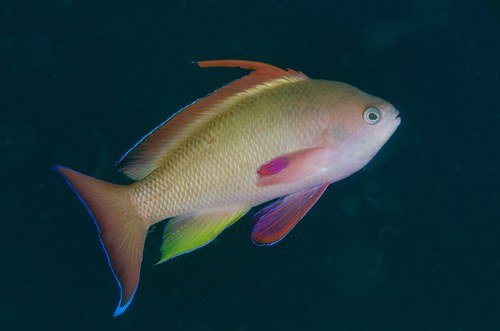
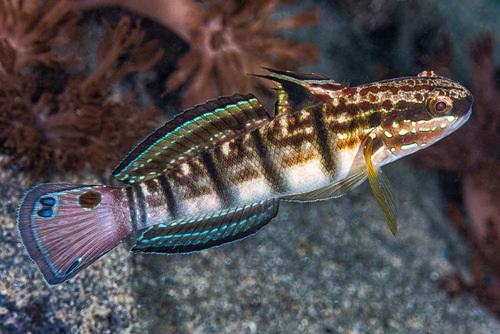
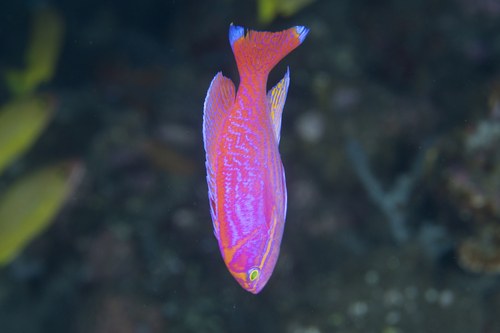
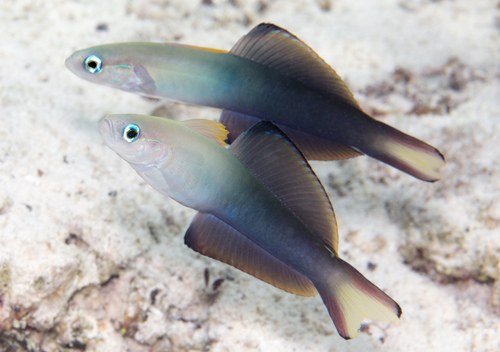
The Scissortail (Ptereleotris evides) is a stunning marine fish native to the coral reefs of the Indo-Pacific region. Known for its elongated body and vibrant coloration, the Scissortail exhibits a remarkable combination of blues, yellows, and reds that make it a popular choice among aquarium enthusiasts. Its unique tail fin, which resembles a pair of scissors, is not only visually striking but also aids in its agile swimming, allowing it to dart gracefully among the reef structures.
In terms of behavior, Scissortails are generally peaceful and social fish that thrive in small groups. They are often seen swimming in tandem, showcasing their dynamic movements and adding life to any aquarium setting. Scissortails are typically found in shallow waters, preferring sandy substrates near coral reefs where they can hunt for small invertebrates and plankton, their primary food sources.
Scissortails exhibit a unique reproductive behavior, where males perform elaborate courtship displays to attract females. During mating, they can often be observed engaging in synchronized swimming, which highlights their colorful patterns. This display not only serves as a means of attracting partners but also strengthens social bonds within their groups.
Overall, the Scissortail is not just a visually appealing fish but also an integral part of its natural habitat, contributing to the biodiversity of coral reef ecosystems. Its captivating appearance and interesting behaviors make it a prized addition to both public aquariums and private collections.
In terms of behavior, Scissortails are generally peaceful and social fish that thrive in small groups. They are often seen swimming in tandem, showcasing their dynamic movements and adding life to any aquarium setting. Scissortails are typically found in shallow waters, preferring sandy substrates near coral reefs where they can hunt for small invertebrates and plankton, their primary food sources.
Scissortails exhibit a unique reproductive behavior, where males perform elaborate courtship displays to attract females. During mating, they can often be observed engaging in synchronized swimming, which highlights their colorful patterns. This display not only serves as a means of attracting partners but also strengthens social bonds within their groups.
Overall, the Scissortail is not just a visually appealing fish but also an integral part of its natural habitat, contributing to the biodiversity of coral reef ecosystems. Its captivating appearance and interesting behaviors make it a prized addition to both public aquariums and private collections.
When caring for Scissortails, maintaining optimal water conditions is crucial. The ideal temperature range for these fish is between 24°C to 28°C, with a salinity level of 1.020 to 1.025 ppt. The pH should be kept between 7.8 and 8.4 to ensure a healthy environment. A minimum tank size of 100 liters is recommended to provide ample swimming space and allow for a group of these lively fish.
Feeding Scissortails is relatively straightforward, as they are omnivores. A varied diet consisting of high-quality flake food, frozen or live brine shrimp, and small pieces of seafood will help maintain their vibrant colors and overall health. It's best to feed them multiple times a day in small amounts to mimic their natural foraging behavior.
Scissortails are generally compatible with other peaceful marine species, making them suitable for community tanks. However, caution should be taken if housing them with more aggressive fish. Acclimation should be done slowly to prevent stress; a drip acclimation method is recommended. Quarantine new arrivals for at least two weeks to observe for any signs of disease or stress before introducing them to the main tank.
Feeding Scissortails is relatively straightforward, as they are omnivores. A varied diet consisting of high-quality flake food, frozen or live brine shrimp, and small pieces of seafood will help maintain their vibrant colors and overall health. It's best to feed them multiple times a day in small amounts to mimic their natural foraging behavior.
Scissortails are generally compatible with other peaceful marine species, making them suitable for community tanks. However, caution should be taken if housing them with more aggressive fish. Acclimation should be done slowly to prevent stress; a drip acclimation method is recommended. Quarantine new arrivals for at least two weeks to observe for any signs of disease or stress before introducing them to the main tank.
Scissortails are suitable for shipping, provided that proper packing techniques are used to ensure their safety during transit. A packing density of 1 fish per 5 liters is recommended to minimize stress. These fish are sensitive to temperature fluctuations; therefore, maintaining a stable temperature range between 24°C and 28°C during shipping is essential. As of now, Scissortails are not listed under CITES, making them easier to export.
Species Parameters
Max Adult Size
15.0 cm
Origin
Indo-Pacific
Diet
omnivore
Temp Min
24.0 °C
Temp Max
28.0 °C
Salinity Min
1.020
Salinity Max
1.025
pH Min
7.80
pH Max
8.40
Min Tank
100 L