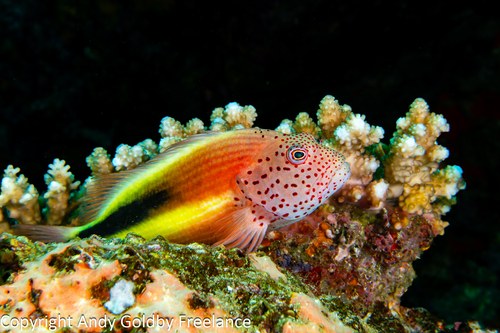
Blacksided Hawkfish
Paracirrhites forsteri
In Stock
Common stock
Wild Caught
Moderate care
With Caution
SKU: CB-MF-0322
The Blacksided Hawkfish is a vibrant marine fish known for its striking coloration and unique behavior.
Pricing for Verified Importers
Log in to see wholesale prices and order.
Export Size
up to 15.0 cm
Origin
Indo-Pacific
Temperature
24.0–28.0°C
Min. Tank Size
200 L
Salinity
1.020–1.025 ppt
pH
8.10–8.40
Diet
carnivore
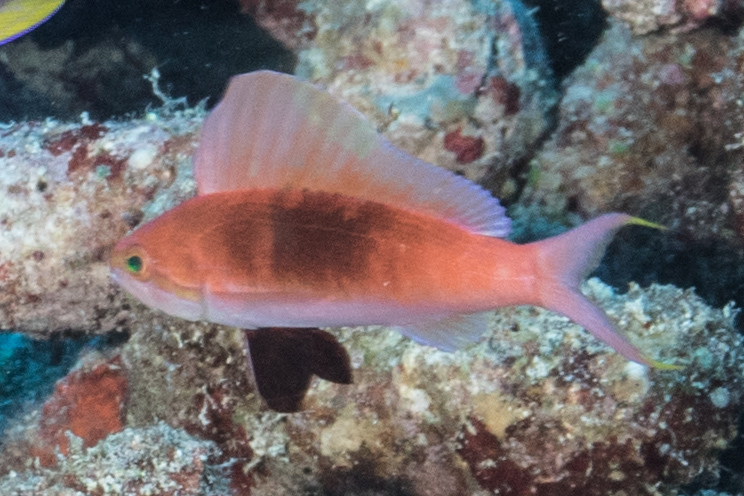
The Blacksided Hawkfish (Paracirrhites forsteri) is a captivating marine fish native to the coral reefs of the Indo-Pacific region. Characterized by its striking black and white coloration, this species displays a notable dark stripe running along its body, which provides excellent camouflage among the reef structures. Adult males can reach lengths of up to 15 cm, making them a noticeable addition to any marine aquarium. Their robust bodies and large, expressive eyes contribute to their appeal, while their unique swimming style, characterized by short bursts and hovering, captivates aquarists and observers alike.
In terms of behavior, the Blacksided Hawkfish is known for its territorial nature. They often perch on rocks and corals, watching for prey and displaying a curious demeanor. This species primarily feeds on small crustaceans and fish, using its excellent eyesight to spot potential meals from a distance. They are diurnal, being most active during the day, and can often be seen engaging in social interactions, especially during breeding season.
Their natural habitat consists of coral reefs and rocky crevices where they can find shelter and hunting grounds. The Blacksided Hawkfish thrives in warm, shallow waters, typically found at depths of 1 to 30 meters. They prefer areas with abundant coral cover, which provides both hiding places and hunting opportunities. This species plays a vital role in the reef ecosystem by controlling the population of small invertebrates and contributing to the overall health of the coral reef environment.
Importers and retailers will find that the Blacksided Hawkfish not only adds visual appeal to marine displays but also serves as an engaging species that interacts well with its environment. Their unique characteristics make them a sought-after choice for both novice and experienced aquarists alike.
In terms of behavior, the Blacksided Hawkfish is known for its territorial nature. They often perch on rocks and corals, watching for prey and displaying a curious demeanor. This species primarily feeds on small crustaceans and fish, using its excellent eyesight to spot potential meals from a distance. They are diurnal, being most active during the day, and can often be seen engaging in social interactions, especially during breeding season.
Their natural habitat consists of coral reefs and rocky crevices where they can find shelter and hunting grounds. The Blacksided Hawkfish thrives in warm, shallow waters, typically found at depths of 1 to 30 meters. They prefer areas with abundant coral cover, which provides both hiding places and hunting opportunities. This species plays a vital role in the reef ecosystem by controlling the population of small invertebrates and contributing to the overall health of the coral reef environment.
Importers and retailers will find that the Blacksided Hawkfish not only adds visual appeal to marine displays but also serves as an engaging species that interacts well with its environment. Their unique characteristics make them a sought-after choice for both novice and experienced aquarists alike.
To ensure the successful import and care of the Blacksided Hawkfish, it is essential to maintain appropriate water parameters. The ideal temperature range for this species is between 24°C and 28°C, with a salinity level of 1.020 to 1.025 ppt. The pH level should be maintained between 8.1 and 8.4 to replicate their natural environment. A minimum tank size of 200 liters is recommended to provide ample swimming space and hiding spots, as these fish can be territorial.
Feeding the Blacksided Hawkfish requires a varied diet that includes high-quality pellets, frozen or live foods such as shrimp and other meaty options. They are carnivorous and should be fed multiple times a week to maintain optimal health. Compatibility with other species is generally good, but caution is advised when introducing smaller fish, as they may be viewed as prey. It is best to house them with similarly sized or larger tank mates.
Acclimation is critical, as this species can be sensitive to changes in water conditions. A slow acclimation process over several hours is recommended to reduce stress. Quarantine new arrivals for at least two weeks to monitor for any signs of disease or stress before introducing them to the main display tank. Regular water quality testing and maintenance will ensure a healthy environment for the Blacksided Hawkfish.
Feeding the Blacksided Hawkfish requires a varied diet that includes high-quality pellets, frozen or live foods such as shrimp and other meaty options. They are carnivorous and should be fed multiple times a week to maintain optimal health. Compatibility with other species is generally good, but caution is advised when introducing smaller fish, as they may be viewed as prey. It is best to house them with similarly sized or larger tank mates.
Acclimation is critical, as this species can be sensitive to changes in water conditions. A slow acclimation process over several hours is recommended to reduce stress. Quarantine new arrivals for at least two weeks to monitor for any signs of disease or stress before introducing them to the main display tank. Regular water quality testing and maintenance will ensure a healthy environment for the Blacksided Hawkfish.
Blacksided Hawkfish are suitable for shipping due to their hardy nature, but care must be taken to maintain optimal shipping conditions. It is recommended to pack them with ample oxygen and sufficient water to minimize stress during transit. The ideal temperature for shipping is between 24°C and 28°C, as they are sensitive to extreme temperature fluctuations. Ensure that packing density allows for adequate space to prevent injury. This species is not listed on CITES, making it easier to export commercially.
Species Parameters
Max Adult Size
15.0 cm
Origin
Indo-Pacific
Diet
carnivore
Temp Min
24.0 °C
Temp Max
28.0 °C
Salinity Min
1.020
Salinity Max
1.025
pH Min
8.10
pH Max
8.40
Min Tank
200 L