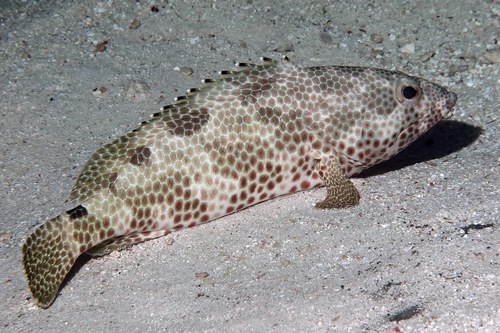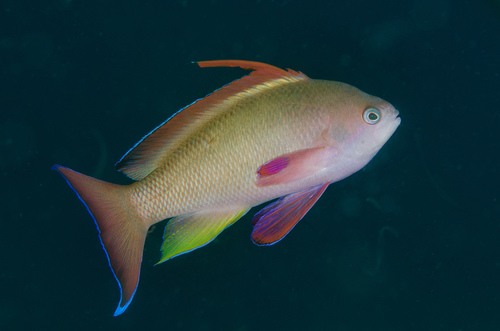
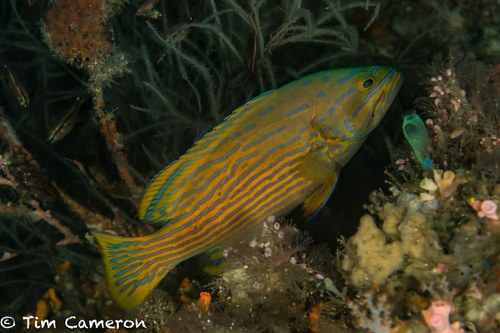
Harlequin Grouper
Cephalopholis polleni
In Stock
Common stock
Wild Caught
Moderate care
With Caution
SKU: CB-MF-0321
The Harlequin Grouper is a vibrant marine fish known for its striking coloration and hardy nature.
Pricing for Verified Importers
Log in to see wholesale prices and order.
Export Size
up to 50.0 cm
Origin
Indo-Pacific
Temperature
24.0–28.0°C
Min. Tank Size
200 L
Salinity
1.020–1.025 ppt
pH
8.10–8.40
Diet
carnivore
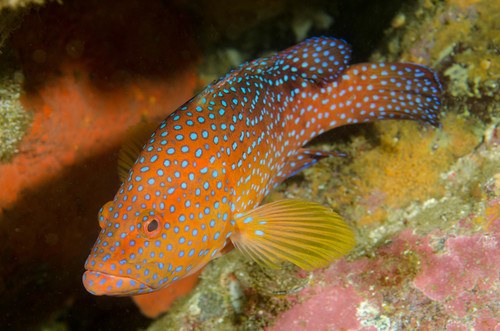
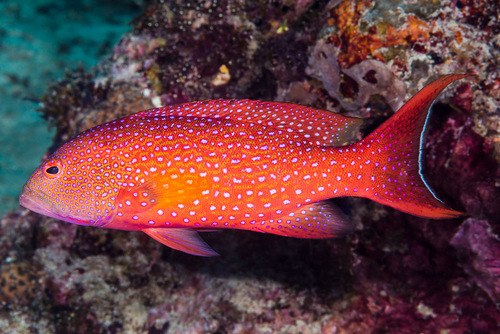
The Harlequin Grouper (Cephalopholis polleni) is a remarkable marine fish native to the coral reefs of the Indo-Pacific region. This species is particularly celebrated for its vivid coloration, featuring a striking pattern of blue and orange spots against a light background, which serves as a form of camouflage among the coral structures. Adult individuals can reach sizes of up to 50 cm, making them a noticeable presence in their natural habitat.
In terms of behavior, Harlequin Groupers are generally solitary or found in small groups, often lurking in the crevices of reefs where they can ambush prey. They are carnivorous predators, primarily feeding on smaller fish and crustaceans. Their hunting technique involves quick bursts of speed, allowing them to catch unsuspecting prey. This species also exhibits territorial behavior, particularly during breeding seasons, where males can be quite aggressive in defending their chosen areas.
Harlequin Groupers inhabit various marine environments, including coral reefs and rocky substrates, typically at depths ranging from 5 to 50 meters. They are most commonly found in clear, warm waters, where the availability of food and suitable shelter is abundant. This species thrives in stable environments with ample hiding spots, which provide safety from larger predators.
Their vibrant colors and unique patterns not only make them a favorite among aquarium enthusiasts but also play a critical role in their survival in the wild. The combination of their striking appearance and fascinating behaviors makes the Harlequin Grouper a sought-after species for both hobbyists and commercial aquarists alike.
In terms of behavior, Harlequin Groupers are generally solitary or found in small groups, often lurking in the crevices of reefs where they can ambush prey. They are carnivorous predators, primarily feeding on smaller fish and crustaceans. Their hunting technique involves quick bursts of speed, allowing them to catch unsuspecting prey. This species also exhibits territorial behavior, particularly during breeding seasons, where males can be quite aggressive in defending their chosen areas.
Harlequin Groupers inhabit various marine environments, including coral reefs and rocky substrates, typically at depths ranging from 5 to 50 meters. They are most commonly found in clear, warm waters, where the availability of food and suitable shelter is abundant. This species thrives in stable environments with ample hiding spots, which provide safety from larger predators.
Their vibrant colors and unique patterns not only make them a favorite among aquarium enthusiasts but also play a critical role in their survival in the wild. The combination of their striking appearance and fascinating behaviors makes the Harlequin Grouper a sought-after species for both hobbyists and commercial aquarists alike.
For successful care of Harlequin Groupers in an aquarium setting, maintaining optimal water parameters is crucial. The ideal temperature range for these fish is between 24°C and 28°C, with a salinity level of 1.020 to 1.025 ppt. The pH should be kept between 8.1 and 8.4 to mimic their natural reef environment. A minimum tank size of 200 liters is recommended to provide adequate space for swimming and territorial behavior.
Feeding Harlequin Groupers should focus on a carnivorous diet. They thrive on high-quality pellets, live or frozen foods such as shrimp, small fish, and other seafood. It's essential to feed them multiple times a day in small portions to maintain their health and vigor.
Compatibility-wise, these fish can be kept with larger tank mates but may show aggression towards smaller fish. Therefore, careful selection of tank partners is necessary. Acclimation should be performed slowly to reduce stress; a drip acclimation method over several hours is recommended. Additionally, a quarantine period of at least two weeks is advisable before introducing them to the main tank, ensuring they are free from diseases and parasites.
Feeding Harlequin Groupers should focus on a carnivorous diet. They thrive on high-quality pellets, live or frozen foods such as shrimp, small fish, and other seafood. It's essential to feed them multiple times a day in small portions to maintain their health and vigor.
Compatibility-wise, these fish can be kept with larger tank mates but may show aggression towards smaller fish. Therefore, careful selection of tank partners is necessary. Acclimation should be performed slowly to reduce stress; a drip acclimation method over several hours is recommended. Additionally, a quarantine period of at least two weeks is advisable before introducing them to the main tank, ensuring they are free from diseases and parasites.
Harlequin Groupers are suitable for shipping, but it is essential to maintain proper packing density to avoid stress during transport. Packing should ensure ample water volume and oxygenation. They are sensitive to temperature fluctuations, and shipping should occur within the range of 24°C to 28°C. This species is not listed under CITES and is generally considered stable in the wild, but sustainable sourcing practices are essential.
Species Parameters
Max Adult Size
50.0 cm
Origin
Indo-Pacific
Diet
carnivore
Temp Min
24.0 °C
Temp Max
28.0 °C
Salinity Min
1.020
Salinity Max
1.025
pH Min
8.10
pH Max
8.40
Min Tank
200 L