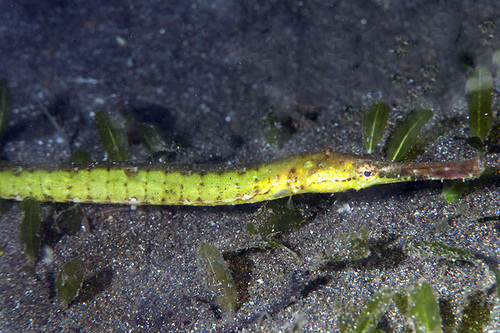
Aligator Pipefish
Syngnathoides biaculeatus
Limited
Rare stock
Wild Caught
Moderate care
With Caution
SKU: D194B
Discover the unique alligator pipefish, a master of camouflage and a fascinating addition to marine aquariums.
Pricing for Verified Importers
Log in to see wholesale prices and order.
Export Size
up to 29.0 cm
Origin
Indo-Pacific
Temperature
23.0–28.0°C
Min. Tank Size
100 L
Salinity
30.000–35.000 ppt
pH
7.50–8.50
Diet
carnivore
The alligator pipefish (Syngnathoides biaculeatus) is a remarkable species belonging to the family Syngnathidae, showcasing a distinctive elongated body that can reach lengths of up to 29 cm (11 in). This species is renowned for its unique adaptation to its environment, as it positions itself vertically within seagrass and seaweed, blending seamlessly into its surroundings. The alligator pipefish is primarily found in tropical and subtropical waters of the Indo-Pacific, ranging from East Africa to northern Australia, where it thrives in shallow water habitats rich in vegetation.
With its slender, elongated body and well-camouflaged coloration, the alligator pipefish is a sight to behold. Its coloration often mimics the hues of the seagrass and algae it inhabits, making it difficult for predators to spot. The pipefish's feeding behavior is quite fascinating; it uses a specialized suction feeding mechanism to capture small crustaceans and plankton, showcasing its unique adaptations as a predator.
Behaviorally, the alligator pipefish is known for its gentle disposition and preference for solitude or pairing during breeding. Males typically exhibit more vibrant colors during mating rituals, positioning themselves to attract females. This species is not only a stunning addition to any marine aquarium but also an interesting subject for observation due to its unique behaviors and breeding practices.
In its natural habitat, the alligator pipefish plays a vital role in the ecosystem by controlling prey populations and contributing to the overall health of seagrass beds. Its presence indicates a well-balanced marine environment, making it an important species for conservation efforts.
With its slender, elongated body and well-camouflaged coloration, the alligator pipefish is a sight to behold. Its coloration often mimics the hues of the seagrass and algae it inhabits, making it difficult for predators to spot. The pipefish's feeding behavior is quite fascinating; it uses a specialized suction feeding mechanism to capture small crustaceans and plankton, showcasing its unique adaptations as a predator.
Behaviorally, the alligator pipefish is known for its gentle disposition and preference for solitude or pairing during breeding. Males typically exhibit more vibrant colors during mating rituals, positioning themselves to attract females. This species is not only a stunning addition to any marine aquarium but also an interesting subject for observation due to its unique behaviors and breeding practices.
In its natural habitat, the alligator pipefish plays a vital role in the ecosystem by controlling prey populations and contributing to the overall health of seagrass beds. Its presence indicates a well-balanced marine environment, making it an important species for conservation efforts.
To successfully keep alligator pipefish, it's essential to replicate their natural environment as closely as possible. Recommended water parameters include a temperature range of 23-28°C, salinity levels between 30-35 ppt, and a pH of 7.5-8.5. These fish thrive in well-maintained, mature aquariums with plenty of hiding spots and dense vegetation, mimicking their natural habitat.
Feeding the alligator pipefish requires a diet rich in live or frozen foods, such as small brine shrimp, mysis shrimp, and other suitable marine fare. It is crucial to ensure that food particles are small enough for the pipefish to consume, as their feeding technique relies on suction.
Compatibility is another important consideration; while they may coexist with peaceful marine species, avoid aggressive tankmates that can stress or harm them. Acclimation should be gradual, allowing the fish to adapt to their new environment, ideally over several hours. Quarantine new specimens for at least two weeks to prevent the introduction of diseases into your main tank.
Feeding the alligator pipefish requires a diet rich in live or frozen foods, such as small brine shrimp, mysis shrimp, and other suitable marine fare. It is crucial to ensure that food particles are small enough for the pipefish to consume, as their feeding technique relies on suction.
Compatibility is another important consideration; while they may coexist with peaceful marine species, avoid aggressive tankmates that can stress or harm them. Acclimation should be gradual, allowing the fish to adapt to their new environment, ideally over several hours. Quarantine new specimens for at least two weeks to prevent the introduction of diseases into your main tank.
The alligator pipefish is suitable for shipping, provided that proper care is taken during transit. It should be packed in a breathable container with ample water and space to minimize stress. Recommended temperature during shipping is between 24-26°C, and the packing density should allow for sufficient oxygen exchange. This species is not currently listed under CITES, which facilitates easier export and import processes.
Species Parameters
Max Adult Size
29.0 cm
Origin
Indo-Pacific
Habitat
reef
Diet
carnivore
Temp Min
23.0 °C
Temp Max
28.0 °C
Salinity Min
30.000
Salinity Max
35.000
pH Min
7.50
pH Max
8.50
Min Tank
100 L