
Beach Conger
conger japonicus
In Stock
Common stock
Wild Caught
Moderate care
With Caution
SKU: ML-MF-0195
The Beach Conger is a unique marine fish known for its elongated body and adaptability to coastal environments.
Pricing for Verified Importers
Log in to see wholesale prices and order.
Export Size
up to 180.0 cm
Origin
Indo-Pacific
Temperature
22.0–28.0°C
Min. Tank Size
300 L
Salinity
30.000–35.000 ppt
pH
7.80–8.50
Diet
carnivore
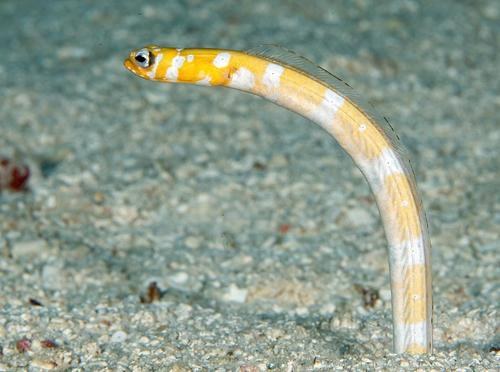
The Beach Conger (conger japonicus) is a remarkable species found primarily along the coasts of the Indo-Pacific region. This marine fish is characterized by its elongated, serpentine body, which can reach lengths of up to 1.8 meters. Its coloration typically ranges from a pale brown to a dark gray, providing excellent camouflage against the sandy and rocky substrates of its natural habitat. The Beach Conger's dorsal fin runs along the length of its body, adding to its streamlined appearance, making it an agile predator in the ocean.
In terms of behavior, the Beach Conger is primarily nocturnal, preferring to hunt and forage during the night. During the day, it can be found hiding in crevices or burrowing into the sand, which offers protection from potential predators. This species feeds predominantly on small fish and crustaceans, showcasing its carnivorous diet. The Beach Conger is known for its impressive hunting skills, utilizing both speed and stealth to ambush prey.
Habitat-wise, the Beach Conger thrives in shallow coastal waters, typically found in sandy and rocky substrates. It is commonly associated with coral reefs, where it benefits from the complex structure for shelter and hunting grounds. The species is known to be quite adaptable, able to tolerate a range of environmental conditions, making it a resilient inhabitant of its marine ecosystem.
Due to its unique physical characteristics and behaviors, the Beach Conger is of interest to both aquarists and researchers alike. Understanding its natural history contributes to better conservation efforts and sustainable practices within marine environments.
In terms of behavior, the Beach Conger is primarily nocturnal, preferring to hunt and forage during the night. During the day, it can be found hiding in crevices or burrowing into the sand, which offers protection from potential predators. This species feeds predominantly on small fish and crustaceans, showcasing its carnivorous diet. The Beach Conger is known for its impressive hunting skills, utilizing both speed and stealth to ambush prey.
Habitat-wise, the Beach Conger thrives in shallow coastal waters, typically found in sandy and rocky substrates. It is commonly associated with coral reefs, where it benefits from the complex structure for shelter and hunting grounds. The species is known to be quite adaptable, able to tolerate a range of environmental conditions, making it a resilient inhabitant of its marine ecosystem.
Due to its unique physical characteristics and behaviors, the Beach Conger is of interest to both aquarists and researchers alike. Understanding its natural history contributes to better conservation efforts and sustainable practices within marine environments.
When importing Beach Congers, it is crucial to ensure optimal water parameters for their health and well-being. The ideal temperature range for this species is between 22°C to 28°C, with a salinity level of 30-35 ppt. Maintaining a stable pH between 7.8 and 8.5 is also important. As carnivores, Beach Congers should be fed a varied diet consisting of high-quality frozen or live foods, such as shrimp, small fish, and other seafood to promote growth and health.
Compatibility is key when housing Beach Congers, as they may exhibit territorial behaviors, especially in smaller tanks. It is advisable to keep them with larger, more robust fish species that can withstand their assertive nature. Acclimation should be gradual, allowing the fish to adjust to the new environment; this can be achieved through drip acclimation methods over several hours.
Quarantine is recommended for new arrivals to prevent the introduction of pathogens into established tanks. A separate tank with similar water parameters can be set up for a minimum of two weeks before introducing the Beach Conger to the main aquarium. Regular monitoring for signs of stress or disease during this period is essential to ensure a healthy transition.
Compatibility is key when housing Beach Congers, as they may exhibit territorial behaviors, especially in smaller tanks. It is advisable to keep them with larger, more robust fish species that can withstand their assertive nature. Acclimation should be gradual, allowing the fish to adjust to the new environment; this can be achieved through drip acclimation methods over several hours.
Quarantine is recommended for new arrivals to prevent the introduction of pathogens into established tanks. A separate tank with similar water parameters can be set up for a minimum of two weeks before introducing the Beach Conger to the main aquarium. Regular monitoring for signs of stress or disease during this period is essential to ensure a healthy transition.
Beach Congers are suitable for shipping, provided that proper care is taken to maintain water quality during transit. Packing density should be moderate to ensure adequate oxygen levels, with a recommended maximum of 1-2 individuals per 10 liters of water. They are sensitive to temperature fluctuations, so maintaining a stable temperature between 20°C and 25°C is crucial during shipping. Currently, Beach Congers are not listed under CITES, simplifying export procedures.
Species Parameters
Max Adult Size
180.0 cm
Origin
Indo-Pacific
Diet
carnivore
Temp Min
22.0 °C
Temp Max
28.0 °C
Salinity Min
30.000
Salinity Max
35.000
pH Min
7.80
pH Max
8.50
Min Tank
300 L