Bluespotted stingray
neotrygon kuhlii
In Stock
Common stock
Wild Caught
Moderate care
With Caution
SKU: ML-MF-0282
Discover the stunning Bluespotted stingray, a unique addition to marine aquariums.
Pricing for Verified Importers
Log in to see wholesale prices and order.
Export Size
up to 60.0 cm
Origin
Indo-Pacific
Temperature
24.0–28.0°C
Min. Tank Size
500 L
Salinity
30.000–35.000 ppt
pH
7.50–8.50
Diet
carnivore
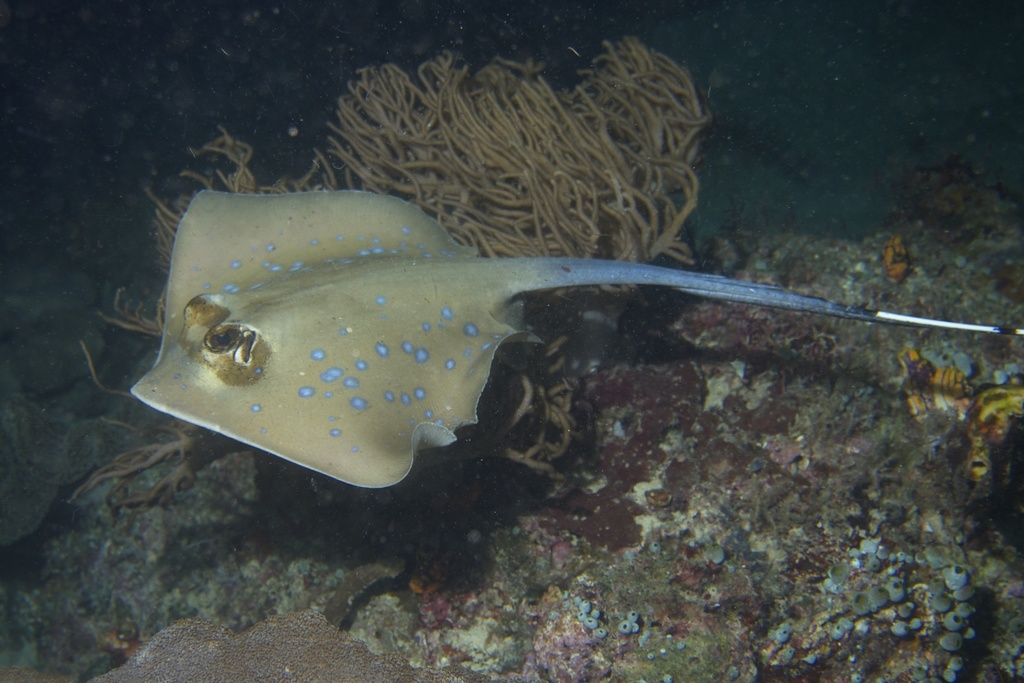
The Bluespotted stingray (Neotrygon kuhlii) is a captivating species known for its vibrant blue spots on a brownish background, making it a visually striking inhabitant of marine environments. This species typically inhabits shallow coastal waters, sandy and muddy substrates, and coral reefs across the Indo-Pacific region, particularly around Bali. Its unique coloration serves as both camouflage and a warning signal to potential predators, highlighting its remarkable adaptation to its habitat.
Bluespotted stingrays have a flattened body shape, which allows them to rest on the ocean floor while blending seamlessly with their surroundings. They possess long, slender tails equipped with a venomous spine, which they use for defense. These rays are generally solitary but can sometimes be found in small groups, especially during mating seasons. Their behavior is mostly benthic, as they forage for food on or near the seafloor, using their electroreceptors to detect prey buried in the sand.
These rays primarily feed on small fish, crustaceans, and mollusks, showcasing their carnivorous diet. The Bluespotted stingray plays an essential role in the marine ecosystem as both predator and prey, contributing to the balance of marine life in their habitats. Their unique biology and striking appearance have made them popular among aquarium enthusiasts, though they require specific care to thrive in captivity.
As a species, Neotrygon kuhlii is not currently considered at risk; however, habitat degradation and pollution pose significant threats to their populations in the wild. Sustainable harvesting practices and responsible aquarium management are crucial for ensuring the long-term viability of this beautiful species in both natural and controlled environments.
Bluespotted stingrays have a flattened body shape, which allows them to rest on the ocean floor while blending seamlessly with their surroundings. They possess long, slender tails equipped with a venomous spine, which they use for defense. These rays are generally solitary but can sometimes be found in small groups, especially during mating seasons. Their behavior is mostly benthic, as they forage for food on or near the seafloor, using their electroreceptors to detect prey buried in the sand.
These rays primarily feed on small fish, crustaceans, and mollusks, showcasing their carnivorous diet. The Bluespotted stingray plays an essential role in the marine ecosystem as both predator and prey, contributing to the balance of marine life in their habitats. Their unique biology and striking appearance have made them popular among aquarium enthusiasts, though they require specific care to thrive in captivity.
As a species, Neotrygon kuhlii is not currently considered at risk; however, habitat degradation and pollution pose significant threats to their populations in the wild. Sustainable harvesting practices and responsible aquarium management are crucial for ensuring the long-term viability of this beautiful species in both natural and controlled environments.
For importers and retailers, the Bluespotted stingray requires specific water parameters to thrive. Ideal temperatures range from 24°C to 28°C, with a salinity level of 30-35 ppt. A stable pH between 7.5 and 8.5 is also essential for their health. Providing a spacious aquarium with a minimum size of 500 liters is recommended, as these rays need ample space to swim and hide.
Feeding should consist of a varied diet including high-quality frozen or live foods such as shrimp, fish, and squid. It is important to ensure the food is appropriately sized for the stingray's mouth. Compatibility with other species should be approached with caution, as their venomous spine can pose a threat to smaller or more aggressive tank mates.
Acclimation is critical; introduce the stingray slowly to avoid shock, ideally using a drip acclimation method. Quarantine new arrivals for at least two weeks to monitor for any signs of disease before introducing them into a display tank. Maintaining a clean and stable environment will promote the health and longevity of the Bluespotted stingray in captivity.
Feeding should consist of a varied diet including high-quality frozen or live foods such as shrimp, fish, and squid. It is important to ensure the food is appropriately sized for the stingray's mouth. Compatibility with other species should be approached with caution, as their venomous spine can pose a threat to smaller or more aggressive tank mates.
Acclimation is critical; introduce the stingray slowly to avoid shock, ideally using a drip acclimation method. Quarantine new arrivals for at least two weeks to monitor for any signs of disease before introducing them into a display tank. Maintaining a clean and stable environment will promote the health and longevity of the Bluespotted stingray in captivity.
The Bluespotted stingray is suitable for shipping, provided they are packed securely in insulated containers with adequate water and oxygen. Optimal shipping temperatures should be maintained between 24°C and 26°C to reduce stress. It is crucial to minimize packing density to allow for movement and oxygen exchange. This species is not listed under CITES, which simplifies export procedures.
Species Parameters
Max Adult Size
60.0 cm
Origin
Indo-Pacific
Diet
carnivore
Temp Min
24.0 °C
Temp Max
28.0 °C
Salinity Min
30.000
Salinity Max
35.000
pH Min
7.50
pH Max
8.50
Min Tank
500 L